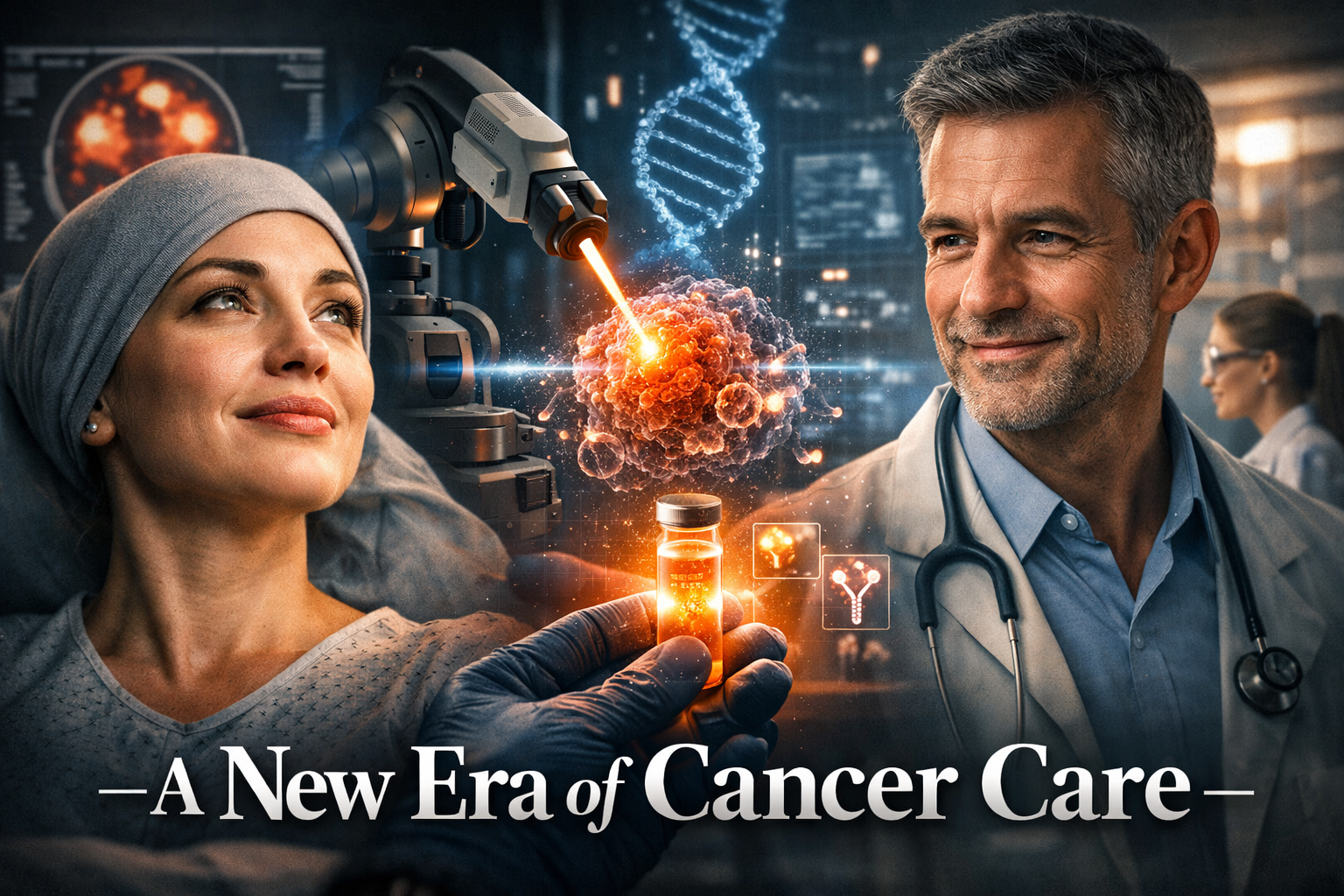
Cancer treatment has undergone a remarkable transformation over the past several decades. What was once a field largely defined by surgery, radiation, and chemotherapy is now evolving into something far more sophisticated. Researchers, physicians, and healthcare organizations around the world are embracing new technologies and scientific discoveries that are changing how cancer is detected, monitored, and treated.
For many years, cancer care focused primarily on attacking tumors after they had already developed. Today, the goal is becoming much broader. Scientists are working toward earlier detection, more personalized treatments, stronger immune-based therapies, and improved quality of life for patients throughout every stage of care.
While there is still much work to be done, there are clear signs that healthcare is entering a new chapter in the fight against cancer. Advances that once seemed futuristic are increasingly becoming part of real-world medical practice.
Here are eight powerful indicators that cancer care is moving into a new era.
1. Treatments Are Becoming More Personalized
One of the biggest shifts in modern oncology is the move away from one-size-fits-all treatment strategies.
In the past, patients with the same type of cancer often received very similar treatment plans. Today, doctors increasingly recognize that every cancer is unique. Even tumors that appear similar under a microscope may have different genetic mutations, molecular characteristics, and growth patterns.
This understanding has fueled the rise of personalized medicine.
Using advanced genetic testing and molecular profiling, healthcare providers can identify specific features within a tumor and select therapies that target those characteristics more precisely.
Personalized treatment offers several potential advantages:
- More effective therapy selection
- Reduced exposure to unnecessary treatments
- Improved treatment outcomes
- Better management of side effects
As technology advances, personalized cancer care is expected to become even more sophisticated.
2. Immunotherapy Is Reshaping Treatment Strategies
Perhaps no development has generated more excitement in recent years than immunotherapy.
Unlike traditional treatments that directly attack cancer cells, immunotherapy helps the body’s own immune system recognize and fight cancer more effectively.
Researchers have discovered that many tumors develop ways to hide from immune defenses. New therapies aim to remove those barriers and allow immune cells to perform their natural protective functions.
Several forms of immunotherapy are currently being studied and used in clinical settings, including:
- Immune checkpoint inhibitors
- Cancer vaccines
- Cell-based therapies
- Monoclonal antibodies
While immunotherapy is not appropriate for every patient or every cancer type, it represents one of the most significant advances in modern oncology.
3. Earlier Detection Is Becoming a Major Priority
Doctors have long known that early detection often improves treatment outcomes.
The earlier cancer is identified, the more treatment options may be available and the greater the chance of successful intervention.
Researchers are developing increasingly sophisticated tools to identify cancer at its earliest stages.
These include:
- Advanced imaging technologies
- Genetic screening methods
- Biomarker testing
- Liquid biopsy research
- Artificial intelligence-assisted diagnostics
The goal is to detect cancer before symptoms become severe and before tumors have an opportunity to spread.
This shift toward proactive detection may become one of the most important developments in future cancer care.
4. Artificial Intelligence Is Supporting Clinical Decisions
Artificial intelligence is rapidly becoming a valuable tool in healthcare.
Cancer generates enormous amounts of data, including medical images, pathology reports, laboratory results, genomic information, and treatment histories.
AI systems can analyze this information at a speed that would be impossible for humans alone.
Researchers are exploring how artificial intelligence can help:
- Detect abnormalities in medical scans
- Identify treatment opportunities
- Predict disease progression
- Improve diagnostic accuracy
- Personalize care recommendations
Importantly, AI is designed to assist healthcare professionals rather than replace them.
By providing additional insights, these tools may help clinicians make more informed decisions and improve patient outcomes.
5. Precision Medicine Is Expanding Rapidly
Precision medicine goes beyond personalized treatment by examining how genetics, environment, lifestyle, and biological factors influence disease.
Instead of treating cancer as a single condition, researchers increasingly view it as a collection of highly individualized diseases.
Precision medicine aims to match therapies to the specific characteristics of each patient and tumor.
This approach may help explain why two patients with seemingly similar diagnoses can experience very different treatment responses.
As researchers gather more genetic and molecular data, precision medicine is becoming an increasingly important component of cancer care.
6. Quality of Life Is Receiving Greater Attention
Historically, cancer treatment focused primarily on survival.
While survival remains the highest priority, healthcare providers increasingly recognize that quality of life matters as well.
Modern cancer care often includes services designed to support patients physically, emotionally, and socially.
These may include:
- Pain management
- Nutritional guidance
- Mental health support
- Rehabilitation services
- Survivorship programs
- Palliative care resources
This broader approach reflects a growing understanding that successful treatment involves caring for the whole person, not just the disease.
Patients today often have access to more comprehensive support than ever before.
7. Collaboration Is Accelerating Medical Progress
Cancer research has become increasingly collaborative.
Scientists, physicians, universities, healthcare systems, and research organizations now work together across national borders to share knowledge and resources.
Global collaboration allows researchers to:
- Conduct larger studies
- Share clinical data
- Accelerate discoveries
- Develop new treatments more efficiently
- Improve access to innovation
The pace of scientific progress often increases when experts from different disciplines combine their expertise.
This collaborative approach is helping drive many of the advances currently transforming oncology.
8. Prevention and Risk Reduction Are Taking Center Stage
One of the most encouraging developments in cancer care is the growing emphasis on prevention.
Researchers increasingly understand that reducing risk can be just as important as treating disease.
Healthcare organizations continue promoting strategies such as:
- Smoking cessation
- Healthy nutrition
- Physical activity
- Vaccination programs
- Sun protection
- Regular screening
Scientists are also improving their understanding of genetic risk factors and environmental influences.
The future of cancer care may involve not only better treatments but also more effective methods for preventing cancer from developing in the first place.
Why These Changes Matter
The impact of these developments extends far beyond laboratories and hospitals.
Cancer affects millions of individuals and families worldwide. Every advancement in detection, treatment, prevention, and supportive care has the potential to improve lives.
Modern innovations offer several important benefits:
- Greater treatment precision
- Earlier diagnosis
- Improved survival outcomes
- Better quality of life
- More personalized healthcare experiences
- Increased opportunities for prevention
While no single breakthrough will eliminate cancer entirely, the combined effect of these innovations is creating meaningful progress.
Challenges Still Facing Cancer Care
Despite encouraging advances, important challenges remain.
Researchers continue working to address issues such as:
Access to Care
Not all patients have equal access to advanced treatments and specialized services.
Treatment Costs
Many innovative therapies can be expensive, creating financial challenges for healthcare systems and patients.
Complex Biology
Cancer remains one of the most biologically complex diseases scientists have ever studied.
Treatment Resistance
Some cancers develop resistance to therapies over time, making ongoing research essential.
Addressing these challenges will require continued investment, innovation, and global cooperation.
What the Future May Look Like
The next generation of cancer care may look dramatically different from what exists today.
Researchers envision a future where:
- Cancers are detected earlier
- Treatments are tailored to individual patients
- Artificial intelligence supports diagnosis
- Immunotherapy becomes more effective
- Monitoring occurs in real time
- Prevention strategies become increasingly personalized
Many of these possibilities are already beginning to take shape.
As scientific understanding continues to grow, the distinction between treatment, prevention, and ongoing health management may become increasingly blurred.
Final Thoughts
Healthcare is clearly entering a new era of cancer care. Advances in personalized medicine, immunotherapy, artificial intelligence, early detection, and patient-centered support are transforming how cancer is understood and managed.
The eight signs highlighted in this article demonstrate a broader shift toward smarter, more precise, and more compassionate healthcare. Rather than relying solely on traditional approaches, modern oncology is embracing innovation at an unprecedented pace.
Although challenges remain, the direction of progress is encouraging. Researchers continue uncovering new insights that improve treatment options, enhance quality of life, and offer greater hope to patients and families around the world.
The future of cancer care is unlikely to be defined by a single breakthrough. Instead, it will be shaped by the combined impact of many advances working together—creating a healthcare system that is more personalized, proactive, and effective than ever before.







