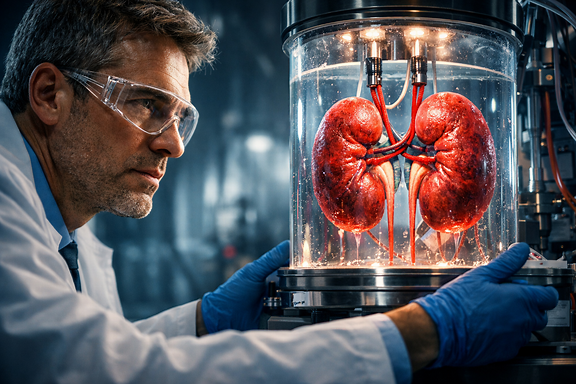
Medical science continues to push the boundaries of what was once thought impossible. One of the most exciting developments in recent years is the progress being made in growing functional human organs in laboratories. Among these breakthroughs, the successful creation of lab-grown kidneys has attracted global attention from researchers, healthcare professionals, and patients alike.
Kidney disease affects millions of people around the world, and the demand for organ transplants far exceeds the available supply. For decades, doctors have relied on donated organs to save lives, but shortages, long waiting lists, and the risk of organ rejection remain major challenges. Lab-grown kidneys could offer a revolutionary solution to these problems and completely reshape how kidney-related illnesses are treated.
While this technology is still evolving, the potential benefits are enormous. Here are eight significant ways lab-grown kidneys could change future medical treatments and improve healthcare for generations to come.
1. Reducing the Global Shortage of Donor Organs
One of the biggest challenges in modern healthcare is the shortage of donor kidneys. Every year, thousands of patients are added to transplant waiting lists, yet many never receive the organ they need in time.
Lab-grown kidneys could dramatically reduce this problem by providing a new source of transplantable organs. Instead of depending entirely on organ donations, doctors may eventually be able to grow kidneys in controlled laboratory environments.
This advancement could save countless lives by ensuring that more patients have access to treatment when they need it most. Rather than waiting months or years for a suitable donor, patients could potentially receive a lab-grown organ designed specifically for transplantation.
2. Lowering the Risk of Organ Rejection
One of the greatest risks after a kidney transplant is organ rejection. The immune system naturally identifies foreign tissues and may attack the transplanted organ, even when donors are carefully matched.
To prevent rejection, transplant recipients often need lifelong immunosuppressive medications. While these drugs help protect the transplanted kidney, they can also increase the risk of infections and other health complications.
Lab-grown kidneys may offer a better solution. Scientists are exploring ways to create organs using a patient’s own cells. If successful, the resulting kidney would be genetically similar to the recipient, significantly reducing the likelihood of rejection.
This personalized approach could improve transplant success rates and reduce dependence on powerful medications.
3. Providing New Hope for Patients with Chronic Kidney Disease
Chronic kidney disease affects millions of individuals worldwide and is a leading cause of serious health complications. As kidney function declines, patients often face ongoing treatments, lifestyle restrictions, and a reduced quality of life.
For many people, dialysis becomes a long-term necessity. Although dialysis helps perform some kidney functions, it is not a cure and can be physically and emotionally demanding.
Lab-grown kidneys could offer a more permanent solution. Instead of managing symptoms through dialysis, patients may eventually receive fully functioning replacement organs that restore normal kidney function.
This possibility represents a major shift from disease management to true organ replacement therapy.
4. Accelerating Medical Research and Drug Development
Lab-grown kidneys could become valuable tools for scientific research. Researchers often struggle to study human kidney diseases accurately because traditional laboratory models do not always reflect real human biology.
By using bioengineered kidney tissues, scientists can observe how diseases develop and test new treatments in environments that closely mimic human organs.
This approach may lead to:
- Faster drug development
- More accurate safety testing
- Better understanding of kidney disorders
- Reduced reliance on animal testing
As a result, promising therapies could reach patients more quickly while improving overall treatment effectiveness.
5. Creating Personalized Medical Treatments
Healthcare is moving toward personalized medicine, where treatments are tailored to an individual’s unique genetic makeup. Lab-grown kidneys fit perfectly into this emerging approach.
Using a patient’s own cells, researchers may be able to grow organs specifically designed for that person. This could allow doctors to predict how a patient will respond to certain medications or procedures before treatment even begins.
Personalized organ engineering could help healthcare providers:
- Improve treatment accuracy
- Reduce complications
- Enhance long-term outcomes
- Deliver more customized care
As technology advances, medicine may become increasingly focused on individual needs rather than one-size-fits-all solutions.
6. Reducing Healthcare Costs Over Time
Kidney disease places a significant financial burden on healthcare systems worldwide. Dialysis treatments require specialized equipment, regular appointments, and continuous medical supervision.
Similarly, organ transplantation involves extensive testing, surgery, recovery, and long-term medication costs.
Although developing lab-grown kidneys may initially be expensive, widespread adoption could eventually lower overall healthcare spending. Successful organ replacements could reduce years of dialysis expenses and decrease the need for repeated hospital visits.
In the long run, this technology has the potential to make treatment more efficient while improving patient outcomes.
7. Advancing Regenerative Medicine as a Whole
The successful development of lab-grown kidneys represents more than a breakthrough for kidney patients—it marks a major step forward for regenerative medicine.
Regenerative medicine focuses on repairing, replacing, or regenerating damaged tissues and organs. Progress in kidney bioengineering could accelerate similar efforts involving other organs such as:
- Hearts
- Livers
- Lungs
- Pancreases
- Blood vessels
Every advancement in organ engineering provides valuable knowledge that researchers can apply across multiple medical fields.
As scientists learn how to create increasingly complex biological structures, the dream of growing replacement organs for a wide range of conditions moves closer to reality.
8. Improving Quality of Life for Millions of People
Perhaps the most important benefit of lab-grown kidneys is the impact they could have on everyday life.
Kidney failure affects far more than physical health. Patients often experience emotional stress, limited mobility, financial challenges, and significant lifestyle disruptions.
Dialysis schedules can consume many hours each week, making work, travel, and social activities difficult. Even after transplantation, concerns about rejection and medication side effects can remain.
A future where patients receive personalized, functional kidneys could dramatically improve overall well-being. People may be able to return to normal activities, spend less time managing their condition, and enjoy greater independence.
For many families, this would mean more time together and fewer healthcare-related challenges.
Challenges That Still Remain
Despite the excitement surrounding lab-grown kidneys, important challenges must still be addressed before the technology becomes widely available.
Researchers continue to work on several critical issues, including:
- Creating fully functional organs with complex blood vessel networks
- Ensuring long-term safety and effectiveness
- Scaling production for widespread use
- Meeting regulatory and ethical requirements
- Making treatments affordable and accessible
Scientific breakthroughs often require years of testing and refinement before becoming routine medical procedures. While progress has been impressive, widespread clinical use may still take time.
What the Future Could Look Like
The idea of growing human organs once belonged to the realm of science fiction. Today, it is becoming a realistic scientific goal. Advances in stem cell research, tissue engineering, biotechnology, and regenerative medicine are bringing researchers closer than ever to creating viable replacement organs.
In the future, hospitals may have specialized facilities capable of producing personalized organs for patients in need. Waiting lists could become significantly shorter, transplant outcomes could improve, and treatment options for chronic diseases could expand dramatically.
While there is still much work ahead, the successful development of lab-grown kidneys signals an important turning point in medical history.
Final Thoughts
Lab-grown kidneys have the potential to revolutionize healthcare in ways that were unimaginable just a few decades ago. From reducing organ shortages and minimizing rejection risks to advancing personalized medicine and improving quality of life, the benefits could be far-reaching.
Although challenges remain, the progress already achieved demonstrates the incredible possibilities of modern science. As research continues, lab-grown kidneys may become one of the most transformative medical innovations of the 21st century, offering hope to millions of patients around the world and paving the way for a new era of regenerative medicine.







