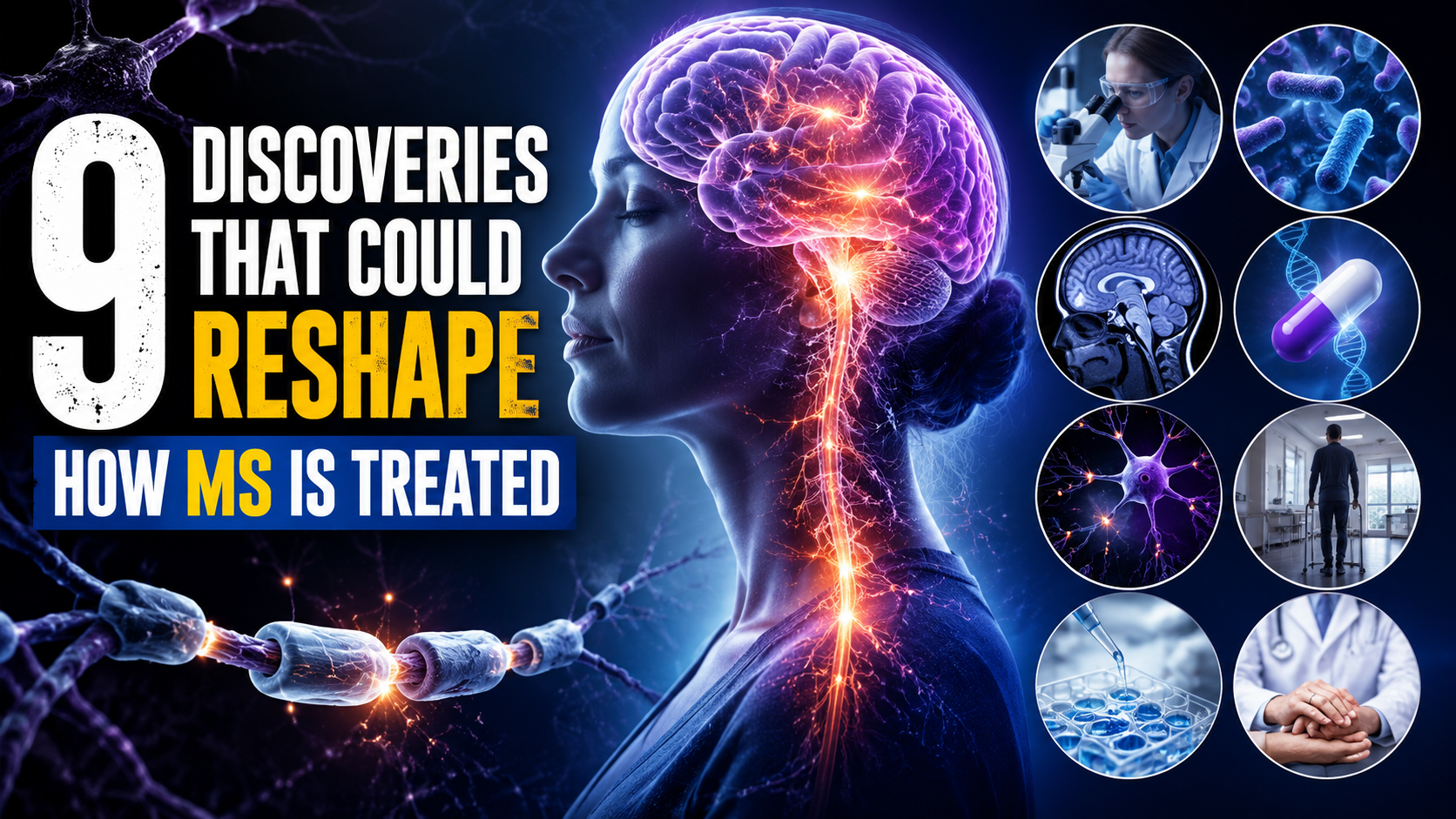
Multiple sclerosis (MS) is one of the most complex neurological disorders facing modern medicine. Affecting millions of people worldwide, the disease occurs when the immune system mistakenly attacks the protective covering around nerve fibers, disrupting communication between the brain and the rest of the body. Symptoms can vary widely, ranging from fatigue and numbness to mobility challenges, vision problems, and cognitive difficulties.
For decades, treatment has focused primarily on slowing disease progression and managing symptoms. While these therapies have improved the lives of many patients, researchers continue searching for better ways to understand, prevent, and potentially reverse the damage caused by MS.
The good news is that scientific progress is accelerating. Advances in genetics, immunology, microbiome research, and regenerative medicine are revealing new possibilities that were unimaginable just a few years ago.
Here are nine important discoveries that could significantly influence the future of multiple sclerosis treatment.
1. Gut Bacteria May Play a Bigger Role Than Previously Thought
One of the most exciting developments in MS research involves the human gut microbiome—the trillions of bacteria that live inside the digestive system.
Scientists have discovered that certain bacterial species appear to influence immune system activity. Some studies suggest that specific microbes may contribute to the abnormal immune responses associated with multiple sclerosis.
Researchers are now investigating whether altering the gut microbiome could help reduce inflammation and disease activity.
Potential approaches include specialized diets, probiotics, targeted microbial therapies, and even microbiome transplants. While research is ongoing, the connection between gut health and neurological disease is becoming increasingly difficult to ignore.
2. Improved Understanding of Immune Cell Behavior
MS is fundamentally an immune system disorder. However, scientists are learning that the immune response involved is far more complex than once believed.
Earlier research focused heavily on T cells, a type of white blood cell involved in immune defense. Today, researchers recognize that many other immune cells also contribute to disease development.
B cells, macrophages, and various inflammatory signaling molecules have become important targets for investigation.
This deeper understanding has already led to newer therapies designed to selectively regulate harmful immune activity while preserving normal immune function. Future treatments may become even more precise as researchers continue mapping the intricate immune networks involved in MS.
3. Personalized Medicine Is Becoming a Reality
No two MS patients experience the disease in exactly the same way.
Some individuals have relatively mild symptoms for decades, while others face more aggressive disease progression. This variability has encouraged scientists to move toward personalized treatment strategies.
Advances in genetic testing, biomarker analysis, and artificial intelligence are helping researchers predict how different patients may respond to specific therapies.
In the future, doctors may be able to develop highly individualized treatment plans based on a person’s unique biological profile, reducing trial-and-error prescribing and improving outcomes.
Personalized medicine could represent one of the most important shifts in MS care over the next decade.
4. New Therapies Are Targeting B Cells More Effectively
One of the most successful treatment breakthroughs in recent years has involved therapies that target B cells.
These immune cells were once considered secondary players in multiple sclerosis. However, researchers now understand that they contribute significantly to inflammation and disease progression.
Several modern medications work by reducing or modifying harmful B-cell activity.
Clinical studies have shown that these therapies can decrease relapse rates, reduce new brain lesions, and slow disability progression in many patients.
As researchers gain a deeper understanding of B-cell biology, even more targeted treatments are likely to emerge.
5. Scientists Are Exploring Ways to Repair Damaged Myelin
The hallmark of MS is damage to myelin, the protective coating that surrounds nerve fibers.
Current therapies primarily focus on preventing further damage. However, researchers are increasingly interested in helping the body repair existing injury.
This process, known as remyelination, involves restoring damaged myelin so nerve signals can travel more efficiently.
Several experimental therapies aim to stimulate the body’s natural repair mechanisms or encourage specialized cells to rebuild lost myelin.
Although challenges remain, successful remyelination therapies could potentially improve neurological function and restore abilities that have been lost due to disease progression.
6. Stem Cell Research Is Showing Promise
Stem cells continue to generate significant interest across many areas of medicine, including multiple sclerosis.
One approach receiving attention is hematopoietic stem cell transplantation (HSCT), a procedure designed to reset the immune system.
The treatment involves eliminating problematic immune cells and replacing them with new stem-cell-derived immune cells.
For certain patients with aggressive forms of MS, this approach has produced encouraging results.
Researchers are also exploring other stem-cell-based therapies that may help repair damaged tissues, reduce inflammation, or support nerve regeneration.
Although stem cell treatments are not appropriate for every patient, ongoing studies continue to reveal new possibilities.
7. Advanced Imaging Is Transforming Diagnosis and Monitoring
Medical imaging has long played a crucial role in diagnosing multiple sclerosis. However, modern technologies are taking this capability to an entirely new level.
High-resolution MRI techniques now provide far more detailed views of brain and spinal cord changes than were possible in the past.
Researchers are developing imaging tools capable of detecting disease activity earlier and monitoring treatment effectiveness with greater precision.
Improved imaging may help doctors identify subtle disease changes before symptoms worsen, allowing earlier intervention and more proactive care.
The ability to track disease progression accurately is essential for developing better treatment strategies.
8. Artificial Intelligence Is Accelerating Research
Artificial intelligence is becoming an increasingly valuable tool in medical research.
MS generates enormous amounts of data, including imaging scans, genetic information, laboratory results, and patient records.
AI systems can analyze these complex datasets far faster than traditional methods.
Researchers are using machine learning to identify disease patterns, predict progression, improve diagnosis, and discover potential therapeutic targets.
Artificial intelligence may also help doctors personalize treatment decisions and identify patients who are most likely to benefit from specific therapies.
As computing power continues to improve, AI could play an increasingly important role in shaping future MS care.
9. Neuroprotection Is Emerging as a Key Treatment Goal
Historically, most MS treatments have focused on reducing inflammation. While this remains important, scientists now recognize that protecting nerve cells themselves may be equally critical.
Neuroprotection refers to strategies designed to preserve neurons and prevent long-term neurological damage.
Researchers are studying compounds that may shield nerve cells from injury, reduce oxidative stress, and support cellular health.
By combining neuroprotective therapies with existing immune-targeting treatments, future treatment plans may address multiple aspects of the disease simultaneously.
This comprehensive approach could help patients maintain neurological function for longer periods and improve overall quality of life.
Why These Discoveries Matter
The significance of these breakthroughs extends beyond the laboratory.
For people living with multiple sclerosis, every scientific advance brings the possibility of better treatments, improved symptom management, and greater independence.
Many current therapies have already transformed outcomes compared with previous generations of treatment. However, researchers are increasingly focused on achieving goals that once seemed unattainable.
Instead of merely slowing disease progression, future therapies may be able to prevent damage before it occurs, repair injured tissues, and perhaps even stop disease activity altogether.
While these outcomes are not guaranteed, the direction of current research is undeniably encouraging.
Challenges Still Remain
Despite remarkable progress, important obstacles remain.
Multiple sclerosis is an extremely complex disease influenced by genetics, environmental factors, immune responses, and potentially the microbiome. No single discovery is likely to provide all the answers.
Researchers must continue conducting large clinical trials to verify safety and effectiveness. New therapies often require years of testing before becoming widely available.
Cost and accessibility also remain significant concerns. Cutting-edge treatments can be expensive, and ensuring that patients have access to new innovations will be an important challenge moving forward.
Nevertheless, scientific momentum continues to build.
Looking Ahead
The future of multiple sclerosis treatment appears more promising than ever before.
From microbiome discoveries and stem cell therapies to personalized medicine and advanced neuroprotection strategies, researchers are uncovering new opportunities to improve patient outcomes.
Each breakthrough adds another piece to the puzzle, helping scientists better understand one of the world’s most complex neurological disorders.
Although there is still much to learn, today’s discoveries are laying the foundation for tomorrow’s treatments. For millions of people affected by MS, that progress offers something incredibly valuable: hope.
As research advances and innovative therapies move closer to clinical use, the possibility of more effective, personalized, and restorative treatments continues to grow. The next generation of MS care may look dramatically different from anything we’ve seen before—and many of the discoveries driving that transformation are already underway today.