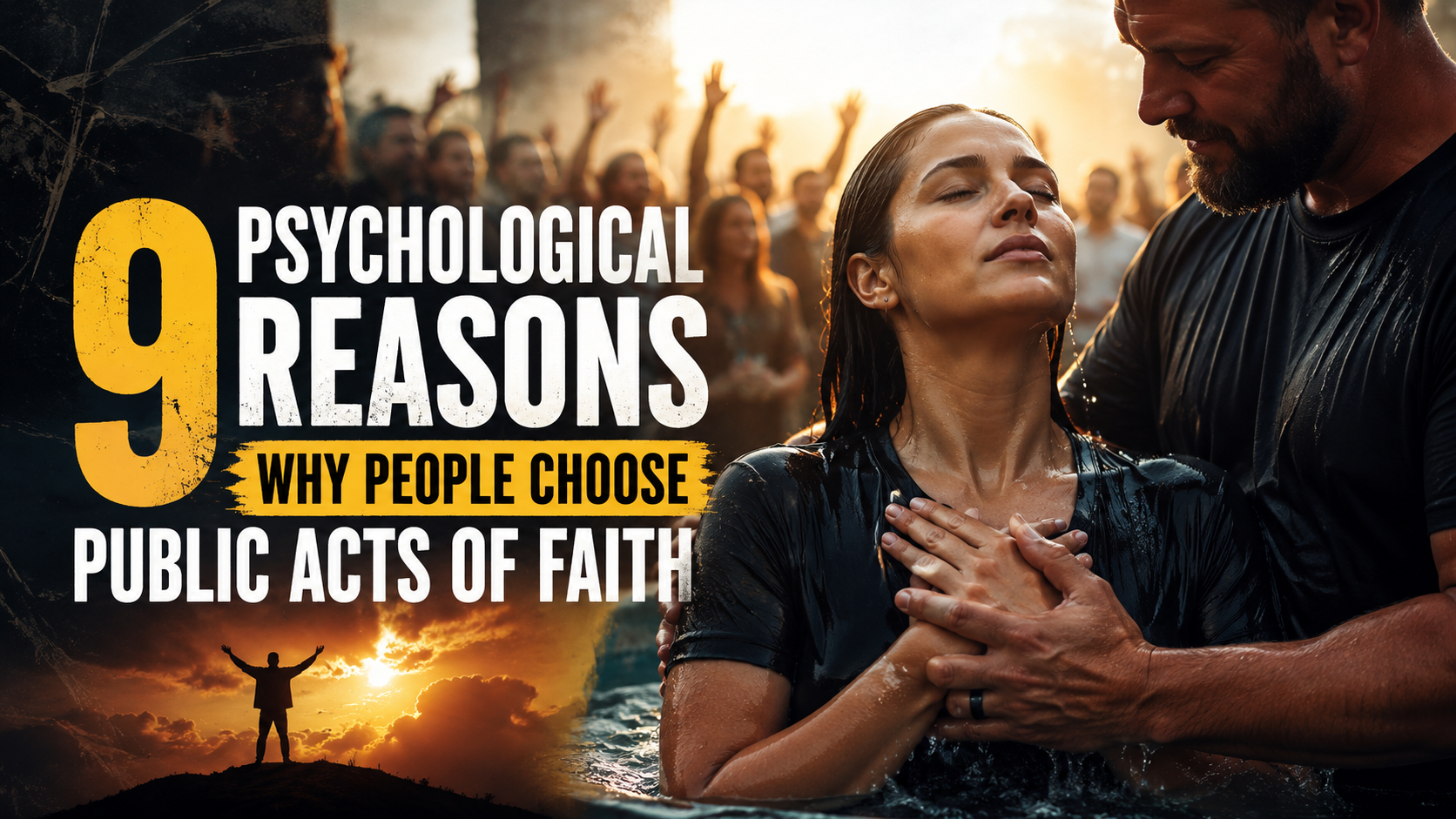
Faith is often viewed as a deeply personal matter. For many people, spiritual beliefs shape their values, decisions, and sense of purpose in quiet and private ways. Yet throughout history, people have also expressed their faith publicly through ceremonies, rituals, testimonies, baptisms, pilgrimages, charitable work, and other visible acts of devotion.
Public expressions of faith are common across cultures and religions. While some observers may see these acts simply as religious traditions, psychology offers a deeper understanding of why people feel compelled to share their beliefs openly. These moments often reflect important emotional, social, and personal experiences that go beyond religion itself.
Here are nine psychological reasons why many people choose to publicly express their faith.
1. A Desire to Strengthen Personal Identity
One of the most powerful psychological needs humans have is the need for identity. People naturally seek to understand who they are and what they stand for.
Public acts of faith can serve as a clear declaration of personal values and beliefs. Whether someone participates in a baptism, shares a testimony, or openly discusses their spiritual journey, they are often reinforcing an important part of their identity.
Psychologists suggest that people feel more confident and secure when their actions align with their beliefs. By publicly expressing faith, individuals create a stronger connection between their inner convictions and their outward behavior.
In many cases, these public moments represent a milestone in personal development, helping people define themselves more clearly.
2. The Need for Belonging and Community
Humans are social beings. We naturally seek connection, acceptance, and a sense of belonging.
Faith communities often provide strong social support networks where individuals feel understood and valued. Public acts of faith can strengthen these connections by signaling membership within a larger group.
When someone participates in a religious ceremony or openly shares their beliefs, they often experience a greater sense of inclusion and support from others who share similar values.
Research consistently shows that social belonging contributes to emotional well-being, resilience, and life satisfaction. Public expressions of faith can therefore help satisfy a fundamental human need for meaningful relationships and community involvement.
3. A Desire to Mark a Significant Life Change
Many public faith experiences occur during periods of personal transformation.
A person may overcome addiction, recover from a difficult life event, rebuild relationships, or discover a new sense of purpose. Publicly expressing faith often serves as a symbolic way to acknowledge that change.
Psychologists recognize the importance of rituals in helping people navigate major life transitions. Rituals create structure and meaning during times of change, allowing individuals to celebrate growth and leave the past behind.
For many believers, public acts of faith represent a visible marker of a new chapter in life.
4. The Need to Share Meaningful Experiences
People naturally want to share experiences that have profoundly impacted them.
Whether it is a life-changing trip, a major achievement, or a personal breakthrough, meaningful experiences often feel incomplete unless they are shared with others.
The same principle applies to spiritual experiences. Individuals who feel their faith has transformed their lives may feel motivated to tell others about it.
This desire is not always about seeking attention. In many cases, it stems from genuine gratitude and a wish to communicate something deeply meaningful.
Sharing these experiences can also help individuals process their own emotions and strengthen their commitment to the beliefs they have embraced.
5. A Search for Purpose and Direction
One of the most common themes in psychological research is the human search for meaning.
People want to feel that their lives matter and that their actions contribute to something larger than themselves.
Faith often provides answers to life’s biggest questions, including questions about purpose, suffering, morality, and hope.
When individuals find a sense of direction through their beliefs, public expressions of faith may become a way of affirming that purpose.
These moments allow people to communicate not only what they believe but also why those beliefs have become important in shaping their lives.
6. Increased Confidence Through Public Commitment
Making a commitment publicly can strengthen long-term dedication to a goal or belief.
Psychologists refer to this as the principle of consistency. Once people publicly declare a commitment, they are often more motivated to act in ways that align with that commitment.
This concept applies to many areas of life, including health goals, career ambitions, relationships, and spiritual beliefs.
When someone publicly professes their faith, they may experience a stronger sense of accountability. The public nature of the commitment encourages them to remain consistent with the values they have chosen to embrace.
As a result, public acts of faith can reinforce personal growth and long-term behavioral change.
7. The Emotional Power of Shared Rituals
Rituals have played a central role in human societies for thousands of years.
From weddings and graduations to cultural celebrations and religious ceremonies, rituals help people create meaning and strengthen emotional bonds.
Public faith ceremonies often involve shared rituals that connect individuals to something greater than themselves. These experiences can evoke powerful emotions, including joy, gratitude, hope, and a sense of peace.
Psychological studies suggest that participating in meaningful rituals can reduce stress, increase feelings of control, and enhance emotional well-being.
For many people, public expressions of faith become memorable life events because they combine personal significance with collective support.
8. A Desire to Inspire or Encourage Others
Many individuals who publicly express their faith are motivated by the hope that their story might help someone else.
People who have experienced personal transformation often feel a responsibility to share what they have learned. They may believe that their journey could encourage others facing similar challenges.
Psychology recognizes the importance of storytelling in human communication. Stories help people connect emotionally, learn from others’ experiences, and find hope during difficult times.
Public acts of faith can serve as powerful narratives that inspire resilience, optimism, and positive change in others.
Even when no direct message is intended, visible acts of conviction often encourage reflection among those who witness them.
9. The Need for Authenticity
Authenticity has become increasingly important in modern society.
Many people want their external actions to reflect their internal beliefs. Living authentically means reducing the gap between what a person believes privately and how they behave publicly.
When faith becomes a central part of someone’s identity, keeping it completely hidden may feel inconsistent with who they are.
Public expressions of faith can therefore represent a desire for honesty and transparency. Rather than separating their spiritual beliefs from the rest of their lives, individuals choose to integrate those beliefs into their public identity.
Psychologists have found that authenticity is often associated with higher levels of well-being, self-esteem, and life satisfaction. People generally feel more comfortable and fulfilled when they live in alignment with their values.
Final Thoughts
Public acts of faith are about much more than religious tradition. They often reflect fundamental psychological needs that are shared by people everywhere. The desire for identity, belonging, purpose, authenticity, and personal growth can all play a role in why individuals choose to express their beliefs openly.
While every person’s journey is unique, public expressions of faith frequently mark important moments of transformation and commitment. They allow individuals to celebrate meaningful life changes, connect with supportive communities, and communicate values that matter deeply to them.
Understanding the psychology behind these actions helps us see them not simply as religious events, but as human experiences shaped by universal emotional and social needs. Whether viewed through a spiritual or psychological lens, public acts of faith often reveal something profound about the human search for meaning, connection, and purpose.







