Bringing a new puppy into your home is an exciting experience. For many families, a dog quickly becomes more than a pet—it becomes a loyal companion, a source of comfort, and an important member of the household. However, finding the right puppy starts with finding the right breeder.
Not all breeders operate with the same standards. While responsible breeders prioritize the health, safety, and well-being of their dogs, others focus primarily on profit. Unfortunately, unethical breeding practices can lead to serious health problems, behavioral issues, and unnecessary suffering for animals.
Many first-time puppy buyers are unaware of the warning signs that may indicate a breeder is cutting corners or failing to provide proper care. Learning how to identify these red flags can help protect both you and the puppy you hope to bring home.
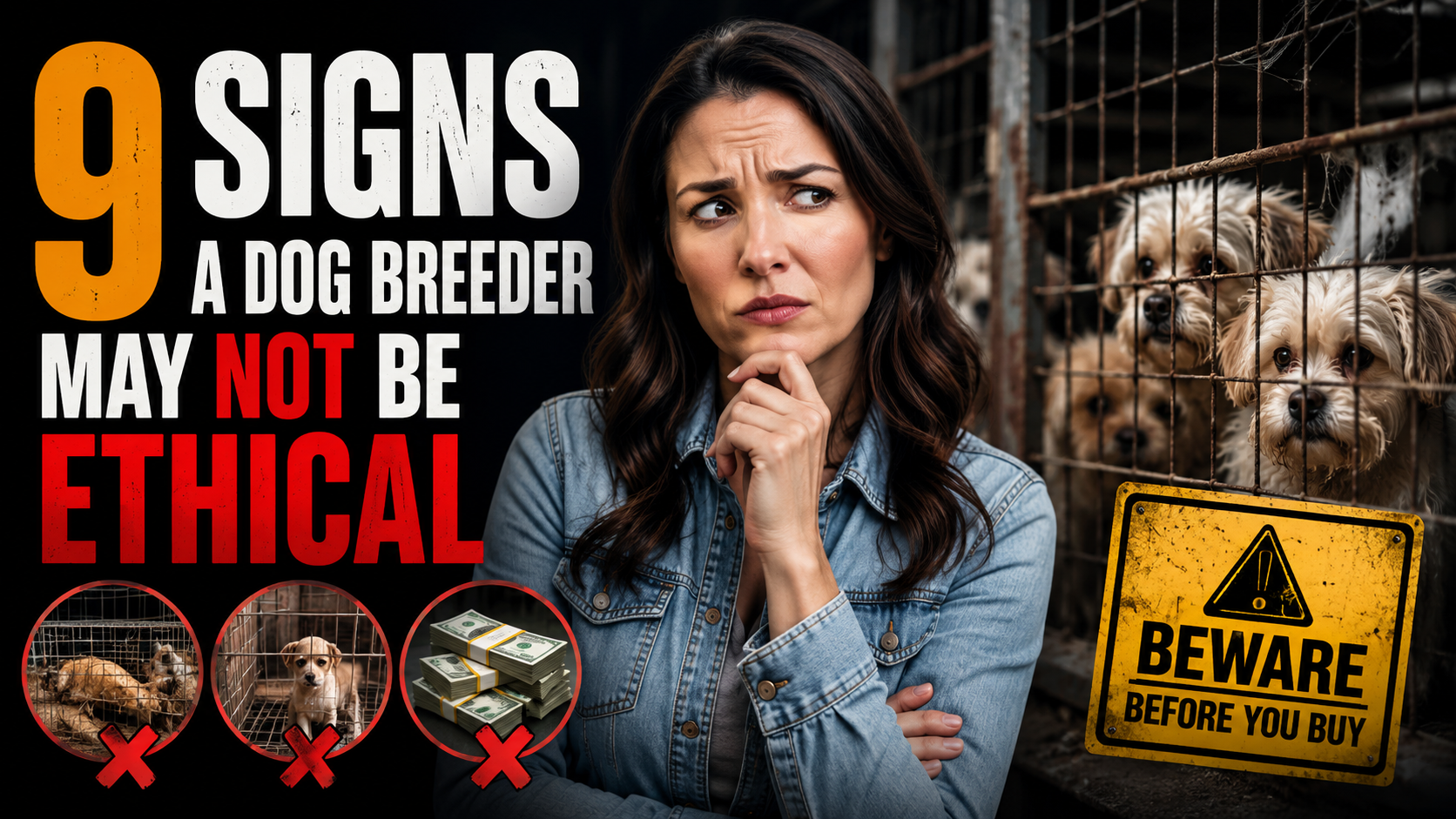
Here are nine important signs that a dog breeder may not be operating ethically.
1. The Breeder Refuses to Let You Visit the Facility
A trustworthy breeder is usually proud to show where their dogs live and grow.
One of the biggest warning signs is when a breeder refuses to allow in-person visits or continually makes excuses about why you cannot see the environment where the puppies are raised.
Ethical breeders understand that potential owners want to see the conditions firsthand. They are typically transparent about their practices and willing to answer questions.
If a breeder insists on meeting in parking lots, public places, or other locations away from their property, it may be a sign they are hiding poor living conditions.
Observing the environment can reveal a great deal about how animals are treated. Clean spaces, healthy dogs, and adequate room for exercise are all positive indicators.
2. Puppies Are Always Available
Responsible breeders carefully plan litters and often have waiting lists.
If a breeder seems to have multiple breeds available year-round or constantly advertises puppies ready for immediate purchase, it could indicate a volume-based operation rather than a quality-focused breeding program.
Ethical breeders generally limit the number of litters they produce to ensure each dog receives proper attention and care.
Breeding dogs continuously without sufficient recovery periods can negatively affect both the mothers and the puppies.
While availability alone doesn’t automatically signal a problem, a constant supply of puppies should encourage further investigation.
3. Health Records Are Missing or Incomplete
Health testing is one of the most important responsibilities of a reputable breeder.
Certain breeds are predisposed to specific genetic conditions. Ethical breeders conduct recommended health screenings and maintain detailed medical records for both parent dogs and puppies.
If a breeder cannot provide veterinary records, vaccination history, genetic testing results, or documentation of health screenings, buyers should proceed with caution.
Responsible breeders are typically eager to discuss health testing because it demonstrates their commitment to producing healthy animals.
A lack of transparency regarding medical history is a major red flag.
4. The Breeder Prioritizes Payment Over Questions
A good breeder wants to know as much about you as you want to know about them.
Ethical breeders often ask detailed questions about your lifestyle, living situation, experience with dogs, and plans for the puppy’s future. Their goal is to ensure each dog is placed in a suitable home.
An unethical breeder may focus almost entirely on payment.
If the conversation centers on deposits, pricing, and quick transactions while showing little interest in where the puppy will live, that can indicate profit is taking priority over animal welfare.
Responsible breeders care deeply about the long-term well-being of their dogs.
5. Puppies Appear Fearful, Sick, or Poorly Socialized
Puppies should generally appear curious, alert, and engaged with people.
While individual personalities vary, healthy puppies are typically active and responsive. Excessive fearfulness, lethargy, visible illness, poor grooming, or signs of neglect should raise concerns.
Early socialization plays a critical role in a dog’s emotional development. Puppies exposed to positive interactions with humans, sounds, and everyday experiences often adapt more easily to new environments.
Poor socialization can contribute to anxiety, fear-based behaviors, and adjustment difficulties later in life.
Pay close attention to how puppies interact with people and their surroundings.
6. The Breeder Offers No Contract or Health Guarantee
Responsible breeders usually provide written agreements outlining expectations for both parties.
These contracts often include health guarantees, vaccination records, spay or neuter agreements, return policies, and breeder responsibilities.
A breeder who offers no paperwork whatsoever may not be operating professionally.
While no breeder can guarantee a puppy will never experience health issues, ethical breeders often stand behind their breeding program and provide clear documentation.
Written agreements protect both buyers and animals.
The absence of formal paperwork may indicate a lack of accountability.
7. Parent Dogs Are Not Available for Observation
Meeting at least one parent—usually the mother—can provide valuable insight into a puppy’s future temperament and health.
Ethical breeders are often willing to introduce prospective owners to the mother dog and discuss her health history, personality, and breeding background.
If a breeder refuses to show the parents or claims they are unavailable without a reasonable explanation, buyers should ask additional questions.
Observing parent dogs can help identify potential behavioral concerns and reveal how adult dogs are treated within the breeding program.
Transparency regarding parent animals is generally a positive sign.
8. The Breeder Pressures You to Make a Quick Decision
Buying a puppy should never feel rushed.
Responsible breeders understand that choosing a dog is a significant commitment. They encourage thoughtful decision-making and are usually willing to answer questions over time.
Unethical breeders may use pressure tactics to speed up the sale.
Common warning signs include:
- Claims that multiple buyers are waiting immediately
- Pressure to send deposits without sufficient information
- Discouraging independent research
- Urging buyers to commit before meeting the puppy
A breeder focused on long-term welfare will prioritize finding the right home rather than closing a sale as quickly as possible.
Take your time and trust your instincts.
9. There Is Little Concern for the Dog’s Future
One of the clearest signs of an ethical breeder is their ongoing commitment to the animals they produce.
Many reputable breeders remain available for guidance long after the puppy goes home. They often provide training advice, health recommendations, and support throughout the dog’s life.
Some even require owners to return the dog if circumstances change rather than surrendering it to a shelter.
In contrast, unethical breeders may disappear once the transaction is complete.
If there is no discussion about long-term care, training, health, or future support, it may indicate the breeder views the puppy primarily as a product rather than a living animal.
A responsible breeder cares about where every puppy ends up.
Why Ethical Breeding Matters
Ethical breeding is about much more than producing puppies.
Responsible breeders invest significant time, money, and effort into maintaining healthy bloodlines, conducting health screenings, providing proper veterinary care, and ensuring puppies receive early socialization.
These practices help reduce the risk of inherited diseases, behavioral challenges, and welfare concerns.
When buyers support ethical breeders, they encourage higher standards throughout the industry and contribute to better outcomes for animals.
On the other hand, purchasing from irresponsible breeders can unintentionally support practices that prioritize profits over animal welfare.
Every purchasing decision has an impact.
Questions Every Puppy Buyer Should Ask
Before committing to a puppy, consider asking the breeder:
- What health tests were performed on the parents?
- Can I meet the mother dog?
- Where are the puppies raised?
- What veterinary care have the puppies received?
- How are puppies socialized?
- Do you provide a written contract?
- What happens if I can no longer keep the dog?
- Can you provide references from previous buyers?
The answers can reveal a great deal about the breeder’s priorities and practices.
Final Thoughts
Choosing a puppy is an emotional decision, but it should also be an informed one.
Ethical breeders work hard to provide healthy, well-adjusted dogs and ensure they are placed in loving homes. By learning to recognize warning signs, prospective owners can avoid supporting harmful breeding practices and make better choices for both themselves and their future pets.
A responsible breeder welcomes questions, values transparency, prioritizes animal welfare, and remains committed to the well-being of every dog they produce.
Taking the time to do your research today can lead to years of companionship, trust, and happiness with a healthy, well-cared-for dog tomorrow.







