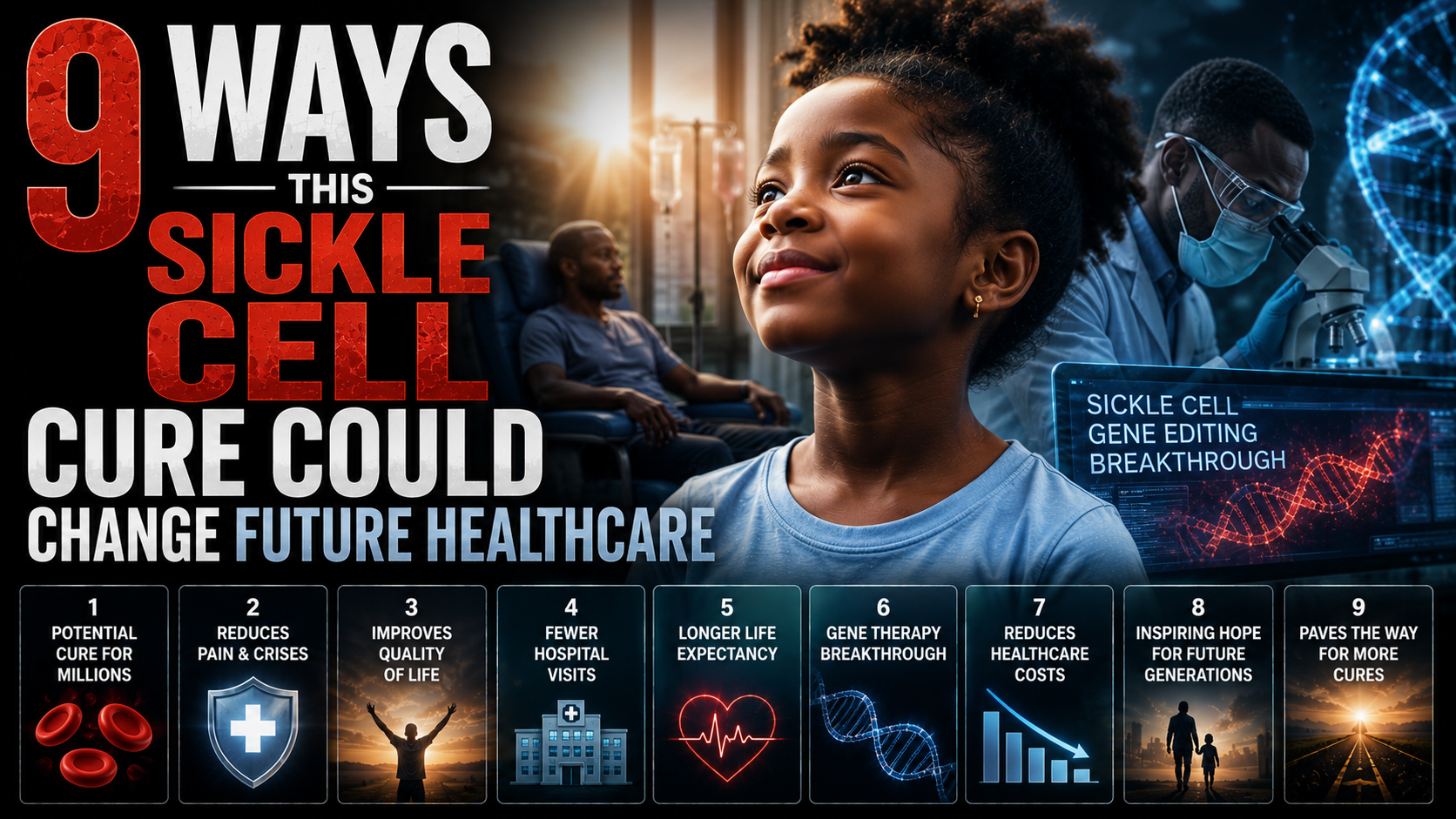
Sickle cell disease has long been one of the most challenging inherited blood disorders in modern medicine. It affects millions of people worldwide and often leads to chronic pain, organ complications, and reduced quality of life. For decades, treatment has focused mainly on managing symptoms rather than addressing the root cause.
Recent progress toward a potential cure is now reshaping how doctors, researchers, and patients think about the future. While still under study and refinement, these breakthroughs signal a turning point that could extend far beyond sickle cell itself.
Here are nine important ways a sickle cell cure could transform the future of healthcare.
1. Shifting Medicine From Treatment to Cure-Based Approaches
One of the biggest impacts would be a shift in medical philosophy.
Instead of lifelong symptom management, healthcare systems could increasingly focus on curing diseases at their source.
This would mark a major transformation in how chronic illnesses are approached globally.
2. Advancing Gene Therapy Technologies
Many of the most promising sickle cell treatments rely on gene-editing techniques such as CRISPR and advanced gene therapy.
Success in this area could accelerate similar treatments for other genetic conditions.
This includes disorders like cystic fibrosis, muscular dystrophy, and certain immune deficiencies.
3. Reducing Lifelong Healthcare Costs
Managing sickle cell disease requires ongoing treatments, hospital visits, and medications.
A successful cure could significantly reduce these long-term healthcare costs.
While initial treatments may be expensive, the long-term savings for families and healthcare systems could be substantial.
4. Improving Quality of Life for Patients
A cure would dramatically change daily life for patients living with sickle cell disease.
It could reduce or eliminate painful episodes known as crises, which often require emergency care.
This would allow individuals to live with fewer physical limitations and greater independence.
5. Expanding Research Into Rare Genetic Diseases
Scientific progress in one area often benefits many others.
A breakthrough in sickle cell treatment would likely encourage more investment in rare disease research.
This could lead to new discoveries and treatments for conditions that currently receive limited attention.
6. Increasing Focus on Early Genetic Screening
If cures become widely available, healthcare systems may place greater emphasis on early diagnosis.
Genetic screening could help identify at-risk individuals sooner.
Early intervention often leads to better outcomes and more effective treatment planning.
7. Reducing Health Inequality in Affected Populations
Sickle cell disease disproportionately affects people of African, Mediterranean, and South Asian descent.
A widely accessible cure could help reduce long-standing health disparities.
However, ensuring equitable access would be just as important as developing the treatment itself.
8. Encouraging Personalized Medicine
Gene-based treatments are highly individualized, tailored to each patient’s genetic makeup.
This approach reflects the growing trend toward personalized medicine in healthcare.
Future treatments may increasingly be designed based on a patient’s unique biological profile rather than a one-size-fits-all model.
9. Redefining What Is Possible in Modern Medicine
Perhaps the most profound impact is symbolic.
A successful cure for sickle cell disease would demonstrate that long-standing genetic conditions are no longer untouchable.
It would reshape public expectations of medical science and expand the boundaries of what researchers believe is possible.
The Science Behind the Breakthrough
Most current research focuses on modifying or replacing faulty genes responsible for producing abnormal hemoglobin.
By correcting this genetic mutation, red blood cells can function normally instead of forming the sickle shape that causes blockages and pain.
Techniques like CRISPR gene editing and bone marrow transplantation are central to these developments.
While still in clinical trials, early results have been highly encouraging.
Challenges That Still Need to Be Addressed
Despite the optimism, several challenges remain.
Accessibility is a major concern, as advanced treatments may initially be expensive and limited to specialized centers.
There are also long-term safety questions that require continued monitoring.
In addition, healthcare infrastructure must evolve to support widespread implementation.
A Turning Point in Medical History
If these treatments continue to progress successfully, sickle cell disease may become one of the first major genetic disorders to be routinely cured rather than managed.
This would represent a historic milestone in medicine, comparable to the development of antibiotics or vaccines.
It would also signal a broader shift toward precision-based, curative healthcare systems.
Final Thoughts
The potential cure for sickle cell disease represents more than a medical breakthrough—it represents a reimagining of what healthcare can achieve.
From reducing chronic suffering to advancing gene therapy and personalized medicine, its impact could extend far beyond one condition.
While challenges remain, the direction of research offers real hope.
In the coming years, this progress could redefine not only how sickle cell disease is treated, but how humanity approaches genetic illness as a whole.







