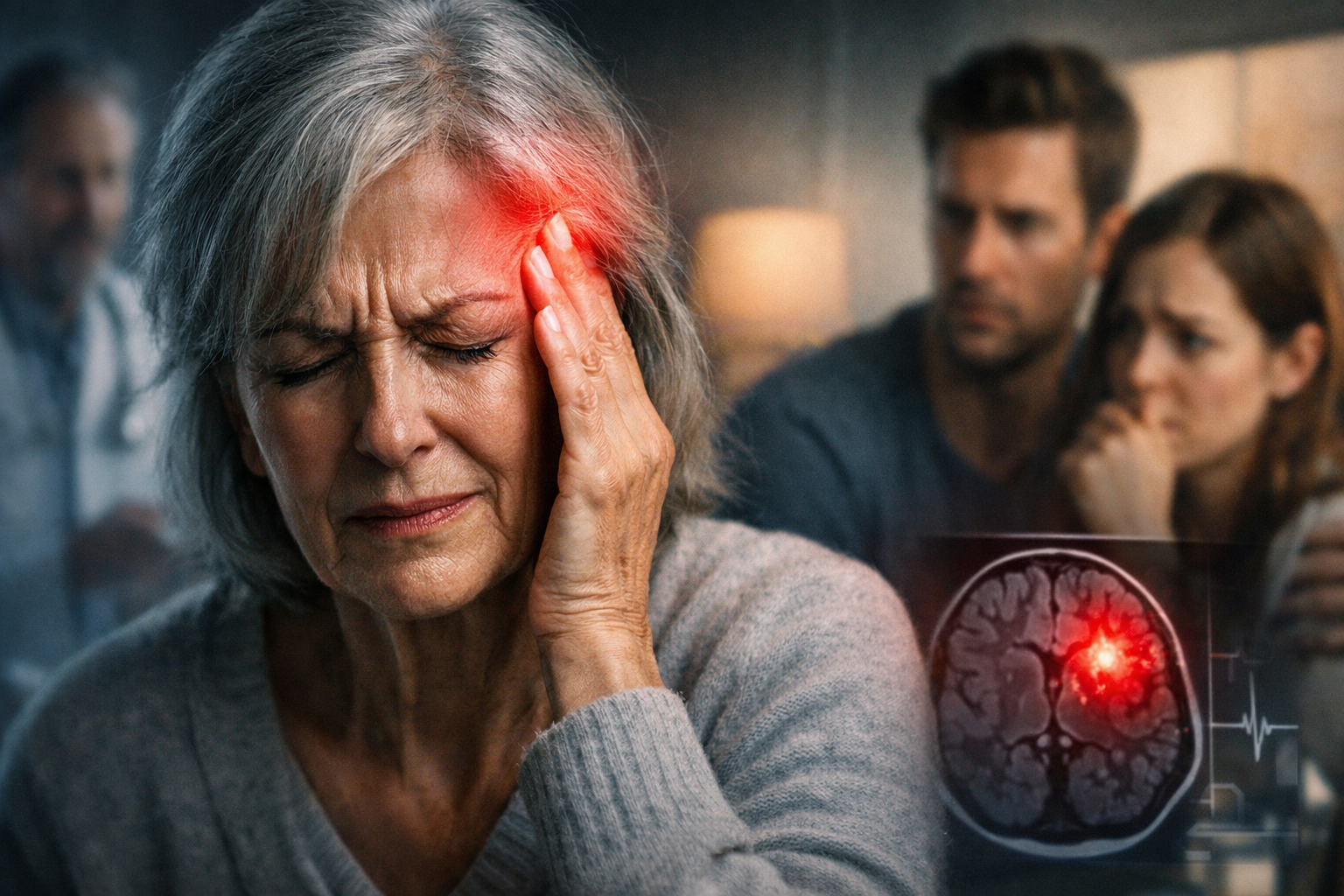
When people hear the word “stroke,” they often think of a major medical emergency that causes sudden paralysis or loss of speech. However, not all strokes present with dramatic symptoms. Some begin with subtle warning signs that disappear quickly, causing many people to ignore them.
A mini stroke, medically known as a transient ischemic attack (TIA), occurs when blood flow to part of the brain is temporarily blocked. Unlike a major stroke, the blockage is short-lived and symptoms usually resolve within minutes or hours. However, a TIA should never be dismissed.
Medical experts consider a mini stroke a serious warning sign. It can indicate an increased risk of a future stroke, making early recognition and treatment extremely important.
Because symptoms may come and go quickly, family members are often the first people to notice that something is wrong. Knowing what to look for could help save a life.
Here are seven mini stroke symptoms every family should recognize.
1. Sudden Weakness or Numbness on One Side of the Body
One of the most common signs of a mini stroke is sudden weakness or numbness affecting one side of the body.
A person may suddenly notice:
- Weakness in an arm or leg
- Difficulty lifting one arm
- Numbness in the face
- Tingling sensations on one side of the body
- A feeling that one side is “heavy”
In some cases, the symptoms are so mild that the person assumes they simply slept in an awkward position or pinched a nerve.
However, any sudden weakness affecting one side of the body should be treated as a medical emergency.
Even if the sensation disappears after a few minutes, immediate medical evaluation is necessary.
2. Facial Drooping
Changes in facial appearance can be one of the easiest symptoms for family members to spot.
A mini stroke may affect the muscles on one side of the face, causing:
- A drooping mouth
- Uneven smile
- Difficulty controlling facial expressions
- One eyelid appearing lower than the other
A simple test is to ask the person to smile.
If one side of the face appears uneven or does not move normally, seek emergency medical attention immediately.
Facial drooping is one of the key warning signs included in stroke awareness campaigns worldwide.
3. Sudden Difficulty Speaking
A person experiencing a mini stroke may suddenly struggle to communicate.
Speech-related symptoms can include:
- Slurred speech
- Difficulty forming words
- Speaking unusually slowly
- Using incorrect words
- Trouble understanding conversations
Sometimes the person knows exactly what they want to say but cannot get the words out correctly.
Family members may notice that their loved one suddenly sounds confused or has trouble following simple discussions.
Even if speech returns to normal quickly, this symptom requires urgent medical evaluation.
4. Vision Problems
Changes in vision can occur when a mini stroke affects areas of the brain responsible for processing visual information.
Symptoms may include:
- Blurred vision
- Double vision
- Sudden loss of vision in one eye
- Temporary blindness
- Difficulty focusing
Some people describe it as a curtain briefly falling over one eye.
Because vision changes can have many causes, people sometimes dismiss them as eye strain or fatigue.
However, sudden vision disturbances should never be ignored, especially when accompanied by other neurological symptoms.
5. Sudden Dizziness or Loss of Balance
Many people occasionally feel dizzy after standing too quickly or becoming dehydrated.
A mini stroke can produce a different type of dizziness.
Warning signs may include:
- Sudden loss of balance
- Difficulty walking
- Feeling unsteady on your feet
- Lack of coordination
- Unexpected falls
A person may appear clumsy or have trouble performing tasks that normally require little effort.
When dizziness appears suddenly and without a clear explanation, it may indicate a problem affecting the brain’s balance centers.
6. Severe Headache With No Known Cause
Although headaches are common and usually harmless, a sudden, severe headache can sometimes signal a serious neurological event.
People experiencing a mini stroke may report:
- An unusually intense headache
- Pain that develops suddenly
- A headache unlike any they have experienced before
- Head pain accompanied by confusion or vision changes
While headaches are more commonly associated with certain types of stroke than TIAs, any sudden and severe headache deserves prompt medical attention.
It’s especially important to seek help if the headache occurs alongside weakness, speech problems, or other neurological symptoms.
7. Brief Episodes of Confusion
Confusion is another symptom that can be easy to overlook.
A person experiencing a mini stroke may suddenly:
- Seem disoriented
- Have trouble understanding instructions
- Forget familiar information
- Appear mentally “foggy”
- Struggle to answer simple questions
Because these episodes may last only a short time, family members sometimes assume the person was distracted or tired.
However, temporary confusion can be a sign that blood flow to the brain has been interrupted.
Any sudden change in mental clarity should be taken seriously.
Why a Mini Stroke Should Never Be Ignored
One of the biggest dangers of a mini stroke is that symptoms often disappear quickly.
Many people assume that because they feel better, the problem has resolved itself.
Unfortunately, this can be a dangerous misconception.
A mini stroke serves as a warning that a larger stroke may occur in the future.
Research shows that the risk of a major stroke is significantly higher in the days and weeks following a TIA.
Prompt medical evaluation allows doctors to identify risk factors and begin treatments that may help prevent a more serious event.
Remember the FAST Warning Signs
Healthcare professionals often use the FAST acronym to help people recognize stroke symptoms quickly:
F — Face Drooping
Ask the person to smile. Does one side droop?
A — Arm Weakness
Ask them to raise both arms. Does one arm drift downward?
S — Speech Difficulty
Is speech slurred or difficult to understand?
T — Time to Call Emergency Services
If any of these symptoms occur, seek emergency medical help immediately.
Even if symptoms disappear, emergency evaluation remains essential.
Risk Factors for Mini Strokes and Strokes
Several factors can increase the likelihood of experiencing a TIA or stroke, including:
- High blood pressure
- Diabetes
- Smoking
- High cholesterol
- Obesity
- Heart disease
- Irregular heart rhythms such as atrial fibrillation
- Family history of stroke
- Lack of physical activity
Managing these risk factors can significantly reduce the chances of future strokes.
Regular checkups and healthy lifestyle choices play an important role in prevention.
What to Do If You Suspect a Mini Stroke
If someone develops any stroke-like symptoms:
- Call emergency services immediately.
- Note the time symptoms began.
- Do not wait for symptoms to disappear.
- Keep the person safe and comfortable.
- Follow emergency medical instructions.
Time is critical when dealing with stroke symptoms. Early treatment can reduce the risk of long-term damage and improve outcomes.
Final Thoughts
A mini stroke may be temporary, but its message is serious. It often serves as the body’s warning that a more significant stroke could occur in the future.
Recognizing symptoms such as facial drooping, weakness, speech difficulties, vision changes, dizziness, confusion, and sudden severe headaches can help families act quickly when every minute matters.
The most important thing to remember is this: never ignore symptoms simply because they disappear. A mini stroke is a medical emergency that requires immediate attention.
Knowing these warning signs and responding promptly could make all the difference for someone you love.







