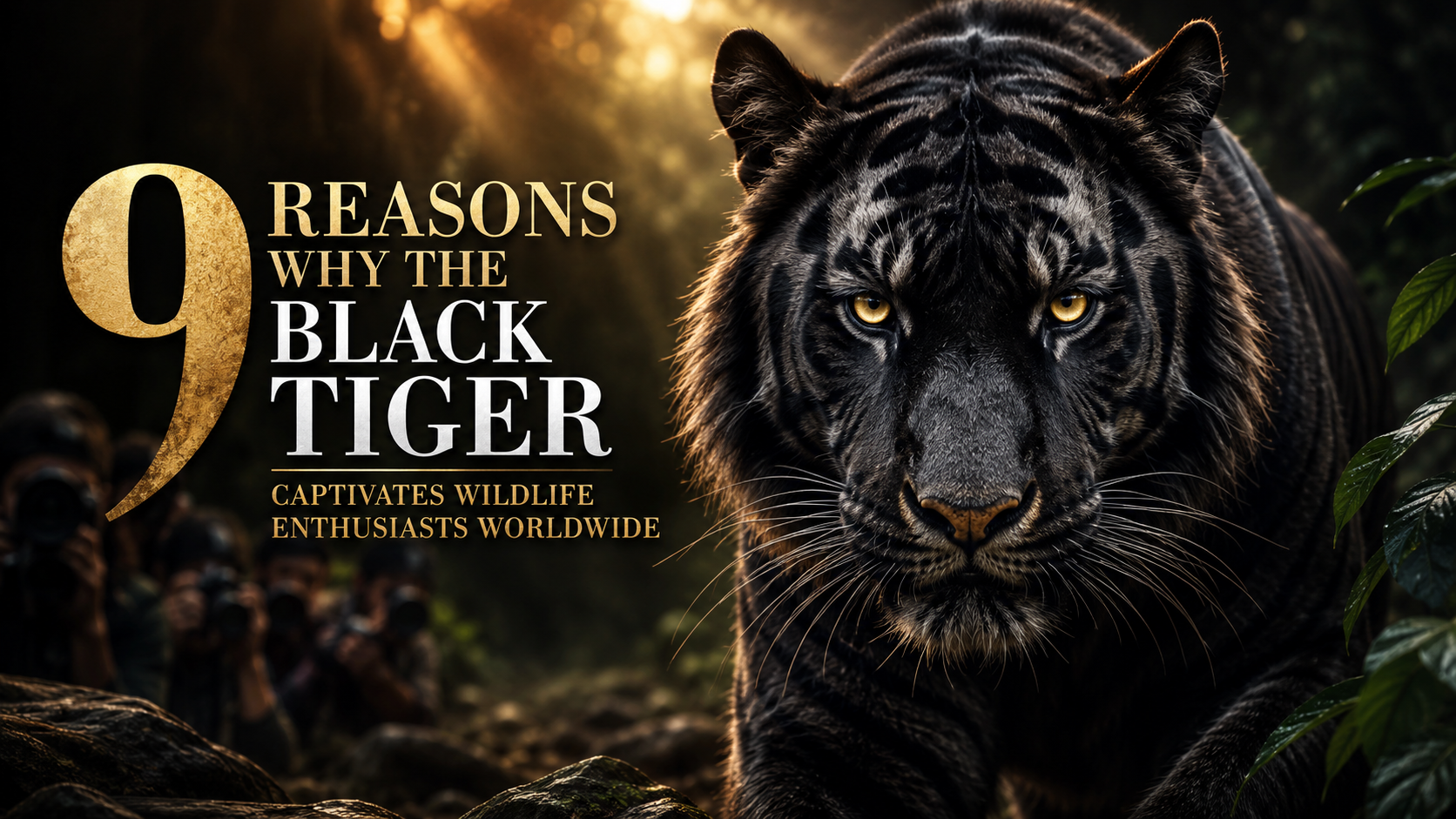
Few animals inspire awe quite like the tiger. As one of the world’s most iconic predators, the tiger has long symbolized strength, beauty, and mystery. Yet among all tiger variations, one stands out as particularly fascinating: the black tiger. With its unusually dark appearance and striking pattern, this rare big cat has become a source of intrigue for wildlife enthusiasts, photographers, researchers, and conservationists around the globe.
Unlike mythical creatures or legendary beasts, black tigers are real. However, they are exceptionally rare, making every confirmed sighting a major event in the wildlife world. Their unusual coloration, limited distribution, and connection to genetic diversity have only added to their allure.
Here are nine reasons why the black tiger continues to captivate wildlife enthusiasts worldwide.
1. Its Appearance Is Unlike Any Other Tiger
The first thing people notice about a black tiger is its extraordinary coat pattern.
Despite the name, black tigers are not completely black. Instead, they typically display unusually broad, dark stripes that merge together, giving the animal a much darker appearance than a typical tiger.
In some individuals, the stripes are so thick that only small patches of the usual orange background remain visible. The result is a dramatic and visually stunning look that immediately sets these animals apart.
For many observers, seeing a black tiger feels like encountering an entirely different subspecies.
2. They Are Extremely Rare
Rarity is one of the biggest reasons black tigers attract so much attention.
Unlike the more familiar orange-and-black striped tiger, black tigers have been documented only in a limited number of cases. Most confirmed sightings have come from specific regions where unique genetic conditions have allowed the trait to appear more frequently.
Because they are so uncommon, photographs and videos of black tigers often generate worldwide interest.
The simple possibility of spotting one in the wild is enough to excite even experienced wildlife observers.
3. Their Coloration Is the Result of a Genetic Variation
The black tiger’s appearance is linked to a rare genetic trait known as pseudomelanism.
Pseudomelanism differs from true melanism, which results in an animal becoming almost entirely dark. In black tigers, the condition causes the stripes to become unusually wide and closely spaced.
Scientists study this trait because it offers valuable insights into genetics, inheritance, and population dynamics within wild tiger populations.
The phenomenon serves as a fascinating example of how small genetic changes can create dramatic visual differences.
4. They Highlight Nature’s Diversity
Wildlife enthusiasts are often drawn to examples of nature’s incredible variety.
The black tiger demonstrates how diverse animal populations can be, even within a single species. Variations in color, pattern, size, and behavior remind us that nature rarely follows a single blueprint.
Every black tiger represents a unique expression of genetic diversity.
For many people, that individuality makes the animal even more captivating.
5. They Are Closely Associated With a Specific Region
Most confirmed black tiger sightings have come from parts of eastern India, particularly from protected habitats where tiger populations have been carefully monitored.
This geographic connection has turned certain reserves into important destinations for wildlife researchers and photographers hoping to glimpse one of these rare cats.
The association with a particular landscape adds an element of mystery and exclusivity to the black tiger’s story.
It also highlights the importance of preserving habitats that support unique wildlife populations.
6. They Are a Photographer’s Dream
Wildlife photographers spend years searching for rare and extraordinary subjects.
A black tiger ranks among the most coveted sightings in the world of wildlife photography. Its dramatic coat pattern creates stunning visual contrast, especially when photographed against forest backgrounds.
Because sightings are so uncommon, a successful image often represents a once-in-a-lifetime achievement.
Photographs of black tigers frequently attract global attention and become valuable tools for conservation awareness.
7. They Inspire Scientific Research
The black tiger is more than a visual curiosity.
Scientists are interested in understanding how and why the trait occurs, what it reveals about genetic diversity, and how isolated populations influence the appearance of rare characteristics.
Research involving black tigers contributes to broader studies of wildlife genetics and conservation biology.
By examining these animals, researchers gain insights that can help protect tiger populations as a whole.
8. They Strengthen Conservation Awareness
Rare animals often become powerful ambassadors for conservation.
The black tiger’s unusual appearance naturally attracts public interest, creating opportunities to discuss habitat protection, biodiversity, and the challenges facing wild tigers.
Many people who first learn about black tigers become interested in broader conservation efforts aimed at protecting forests and endangered species.
In this way, the animal serves as a gateway to greater environmental awareness.
9. They Represent the Wild’s Remaining Mysteries
Despite advances in science and technology, nature still holds surprises.
The black tiger reminds us that the natural world remains full of discoveries waiting to be made. Even among one of the most studied big cats on Earth, rare traits continue to emerge and challenge our understanding.
For wildlife enthusiasts, this sense of mystery is part of the appeal.
The existence of black tigers suggests there is still much to learn about the creatures that share our planet.
What Exactly Is a Black Tiger?
A black tiger is not a separate species or subspecies.
It is generally a tiger exhibiting pseudomelanism, a rare genetic condition that causes the dark stripes to become unusually enlarged and closely packed. This gives the animal a darker overall appearance while still retaining the characteristic tiger pattern.
Most documented examples have involved members of the Bengal tiger population.
Although visually striking, black tigers remain biologically part of the same species as other tigers.
Are Black Tigers Truly Black?
Not entirely.
The term “black tiger” can be misleading because these animals are usually not solid black. Instead, their expanded stripes dominate much of the coat, creating the illusion of a nearly black animal from a distance.
Up close, the familiar orange background coloration is still present, though often reduced to narrow patches between the dark markings.
This distinctive appearance is what makes them so recognizable and sought after.
Why Are They So Rare?
Several factors contribute to the rarity of black tigers.
The genetic trait responsible for pseudomelanism is uncommon and tends to appear only under specific circumstances. In some populations, limited genetic diversity may increase the likelihood of the trait being expressed.
Because wild tiger populations are relatively small compared to many other species, unusual genetic characteristics can become concentrated in certain regions.
This combination of genetics and geography helps explain why black tigers remain such an uncommon sight.
The Conservation Importance of Tigers
Whether orange or black, all tigers play a crucial role in their ecosystems.
As apex predators, they help regulate prey populations and maintain ecological balance. Healthy tiger populations often indicate healthy forests that support countless other species.
Protecting tiger habitats benefits entire ecosystems, not just the tigers themselves.
The fascination surrounding black tigers can therefore help draw attention to broader conservation goals.
Conclusion
The black tiger captivates wildlife enthusiasts worldwide because it combines rarity, beauty, mystery, and scientific significance in a single extraordinary animal. Its dramatic appearance immediately captures attention, while its genetic uniqueness provides valuable insights into the complexity of nature.
From inspiring photographers and researchers to promoting conservation awareness, the black tiger serves as a powerful reminder of the diversity and wonder that still exist in the wild. As long as these elusive cats continue to roam protected forests, they will remain one of the most fascinating and sought-after sights in the natural world.