Survival in the wild is never guaranteed. For predators, success often depends on speed, strength, sharp eyesight, and the ability to react instantly to danger. That’s why stories involving animals that overcome physical challenges tend to capture so much attention. They remind us that nature is often more adaptable and resilient than we imagine.
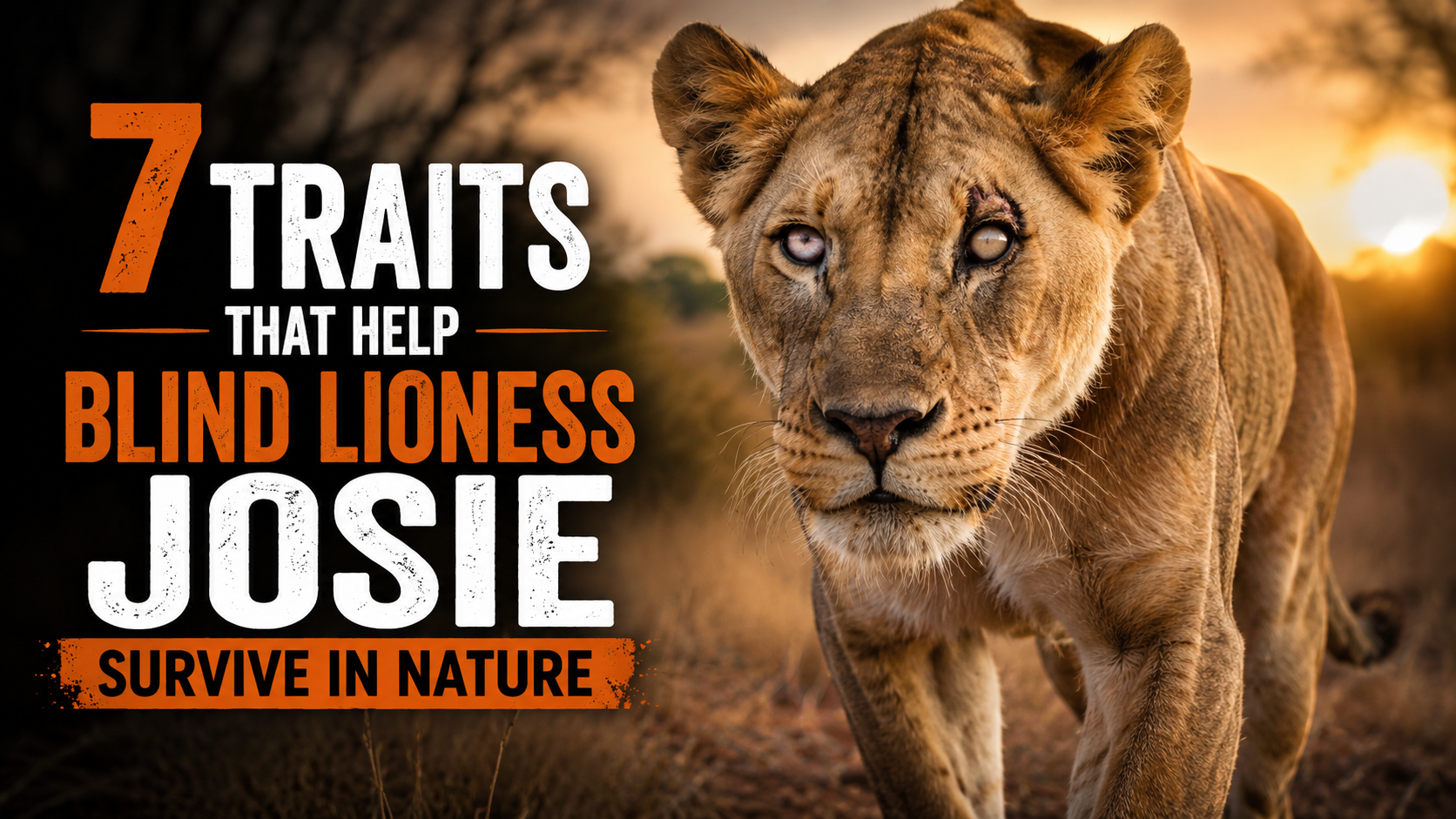
Among the most inspiring examples is the story of a blind lioness known as Josie. While lions typically rely heavily on vision for hunting, navigation, and social interaction, a lioness facing blindness must find alternative ways to thrive. Her ability to adapt demonstrates the remarkable survival instincts that many wild animals possess.
Blindness creates obvious challenges in an environment where every decision can affect survival. Yet animals are often capable of compensating for lost abilities by relying more heavily on other senses, learned behaviors, and social support.
What allows a blind lioness like Josie to continue functioning despite such a significant obstacle? Several key traits may play a role. Together, they highlight the incredible adaptability found throughout the animal kingdom.
Here are seven traits that can help a blind lioness survive and navigate life in the wild.
1. An Extraordinary Sense of Hearing
When vision becomes limited or unavailable, hearing often becomes one of the most important tools for survival.
Lions already possess highly developed hearing abilities. Their ears can detect subtle sounds from considerable distances, allowing them to locate prey, identify threats, and communicate with pride members.
For a blind lioness, hearing becomes even more critical.
The rustle of grass, distant calls from other animals, approaching footsteps, and vocal signals from pride members provide valuable information about the surrounding environment. Over time, increased reliance on sound can help compensate for the loss of visual cues.
Many animals demonstrate an impressive ability to sharpen their attention to sounds when vision is impaired.
2. A Powerful Sense of Smell
While lions are not known primarily for their sense of smell, scent still plays a major role in their daily lives.
A blind lioness can use scent to recognize familiar pride members, locate territory boundaries, identify prey species, and detect potential dangers.
Every environment contains a rich collection of scent information that sighted humans rarely notice.
By interpreting these scent cues, a lioness can develop a detailed understanding of her surroundings. Smell helps create a mental map that supports navigation and decision-making.
In many ways, the nose becomes an alternative guide through the landscape.
3. Strong Spatial Memory
Animals often remember far more about their environments than people realize.
Lions become familiar with watering holes, resting areas, travel routes, and hunting grounds through repeated experience. This knowledge forms a mental map that remains useful even when visual information is unavailable.
A blind lioness who has spent years within a territory may continue moving confidently through familiar locations because she already understands the layout.
Memory allows her to anticipate obstacles, recognize landmarks through scent or sound, and navigate efficiently.
This ability to remember and adapt is one of nature’s most valuable survival tools.
4. Exceptional Resilience
Physical abilities alone do not determine survival.
Resilience—the capacity to adapt after setbacks—is equally important.
Animals face challenges constantly, including injuries, environmental changes, food shortages, and competition. Those that survive often demonstrate remarkable persistence.
A lioness coping with blindness must continually adjust her behavior and learn new ways to accomplish essential tasks. This process requires flexibility and determination.
Her ability to keep functioning despite a major limitation highlights a level of resilience that many people find inspiring.
Nature often rewards adaptability as much as strength.
5. Strong Social Bonds Within the Pride
Unlike many large predators, lions are highly social animals.
Living in a pride provides advantages that solitary hunters do not enjoy. Group members cooperate during hunting, defend territory together, and help raise cubs.
For a blind lioness, social relationships can be especially important.
The presence of familiar companions may offer protection and support in situations where vision would normally be helpful. Pride members communicate through vocalizations, scent marking, and physical interactions, allowing coordination even without sight.
Strong social bonds can significantly improve an individual’s chances of survival.
The collective strength of the group often compensates for challenges faced by individual members.
6. Heightened Awareness of Environmental Cues
Survival frequently depends on noticing small details.
Changes in wind direction, shifts in animal behavior, unfamiliar sounds, and subtle vibrations can all provide valuable information about the environment.
A blind lioness may become particularly skilled at interpreting these nonvisual signals.
Rather than relying primarily on sight, she learns to gather information from multiple sources simultaneously. This heightened awareness helps her respond effectively to changing conditions.
Many wildlife experts observe that animals often develop impressive compensatory behaviors when one sense becomes impaired.
The result is an alternative form of environmental awareness that can be surprisingly effective.
7. Instincts Refined Over Generations
Perhaps the most important survival trait is one shared by lions everywhere: instinct.
Millions of years of evolution have equipped lions with behaviors that support hunting, communication, territory defense, and social interaction.
These instincts remain active regardless of physical challenges.
Even when blindness creates obstacles, deeply ingrained behavioral patterns continue guiding decision-making. Instinct helps determine when to rest, when to move, how to respond to threats, and how to interact with pride members.
Combined with experience and adaptation, these natural behaviors provide a powerful foundation for survival.
How Animals Adapt to Physical Challenges
Stories involving animals with disabilities often surprise people because they challenge assumptions about survival.
Humans tend to view physical impairments through our own experiences. Yet animals frequently respond differently. Rather than focusing on limitations, they adapt to new circumstances using whatever abilities remain available.
Researchers have documented numerous examples of wildlife surviving despite injuries, missing limbs, impaired vision, or other challenges.
While these situations are never easy, they demonstrate the remarkable flexibility built into many species.
Adaptation is one of the most important forces in nature.
Why Lionesses Are Remarkably Resourceful
Lionesses play a central role in pride life.
They are skilled hunters, attentive mothers, and experienced navigators within their territories. Their intelligence and social behavior contribute significantly to the success of the pride.
These qualities make lionesses particularly capable of adapting to unexpected circumstances.
Problem-solving, cooperation, and environmental awareness all enhance their ability to respond to challenges.
A lioness facing blindness may struggle in ways that sighted individuals do not, but her natural strengths provide valuable tools for overcoming obstacles.
The Power of Social Animals
One reason lions are unique among big cats is their reliance on cooperation.
Many predators hunt and live alone, making injuries or disabilities especially dangerous. Lions benefit from group living, which creates opportunities for support and protection.
The social nature of lion prides demonstrates an important principle found throughout nature: cooperation can increase resilience.
Whether defending territory, raising cubs, or responding to challenges, working together often improves survival outcomes.
This social structure may help explain why some individuals are able to continue thriving despite significant physical limitations.
Lessons From Josie’s Story
Stories like Josie’s resonate because they highlight qualities people admire—perseverance, adaptability, courage, and resilience.
Although wild animals do not think about adversity in the same way humans do, their responses often reveal extraordinary determination. Rather than giving up when circumstances change, they adjust and continue moving forward.
These examples remind us that survival is not always about being the strongest or fastest.
Sometimes it is about learning new ways to succeed.
Final Thoughts
A blind lioness faces challenges that few animals would choose, yet nature is filled with examples of remarkable adaptation. Through keen hearing, a strong sense of smell, reliable memory, resilience, social support, environmental awareness, and powerful instincts, a lioness like Josie can continue navigating a world that many would assume impossible to survive.
Her story serves as a powerful reminder that strength comes in many forms. In the wild, survival is not solely determined by physical perfection. Often, it is shaped by adaptability, persistence, and the ability to make the most of every available advantage.
And sometimes, those qualities prove far more powerful than eyesight alone.