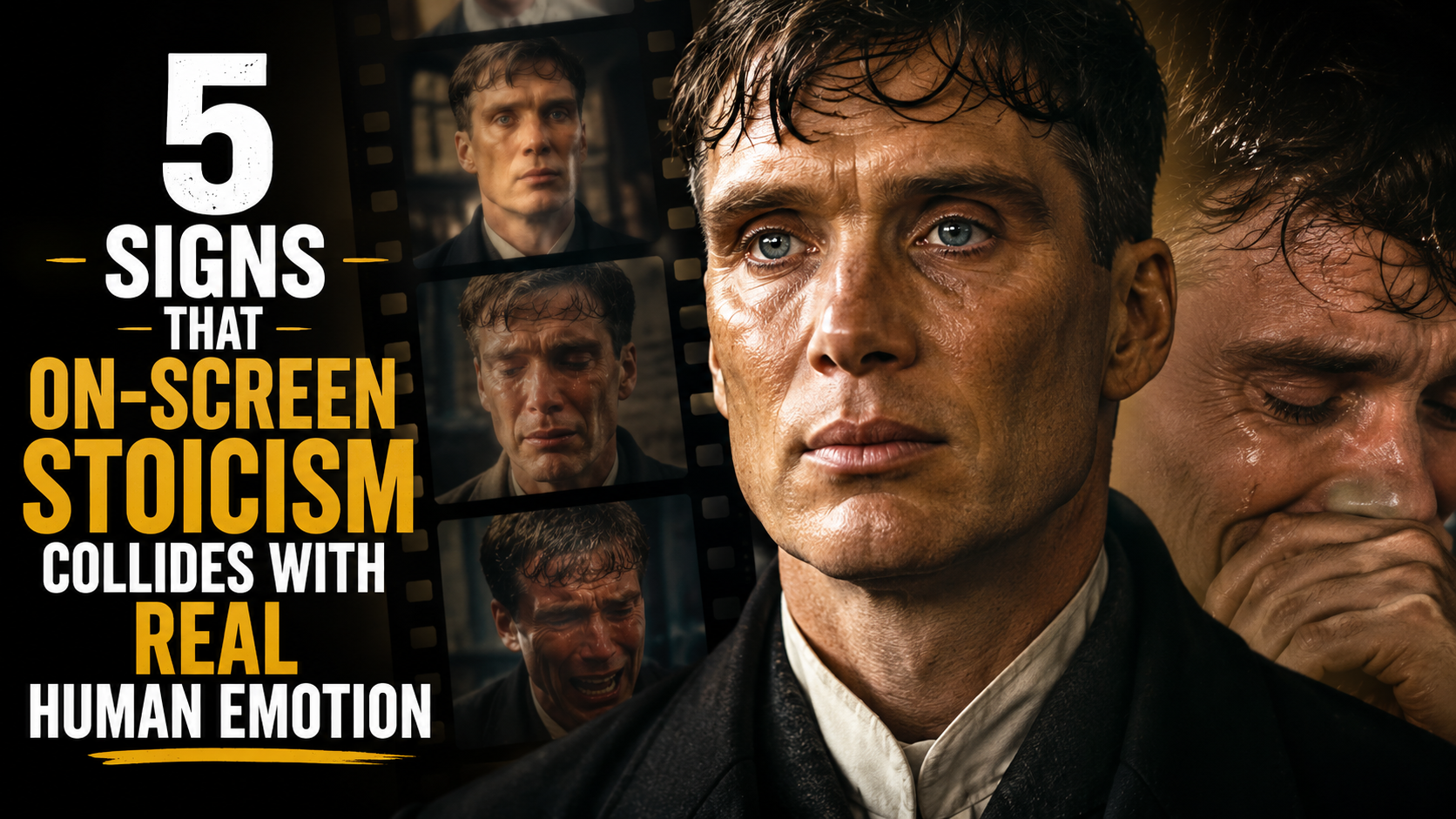
In film and television, stoic characters have long held a special place. They are the calm ones in chaos, the quiet thinkers, the emotionally restrained figures who rarely show what they feel. From action heroes to detectives, historical figures to modern antiheroes, stoicism is often portrayed as strength, discipline, and control.
But audiences are becoming more emotionally aware. Viewers now pay closer attention to what lies beneath the surface of these characters. And increasingly, we notice something interesting: even the most stoic on-screen personas eventually collide with real human emotion.
No matter how controlled a character appears, emotional depth tends to break through in subtle, powerful ways. These moments often become the most memorable parts of a story because they reveal something universal—no one is entirely untouched by emotion.
Here are five clear signs that on-screen stoicism begins to crack and reveal genuine human feeling underneath.
1. Micro-Expressions That Reveal Hidden Emotion
One of the most powerful storytelling tools in film is the close-up.
Stoic characters are often written and performed to maintain a composed exterior, but the camera rarely misses what the body tries to hide. A slight tightening of the jaw, a flicker in the eyes, or a brief pause before speaking can reveal emotional tension beneath a calm surface.
These micro-expressions are often unintentional yet deeply meaningful. They suggest that something is happening internally that the character is not fully expressing outwardly.
Actors skilled in subtle performance use these moments to communicate entire emotional arcs without dialogue.
When stoicism meets real emotion, it often appears first in these small, almost invisible details.
The audience may not consciously notice them at first, but they feel them instinctively.
2. Silence That Feels Heavy Rather Than Empty
Silence is often associated with stoic characters.
They don’t always speak much, and when they do, their words are usually measured and precise. However, there is a distinct difference between simple silence and emotionally charged silence.
When stoicism begins to give way to real emotion, silence changes its weight.
It no longer feels neutral or calm. Instead, it becomes heavy, charged, and meaningful. It suggests that something unspoken is pressing against restraint.
This type of silence often appears after a traumatic event, a personal loss, or a difficult moral decision. The character is not simply choosing not to speak—they are struggling with what they cannot say.
In storytelling, this shift in silence often signals emotional transformation more effectively than dialogue ever could.
3. Physical Control Starts to Slip Under Pressure
Stoic characters are typically defined by physical control.
They stand still in tense situations, maintain steady breathing, and avoid visible emotional reactions. Their bodies are portrayed as disciplined extensions of their mindset.
However, when real emotion enters the scene, physical control often begins to break down in subtle ways.
Hands may tremble slightly. Posture may soften. Breathing may become uneven. A character who once moved with precision might hesitate or freeze for a moment longer than usual.
These changes are rarely dramatic, but they are significant.
They show that emotional pressure is no longer contained entirely within the mind—it is beginning to affect the body.
This physical unraveling often marks the transition from emotional suppression to emotional acknowledgment.
4. Moments of Unplanned Honesty in Dialogue
Stoic characters are known for careful speech. Their words are often deliberate, minimal, and controlled.
But when emotional barriers begin to weaken, dialogue can shift in noticeable ways.
A character might accidentally reveal more than intended. Their voice may crack slightly, or they may use words that contradict their usual restraint. In some cases, they may even struggle to complete a sentence.
These moments of unplanned honesty are powerful because they feel authentic.
They suggest that the character is no longer fully filtering their emotions through logic or discipline. Instead, something real is breaking through the surface.
Writers often use these moments to expose vulnerability without fully abandoning the character’s established personality.
The result is a layered portrayal that feels more human and relatable.
5. Emotional Choices Replace Logical Behavior
Stoic characters are often defined by rational decision-making.
They weigh consequences, avoid impulsive actions, and prioritize control over reaction. But when emotional intensity increases, decision-making can shift dramatically.
Instead of choosing what is strategically best, the character may begin to act based on feeling—protecting someone out of love, making sacrifices driven by guilt, or taking risks that defy their usual logic.
These emotional choices signal a turning point in the narrative.
They reveal that beneath the disciplined exterior, the character is still deeply human. Emotion, once suppressed, begins to guide action more strongly than reason.
This shift often marks a major character development moment in storytelling.
Why Stoic Characters Are So Compelling
Stoicism in storytelling works because it creates contrast.
A calm exterior invites curiosity. Viewers naturally wonder what lies beneath a controlled expression. This tension builds anticipation, making emotional breakthroughs more impactful when they finally occur.
Stoic characters also reflect real human behavior. Many people in real life suppress emotions in difficult situations, choosing composure over expression. This makes on-screen stoicism relatable on a deeper level.
However, what truly captivates audiences is not the stoicism itself, but its eventual breakdown.
When emotional truth emerges, it feels earned. It reflects the idea that no matter how much someone tries to suppress their feelings, emotion eventually finds a way to surface.
The Role of Acting in Portraying Emotional Conflict
Bringing stoic characters to life requires a high level of skill from actors.
Because these roles often involve minimal dialogue and restrained expression, performers must rely heavily on subtle physical cues and timing.
The most effective portrayals balance control with vulnerability. An actor must maintain the illusion of emotional distance while allowing glimpses of internal conflict to emerge.
This duality is what makes stoic performances so compelling.
Audiences are not simply watching what the character says—they are watching what the character is trying not to show.
When Stoicism Becomes Emotional Suppression
In storytelling, stoicism is sometimes mistaken for emotional absence.
However, most stoic characters are not emotionless. Instead, they are emotionally restrained. This distinction is important.
Emotional suppression creates internal conflict, which is often more interesting narratively than open emotional expression.
The longer a character suppresses their feelings, the more powerful the eventual release becomes.
This buildup is what gives stoic arcs their emotional weight.
When the suppression finally breaks, the result is often a defining moment in the story.
Why Audiences Connect With These Moments
Viewers are drawn to emotional authenticity.
Even in fictional settings, people can recognize when something feels real. A character who finally breaks their emotional silence often resonates because it mirrors human experience.
Everyone has moments of restraint, internal conflict, or emotional pressure. Watching those experiences reflected on screen creates a sense of connection.
Stoic characters remind audiences that strength and vulnerability are not opposites—they often coexist.
The Balance Between Control and Emotion
The most memorable characters are not purely stoic or purely emotional.
Instead, they exist in a balance between the two. Their strength lies in their ability to control emotion while still being affected by it.
This tension is what makes them compelling.
When control begins to slip, even briefly, it reveals depth that audiences find meaningful and relatable.
These moments remind us that emotional restraint is not the absence of feeling—it is the effort to manage it.
Final Thoughts
Stoic characters continue to play an important role in storytelling because they reflect a familiar human struggle: the desire to stay composed while dealing with intense internal emotion.
However, what truly makes these characters unforgettable are the moments when that control begins to fade.
Through subtle expressions, weighted silence, physical shifts, unplanned honesty, and emotionally driven decisions, we see the collision between restraint and feeling.
And in that collision, something powerful emerges: a reminder that beneath even the most controlled exterior, real human emotion is always present, waiting for the right moment to surface.







