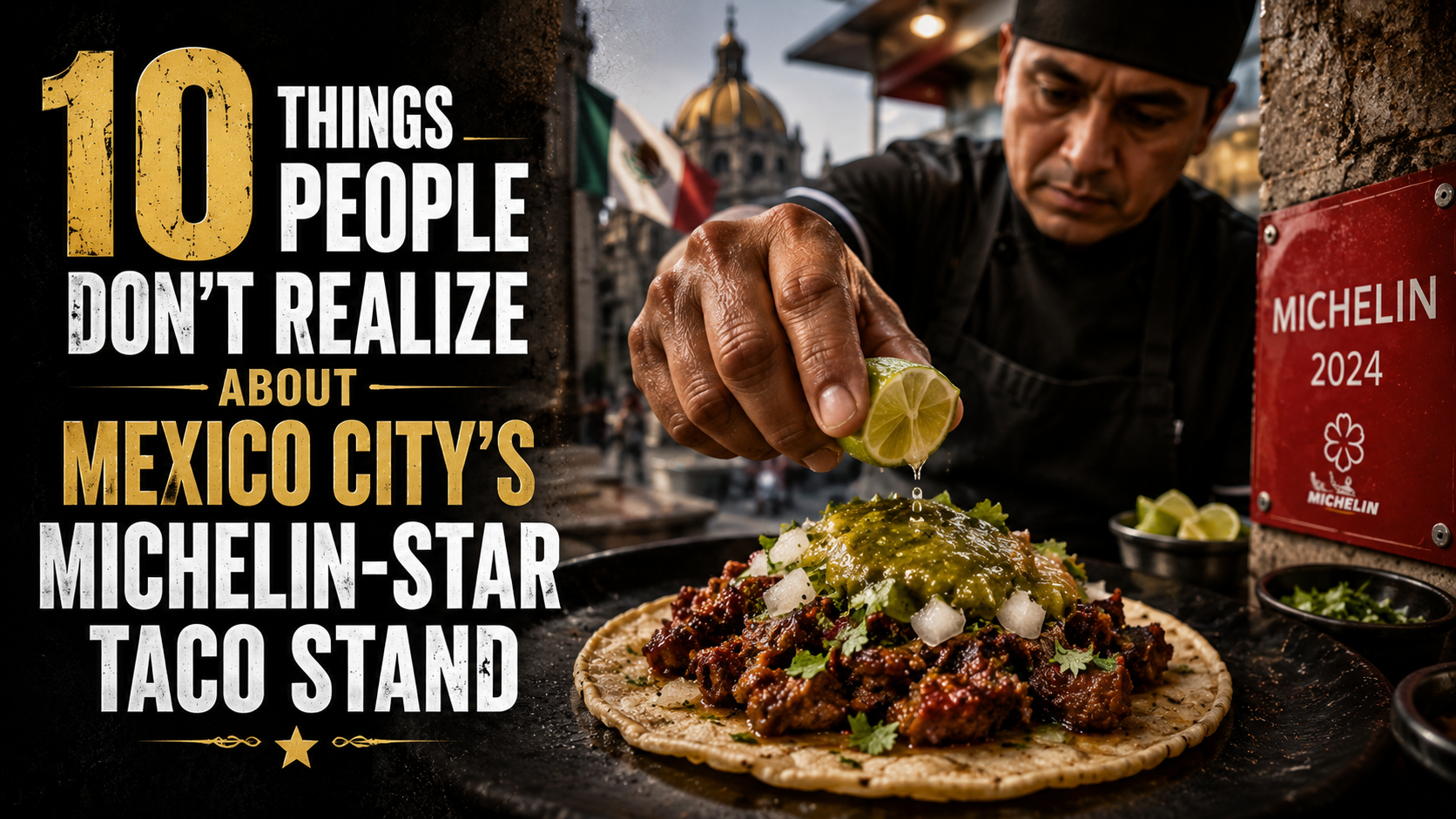
When people think of Michelin-starred dining, they often imagine elegant tasting menus, white tablecloths, and months-long reservation lists. The Michelin Guide has traditionally been associated with fine dining experiences where chefs create intricate dishes that can take hours to prepare.
That’s why the news of a humble taco stand in Mexico City earning a Michelin star captured worldwide attention.
For many food lovers, the achievement felt groundbreaking. Here was a small, unpretentious street-food spot receiving the same type of recognition often reserved for some of the world’s most exclusive restaurants. The award challenged long-held assumptions about what fine dining should look like and reminded people that extraordinary food can come from the simplest places.
Yet beyond the headlines, there’s much more to the story. The taco stand’s success is about craftsmanship, consistency, tradition, and a deep respect for ingredients. It also highlights the growing global appreciation for authentic Mexican cuisine and the skilled cooks who preserve it.
Here are 10 things many people don’t realize about Mexico City’s Michelin-star taco stand.
1. The Michelin Star Wasn’t About Luxury
One of the biggest misconceptions surrounding Michelin stars is that they reward luxury.
In reality, Michelin inspectors focus primarily on the quality of the food. Factors such as ingredient selection, cooking technique, consistency, and flavor matter far more than expensive décor or elaborate presentation.
That’s why a taco stand can earn the same recognition as a high-end restaurant.
The award wasn’t given because the stand reinvented tacos or created a theatrical dining experience. It was awarded because the food itself reached an exceptional standard.
This distinction is important because it reinforces a central idea of the Michelin Guide: great cooking can happen anywhere.
Whether served on fine china or wrapped in paper, outstanding food remains outstanding food.
2. Simplicity Can Be Harder Than Complexity
Many people assume complicated dishes require the most skill.
Professional chefs often disagree.
Creating a dish with dozens of ingredients can sometimes hide mistakes. A taco, however, leaves very little room for error.
When a recipe relies on just a few components, every detail matters. The tortilla must be prepared correctly. The meat must be cooked perfectly. Seasoning has to be balanced. Timing must be precise.
Customers immediately notice flaws because there is nowhere for imperfections to hide.
The Michelin-star taco stand demonstrates a truth many chefs understand: mastering simplicity can be one of the most difficult achievements in cooking.
3. Years of Experience Matter More Than Trends
Food trends change constantly.
One year, everyone is talking about molecular gastronomy. The next year, fermented ingredients or plant-based innovation dominate conversations.
Street-food vendors often operate outside those trends.
Many spend decades perfecting the same recipes, techniques, and preparation methods.
The Michelin-star taco stand didn’t become successful overnight. Its reputation was built through years of dedication and consistency.
Customers returned repeatedly because they knew exactly what to expect.
That long-term commitment helped create the level of trust and quality that eventually attracted international attention.
4. Authenticity Played a Huge Role
Modern diners increasingly value authenticity.
People want food that reflects local culture, history, and tradition rather than dishes designed primarily for social media photos.
The taco stand’s success highlights this shift.
Rather than chasing culinary trends, it focused on doing one thing exceptionally well. The food remained rooted in traditional Mexican cooking while maintaining the flavors and techniques that made it popular in the first place.
For many visitors, eating there feels less like visiting a restaurant and more like experiencing a piece of Mexico City’s culinary identity.
That authenticity carries enormous value in today’s food world.
5. The Recognition Is Bigger Than One Business
Although the Michelin star was awarded to a specific taco stand, many people view the achievement as a victory for Mexican street food as a whole.
Street vendors have long played a vital role in Mexico’s food culture.
Across cities and towns, skilled cooks prepare tacos, tamales, tortas, quesadillas, and countless other dishes using techniques passed down through generations.
For years, these foods were beloved locally but sometimes overlooked internationally compared to European fine dining traditions.
The Michelin recognition helped elevate street food onto a global stage.
It sent a message that culinary excellence is not limited to expensive dining rooms.
6. Consistency Is What Truly Impresses Michelin Inspectors
Many diners focus on flavor alone when evaluating food.
Michelin inspectors take a broader view.
One of the most important criteria is consistency.
A great dish served once is impressive. Serving that same dish at a high level every day, for every customer, is much harder.
Street-food operations often face unique challenges. They work in busy environments, serve large numbers of guests, and operate under demanding conditions.
Maintaining excellence under those circumstances requires discipline and experience.
The taco stand’s recognition reflects not just one outstanding meal but a sustained commitment to quality over time.
7. The Menu Is Often Surprisingly Focused
Many people expect successful restaurants to offer extensive menus.
In reality, some of the world’s best food establishments take the opposite approach.
A focused menu allows cooks to specialize.
Instead of dividing attention among dozens of dishes, they concentrate on a small number of items and refine them continuously.
This philosophy is common among exceptional street-food vendors.
They become known for specific specialties and dedicate years to perfecting them.
The Michelin-star taco stand gained attention not because it offered endless choices but because it excelled at a select few.
That focus often leads to better results than attempting to do everything.
8. Street Food Requires Incredible Precision
From the outside, preparing tacos may appear straightforward.
Professionals know otherwise.
Cooking meat correctly requires careful temperature control. Tortillas must have the right texture and freshness. Portions need to remain consistent. Service must stay efficient even during busy periods.
Unlike many restaurants, street-food vendors often work in compact spaces with limited equipment.
That means every movement matters.
Efficiency becomes part of the craft.
Customers may only see a taco being assembled in seconds, but those seconds are supported by years of experience and countless hours of practice.
The Michelin star highlights the technical skill involved in what many people mistakenly view as simple food preparation.
9. It Changed How Some People View Fine Dining
One of the most interesting effects of the award is how it influenced public perceptions of fine dining.
Traditionally, fine dining has often been associated with exclusivity, formal service, and expensive menus.
The taco stand challenged those assumptions.
It demonstrated that extraordinary food does not require luxury surroundings.
Many food lovers welcomed this perspective because it made culinary excellence feel more accessible.
The recognition encouraged people to judge food by taste, craftsmanship, and quality rather than atmosphere alone.
In many ways, the Michelin star expanded the conversation about what world-class dining can look like.
10. It Celebrates Cultural Heritage as Much as Food
Food is never just food.
Recipes often carry stories, traditions, and cultural identity.
Tacos represent an important part of Mexican culinary heritage. They reflect regional ingredients, cooking methods, and generations of knowledge.
When a taco stand receives international recognition, it also shines a spotlight on that broader cultural history.
The achievement acknowledges the value of traditions that have been preserved over time.
For many observers, this cultural recognition is just as meaningful as the culinary award itself.
It reminds the world that some of the most influential food traditions come from everyday communities rather than luxury establishments.
Why the Michelin Star Sparked Global Interest
The story attracted attention because it overturned expectations.
People are naturally fascinated when established ideas are challenged.
A Michelin-starred taco stand seemed to contradict the stereotype of what Michelin recognition represents.
Yet once people learned more about the criteria used by inspectors, the decision made sense.
The award highlighted flavor, skill, consistency, and craftsmanship—all qualities that can exist in any type of food business.
The story resonated because it reinforced a simple truth: excellence is not defined by appearance.
What This Means for Street Food Around the World
The success of Mexico City’s taco stand may have broader implications for the global food industry.
Street-food cultures exist across the world.
From Southeast Asian night markets to Middle Eastern food stalls and Latin American vendors, countless cooks produce extraordinary meals every day.
Recognition from respected organizations can help bring greater attention to these culinary traditions.
It encourages travelers to explore local food cultures and appreciate the expertise behind seemingly simple dishes.
Most importantly, it validates the work of cooks whose talents may have been underestimated in the past.
Why Travelers Are Seeking Authentic Food Experiences
Modern travelers increasingly prioritize experiences over luxury.
Rather than focusing solely on expensive restaurants, many visitors want to eat where locals eat.
Street-food destinations often provide exactly that opportunity.
They offer direct connections to culture, community, and daily life.
The Michelin-star taco stand became a symbol of this trend.
Its popularity reflects growing appreciation for authenticity and craftsmanship rather than exclusivity.
People are discovering that some of the most memorable meals happen in the least expected places.
Final Thoughts
Mexico City’s Michelin-star taco stand represents far more than a culinary milestone. It challenges assumptions about fine dining, celebrates the skill of street-food vendors, and highlights the global importance of authentic Mexican cuisine.
Its success reminds us that extraordinary food does not require luxury surroundings, complicated presentations, or lengthy tasting menus. Sometimes excellence is found in a warm tortilla, perfectly cooked meat, and years of dedication to a craft.
Perhaps that’s why the story resonated with so many people around the world.
At its heart, the Michelin-star taco stand proves that great food is about quality, passion, consistency, and tradition—not the size of the dining room.
And that may be one of the most important lessons the food world has learned in recent years.







