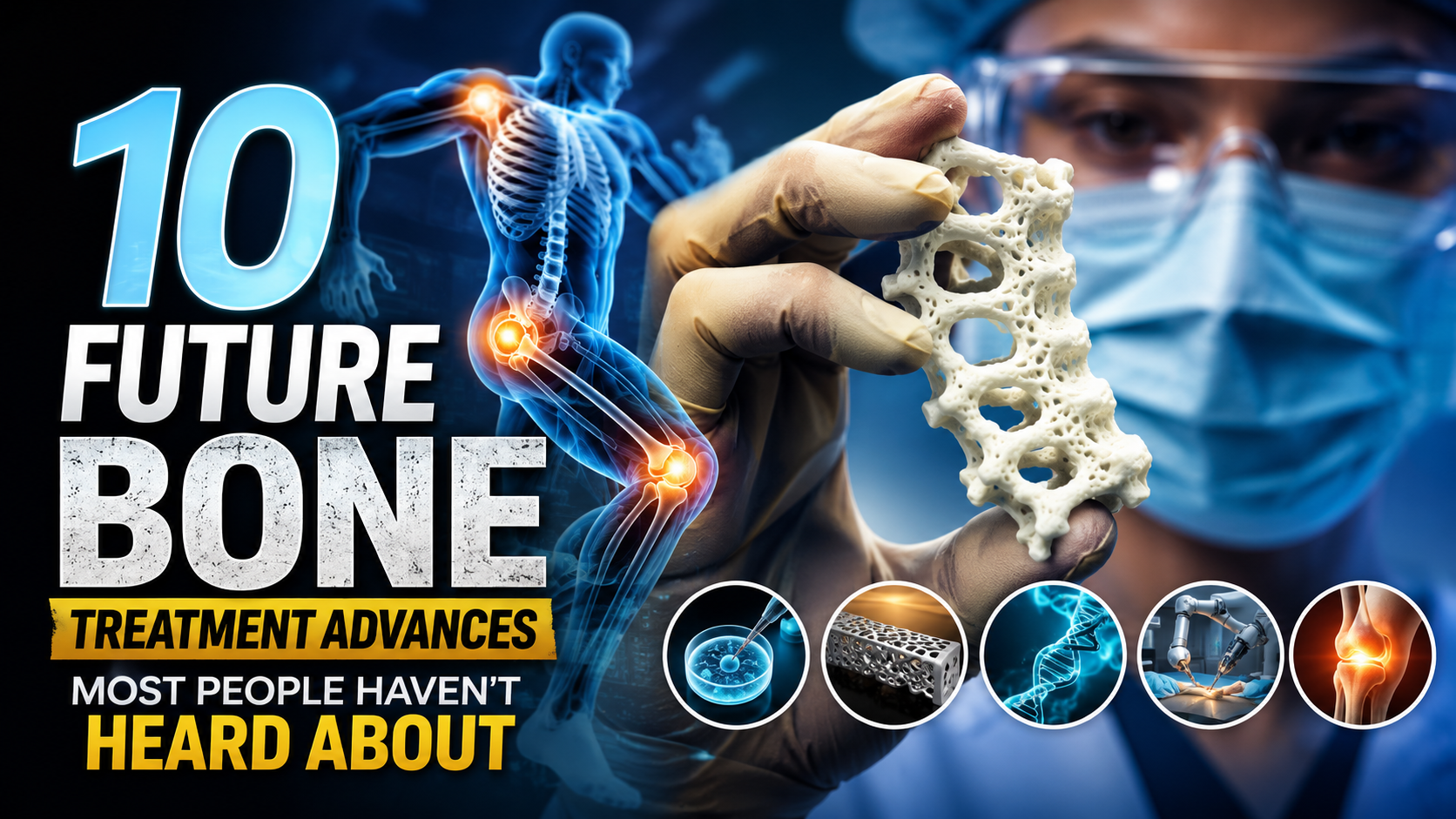
Bones are remarkable structures. They support our bodies, protect vital organs, and even produce blood cells. Yet when bones are damaged by injury, disease, or aging, recovery can be a long and challenging process. Traditional treatments such as casts, metal implants, and bone grafts have helped millions of people, but researchers are now developing technologies that could dramatically change the future of bone care.
Advances in regenerative medicine, biotechnology, and artificial intelligence are opening doors that seemed impossible just a few decades ago. Scientists are exploring ways to help bones heal faster, regenerate damaged tissue, and even replace missing bone without relying on conventional procedures.
Here are ten exciting developments that could shape the future of bone treatment in the years ahead.
1. 3D-Printed Bones Designed for Individual Patients
One of the most promising innovations in modern medicine is 3D printing. While many people associate this technology with manufacturing, it is increasingly being used in healthcare.
Researchers are developing custom-made bone replacements using advanced 3D printers. Instead of using a standard implant, doctors may soon be able to create a replacement that perfectly matches a patient’s anatomy. These personalized implants can be designed from medical imaging scans, ensuring a precise fit.
Future versions may include materials that encourage natural bone growth, helping the body gradually replace the implant with real bone tissue over time. This approach could improve comfort, reduce complications, and shorten recovery periods.
2. Stem Cell Therapies for Bone Regeneration
Stem cells have attracted significant attention because of their ability to develop into different types of cells within the body. Scientists believe these cells may play a major role in repairing damaged bones.
Rather than simply stabilizing a fracture, future treatments could involve injecting stem cells directly into injured areas. These cells may help generate new bone tissue and support the body’s natural healing process.
Although research is still ongoing, early studies suggest stem-cell-based therapies could become particularly useful for patients with severe fractures, bone loss, or conditions that slow healing.
3. Smart Implants That Monitor Recovery
Today’s orthopedic implants are primarily designed to provide structural support. Future implants, however, could do much more.
Engineers are developing “smart” implants equipped with tiny sensors that monitor healing progress in real time. These devices may be able to measure pressure, detect inflammation, and track how well bones are fusing together.
Doctors could receive data remotely, allowing them to identify potential problems before symptoms become serious. This technology may reduce the need for frequent imaging tests while helping patients recover more safely.
4. Bone-Growing Scaffolds
Imagine a framework that guides the body to rebuild damaged bone naturally. That’s the idea behind bone scaffolds.
These specialized structures are designed to act as temporary support systems. Once implanted, they encourage bone cells to grow and fill damaged areas. Over time, the scaffold gradually dissolves, leaving behind newly formed bone.
Scientists are experimenting with materials that closely mimic natural bone architecture. This could be especially beneficial for people with large bone defects caused by trauma, surgery, or disease.
5. Gene-Based Treatments for Faster Healing
Gene therapy is often associated with rare genetic disorders, but researchers are also investigating its role in bone health.
Future treatments may involve activating specific genes that control bone growth and repair. By enhancing the body’s natural regenerative abilities, scientists hope to accelerate healing and improve outcomes after fractures.
Although this field remains in development, gene-based approaches could eventually help patients whose bones heal slowly or who suffer from recurring skeletal problems.
6. Artificial Intelligence in Bone Care
Artificial intelligence is already transforming many areas of healthcare, and orthopedics is no exception.
AI-powered systems can analyze medical images, identify patterns, and help physicians make more informed decisions. In the future, AI may assist doctors in predicting how quickly a fracture will heal and recommending personalized treatment plans.
These systems could also help identify complications earlier, reducing the likelihood of long-term problems. As machine learning technology improves, bone treatment may become increasingly precise and tailored to each patient.
7. Bioprinting Living Bone Tissue
While 3D-printed implants are impressive, researchers are aiming even higher with bioprinting.
Bioprinting involves creating structures that contain living cells. Instead of producing an artificial implant, scientists hope to print functional bone tissue that can integrate seamlessly with the body.
Although the technology is still in its early stages, progress has been encouraging. In the future, patients with severe bone loss may receive customized living tissue replacements that closely resemble natural bone.
This breakthrough could significantly reduce the risk of rejection and improve long-term outcomes.
8. Nanotechnology for Bone Repair
Nanotechnology focuses on materials engineered at an incredibly small scale. These microscopic structures can interact with the body in unique ways.
Researchers are developing nanoparticles that deliver medications directly to damaged bone tissue. This targeted approach could improve treatment effectiveness while minimizing side effects.
Nanotechnology may also be used to create advanced coatings for implants, helping them bond more effectively with surrounding bone. Some experimental materials can even encourage faster tissue regeneration.
As the science advances, nanotechnology could become a powerful tool for improving bone healing and implant performance.
9. Advanced Treatments for Osteoporosis
Osteoporosis affects millions of people worldwide, weakening bones and increasing the risk of fractures. Traditional treatments often focus on slowing bone loss, but future therapies may do much more.
Scientists are exploring medications that stimulate the growth of entirely new bone tissue rather than simply preserving existing bone density.
Researchers are also investigating personalized treatment approaches based on genetic profiles and biological markers. This could allow doctors to identify high-risk individuals earlier and create more effective prevention strategies.
The result may be stronger bones, fewer fractures, and a better quality of life for aging populations.
10. Regenerative Biomaterials That Work With the Body
Traditional implants are often made from metal or synthetic materials. Future biomaterials are being designed to actively participate in the healing process.
These next-generation materials can release growth factors, attract bone-forming cells, and encourage tissue regeneration. Some are even engineered to change their properties as healing progresses.
Rather than acting as passive replacements, regenerative biomaterials become part of the recovery process itself.
This shift could lead to faster healing, improved bone strength, and reduced reliance on repeat surgeries.
Why These Innovations Matter
Bone injuries and skeletal disorders affect people of all ages. Athletes can suffer fractures, older adults may experience osteoporosis, and accidents can cause severe bone damage that requires extensive treatment.
Many current therapies are highly effective, but they also have limitations. Recovery can take months, surgeries can be invasive, and some patients face long-term complications.
The emerging technologies described above aim to address these challenges by enhancing the body’s natural ability to heal. They represent a move toward treatments that are more personalized, less invasive, and potentially more effective than traditional approaches.
In addition, these innovations may help reduce healthcare costs over time by shortening hospital stays, decreasing complications, and improving long-term outcomes.
The Challenges Ahead
Despite the excitement surrounding these developments, several hurdles remain.
Many of these technologies are still being tested in laboratories or clinical trials. Safety, effectiveness, affordability, and regulatory approval must all be carefully evaluated before widespread adoption.
Cost is another important factor. Advanced treatments can be expensive to develop, and healthcare systems will need to determine how to make them accessible to patients.
There are also ethical considerations, particularly regarding genetic therapies and stem cell applications. Researchers and policymakers will need to balance innovation with responsible oversight.
Looking Toward the Future
The future of bone treatment is moving far beyond casts and metal plates. Scientists are developing solutions that focus on regeneration, personalization, and biological healing rather than simple repair.
From smart implants and stem cell therapies to living bone tissue and AI-driven treatment planning, these innovations have the potential to transform orthopedic care in ways that once belonged only in science fiction.
While some of these advances may take years to become routine, the progress already being made suggests a future where bone injuries heal faster, treatments are more precise, and patients enjoy better outcomes than ever before.
As research continues, the next generation of bone care could fundamentally change how we treat fractures, bone loss, and skeletal diseases—bringing new hope to millions of people around the world.







