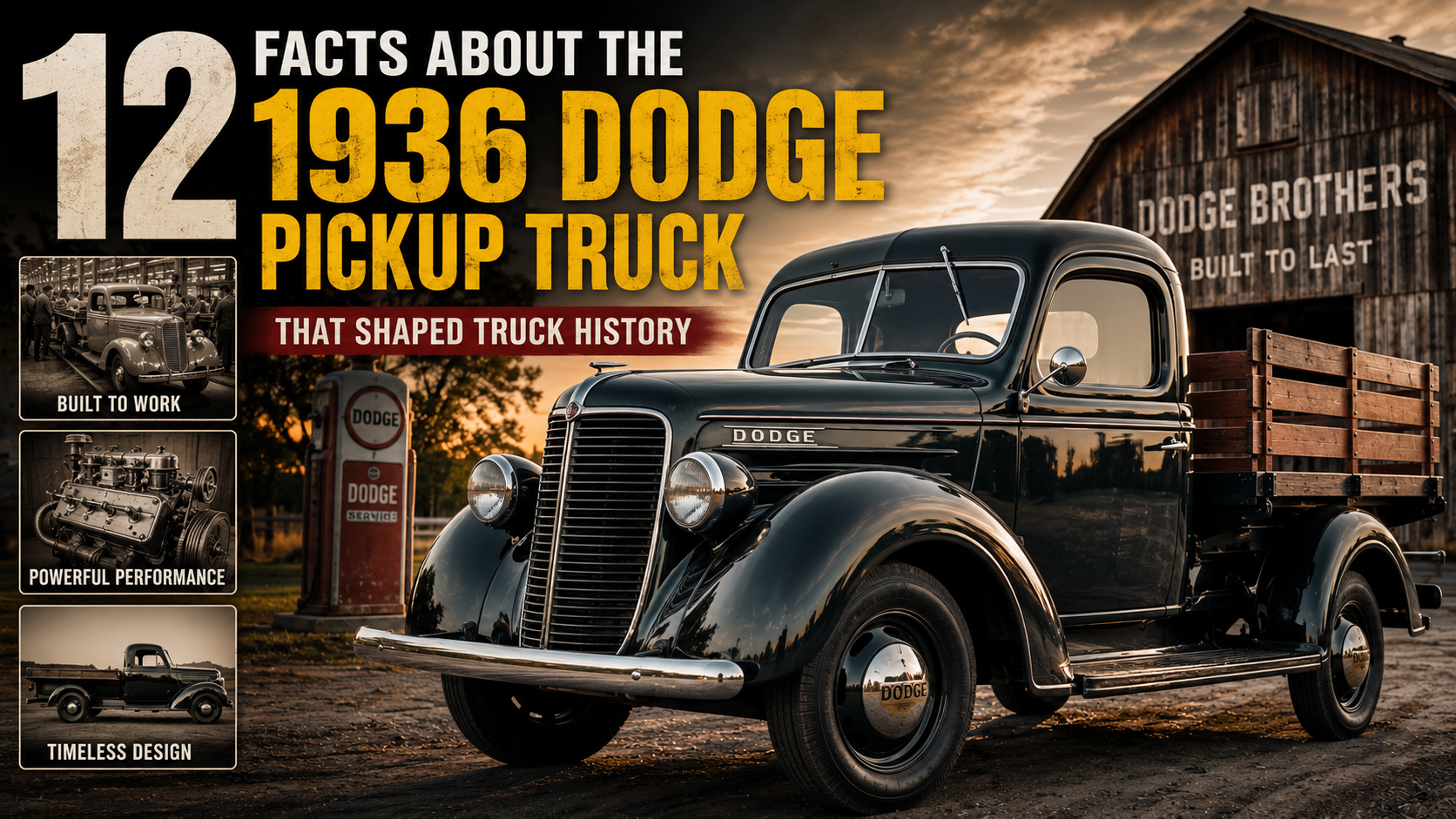
When discussing the trucks that influenced the evolution of America’s pickup market, iconic names from the post-war era often receive most of the attention. However, long before modern pickups became symbols of power, durability, and versatility, a humble workhorse from the 1930s was quietly helping redefine what a truck could be.
The 1936 Dodge Pickup Truck arrived during a period when America was still recovering from the Great Depression. Businesses, farmers, and tradespeople needed dependable vehicles capable of handling tough jobs without breaking the bank. Dodge answered that demand with a truck that combined rugged engineering, practical design, and reliability in ways that impressed buyers across the country.
While it may seem primitive compared to today’s technology-packed pickups, the 1936 Dodge represented a significant step forward in commercial vehicle development. Many of the qualities that modern truck owners value—durability, versatility, comfort, and long-term dependability—were already becoming part of Dodge’s philosophy nearly ninety years ago.
Here are 12 fascinating facts about the 1936 Dodge Pickup Truck and why it remains an important chapter in automotive history.
1. It Was Built During One of America’s Toughest Economic Periods
The mid-1930s were challenging years for both consumers and manufacturers. Although the worst years of the Great Depression had passed, many Americans still struggled financially.
During this time, purchasing a vehicle was a major investment. Buyers needed trucks that could serve multiple purposes and provide years of dependable service.
The 1936 Dodge Pickup was designed with practicality in mind. It wasn’t marketed as a luxury vehicle. Instead, it focused on delivering maximum value for working Americans who depended on their trucks every day.
Its success demonstrated that reliability and functionality often matter more than flashy features.
2. Dodge Prioritized Durability Above Everything Else
One reason the 1936 Dodge earned respect among business owners was its reputation for toughness.
Unlike passenger cars that primarily transported families, pickup trucks faced harsh conditions on farms, construction sites, and rural roads. They were expected to haul equipment, supplies, and heavy loads without complaint.
Dodge engineers understood these demands and built the truck with durability as a primary objective.
The strong frame and robust mechanical components helped establish Dodge as a trusted name among workers who needed a vehicle capable of handling real-world challenges.
That emphasis on durability remains a cornerstone of truck design today.
3. It Helped Expand the Popularity of Pickup Trucks
During the early automotive years, many businesses relied on larger commercial vehicles for transportation and deliveries.
The 1936 Dodge Pickup helped demonstrate that smaller trucks could provide an ideal balance between capability and affordability.
Its versatility appealed to farmers, tradespeople, and small business owners who needed a vehicle that could transport cargo while remaining easy to operate and maintain.
As more consumers recognized the benefits of light-duty pickups, demand for these vehicles steadily increased.
This shift played an important role in establishing the pickup truck as a permanent fixture in American transportation.
4. Its Design Reflected the Streamlining Trend of the 1930s
Automotive styling underwent significant changes during the 1930s.
Manufacturers began moving away from the boxy, utilitarian designs of earlier decades and embraced smoother, more aerodynamic shapes.
The 1936 Dodge Pickup reflected this trend with flowing fenders, rounded body panels, and a more integrated appearance.
While aerodynamic efficiency wasn’t as scientifically advanced as it is today, these design changes made vehicles look more modern and appealing.
The truck’s styling helped bridge the gap between pure utility and visual appeal, a concept that continues to influence pickup design.
5. It Featured Dependable Inline-Six Power
Performance expectations for trucks in the 1930s were different from today’s standards. Buyers weren’t searching for massive horsepower figures or high towing ratings.
Instead, they wanted engines that started reliably, ran smoothly, and required minimal maintenance.
The 1936 Dodge delivered exactly that.
Its inline-six engine earned a reputation for dependability and consistent performance. The engine provided enough power for daily work while remaining relatively simple to service.
This balance of practicality and reliability became one of the vehicle’s strongest selling points.
6. Comfort Was Beginning to Matter
Early trucks often sacrificed comfort in favor of utility.
By the mid-1930s, manufacturers recognized that drivers frequently spent long hours behind the wheel. As a result, comfort became a growing priority.
The 1936 Dodge offered improvements that made daily operation less tiring and more enjoyable.
While still basic by modern standards, the cab provided a more refined driving environment than many earlier trucks.
Better seating, improved ergonomics, and enhanced visibility contributed to a more user-friendly experience.
These developments marked an important step toward the comfortable pickup trucks we know today.
7. It Was Designed for Multiple Industries
One of the truck’s greatest strengths was its versatility.
Unlike specialized commercial vehicles, the 1936 Dodge could adapt to a wide range of applications.
Farmers used it to transport crops and equipment. Contractors relied on it for tools and materials. Small business owners used it for deliveries and service calls.
Its ability to serve multiple industries helped broaden its appeal and demonstrated the flexibility that would later become a defining characteristic of pickup trucks.
Modern pickups continue to succeed largely because they can fulfill so many different roles.
8. The Truck Reflected Dodge’s Engineering Reputation
Throughout its history, Dodge built a reputation for producing sturdy and dependable vehicles.
The 1936 Pickup reinforced that image.
Buyers viewed the truck as a practical investment rather than a short-term purchase. Many owners expected their vehicles to remain in service for years, sometimes even decades.
This confidence stemmed from Dodge’s commitment to engineering quality and mechanical reliability.
The trust established during this era helped strengthen the company’s position within the growing truck market.
9. It Played a Role in Rural America’s Growth
In the 1930s, many rural communities depended heavily on reliable transportation.
Road networks were expanding, businesses were evolving, and agricultural operations increasingly required efficient ways to move goods and supplies.
The 1936 Dodge Pickup became a valuable tool in these efforts.
Its ability to travel long distances, carry cargo, and operate in challenging conditions made it particularly useful in rural areas.
By helping connect farms, towns, and businesses, trucks like the Dodge contributed to economic growth across much of the country.
Their impact extended far beyond transportation alone.
10. Its Simple Mechanics Made Repairs Easier
One advantage of vehicles from this era was mechanical simplicity.
The 1936 Dodge Pickup featured straightforward engineering that allowed owners and local mechanics to perform many repairs without specialized equipment.
This accessibility reduced maintenance costs and minimized downtime.
For business owners who relied on their trucks for income, easy repairs were a significant advantage.
The vehicle’s straightforward design helped build a reputation for practicality and dependability.
Even today, collectors often appreciate classic trucks for their simplicity and ease of restoration.
11. It Became a Favorite Among Collectors
Although it was originally built as a work vehicle, the 1936 Dodge Pickup eventually earned a place in classic automotive culture.
Collectors admire its distinctive styling, historical significance, and connection to America’s industrial past.
Restored examples frequently appear at classic car shows, automotive museums, and vintage truck gatherings.
Enthusiasts appreciate the craftsmanship and engineering that characterized vehicles from this period.
The truck’s enduring popularity demonstrates the lasting impact of thoughtful design and durable construction.
Few vehicles remain admired nearly a century after their introduction.
12. It Helped Define What a Pickup Truck Should Be
Perhaps the most important fact about the 1936 Dodge Pickup is that it helped establish many of the expectations consumers still have for trucks today.
Owners wanted strength, reliability, practicality, and versatility.
The truck delivered all four.
While modern pickups offer vastly more technology, power, and refinement, the core principles remain remarkably similar.
People still purchase trucks because they need vehicles capable of working hard, adapting to different tasks, and providing dependable transportation.
The 1936 Dodge helped prove that a pickup could successfully combine all these qualities in a single package.
Why the 1936 Dodge Pickup Still Matters Today
Automotive technology has advanced dramatically since the 1930s.
Today’s trucks feature turbocharged engines, advanced safety systems, touchscreen infotainment displays, sophisticated towing technology, and luxurious interiors. Yet the foundation of the modern pickup truck was built by vehicles like the 1936 Dodge.
The truck represented an important stage in the industry’s evolution. It showed manufacturers that buyers wanted more than simple transportation. They wanted dependable tools capable of supporting their businesses, families, and daily lives.
Many of the lessons learned during this era continue to influence truck development.
Durability, reliability, versatility, and user-focused design remain key priorities across the industry.
The Legacy of an Overlooked Classic
While it may not enjoy the same level of recognition as some later pickup models, the 1936 Dodge deserves a place among the most influential trucks of its era.
Its combination of practical engineering, rugged construction, and broad usability helped shape the direction of the American pickup market.
The truck arrived at a time when reliable transportation was essential for economic recovery and business growth. By meeting those needs effectively, it earned the trust of countless owners.
That trust became part of Dodge’s identity and contributed to the brand’s long-term success in the truck segment.
Final Thoughts
The 1936 Dodge Pickup Truck was far more than a simple work vehicle. It represented a turning point in truck design and demonstrated how thoughtful engineering could improve everyday life for workers, farmers, and business owners.
From its durable construction and dependable engine to its versatile design and growing emphasis on driver comfort, the truck introduced qualities that continue to define successful pickups nearly ninety years later.
Today, collectors and historians celebrate the 1936 Dodge not only for its vintage charm but also for its lasting contribution to automotive history.
Its story serves as a reminder that some of the most important innovations aren’t always the flashiest. Sometimes they come in the form of a hardworking truck that quietly helps shape an entire industry for generations to come.







