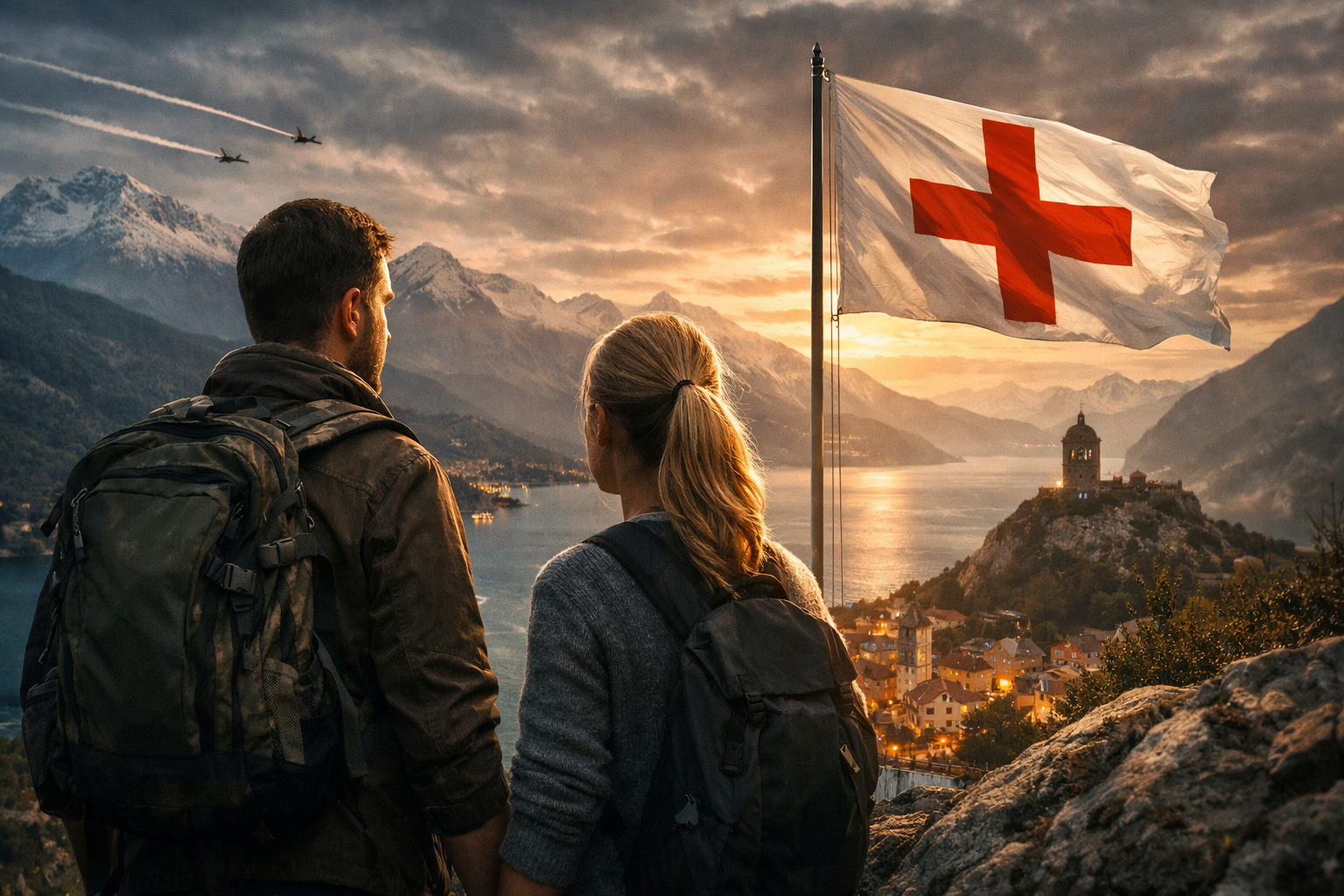
While nobody wants to imagine a large-scale global war, discussions about geopolitical instability often lead to an important question: where would people be safest if international tensions escalated dramatically?
No location on Earth can guarantee complete safety during a major conflict. However, certain countries possess characteristics that may make them more resilient during periods of global instability. Factors such as geographic isolation, political neutrality, food security, renewable energy resources, and low strategic military importance can all contribute to a country’s ability to weather international crises.
Here are ten destinations often considered among the most secure places in a worst-case global conflict scenario.
1. New Zealand

Few countries are as geographically isolated as New Zealand.
Located far from major military powers and global conflict zones, the island nation enjoys a unique level of natural protection. Its relatively small population, strong agricultural sector, and abundant renewable energy resources provide additional advantages.
New Zealand produces a significant amount of its own food and relies heavily on hydroelectric and geothermal energy. Combined with political stability and low involvement in international disputes, these factors often place it near the top of discussions about long-term resilience.
2. Switzerland

For centuries, Switzerland has built a reputation around neutrality.
The country famously remained neutral during both World Wars and continues to avoid military entanglements whenever possible. Its mountainous terrain provides natural defensive advantages, while extensive civil defense infrastructure—including widespread access to shelters—adds another layer of preparedness.
Switzerland’s strong economy, stable government, and ability to produce a substantial portion of its food supply make it one of the most frequently cited safe havens during times of uncertainty.
3. Iceland

Iceland’s location in the North Atlantic provides a significant degree of separation from many of the world’s geopolitical flashpoints.
The country has no standing military and is consistently ranked among the most peaceful nations on Earth. It also benefits from remarkable energy independence, generating virtually all of its electricity through renewable geothermal and hydroelectric sources.
Its isolation, combined with a small population and stable government, makes Iceland a compelling candidate for long-term security during global disruptions.
4. Antarctica

Although not a country, Antarctica represents one of the most remote places on the planet.
The continent is protected by international agreements that prohibit military activity and territorial conflict. With no permanent civilian population and almost no strategic value in terms of warfare, Antarctica would likely remain far removed from conventional conflict.
Of course, survival there presents enormous challenges due to extreme weather and limited infrastructure, making it a practical option for very few people.
5. Argentina

Argentina’s position in the Southern Hemisphere places it far from many major geopolitical hotspots.
The country possesses extensive agricultural resources and significant energy potential. Vast regions of Argentina, particularly in the south, are sparsely populated and geographically remote.
The Andes Mountains also create a natural barrier along much of the country’s western border. These factors contribute to Argentina’s reputation as a potentially resilient location during periods of global instability.
6. Ireland

Ireland has maintained a longstanding policy of military neutrality and generally avoids involvement in international military alliances.
Located on the western edge of Europe, the country is removed from many strategic military locations while maintaining strong diplomatic relationships around the world.
Its stable political environment, agricultural capacity, and reliable infrastructure could help support resilience during international crises.
7. Remote Regions of Canada

Canada’s enormous landmass provides unique advantages when discussing safety and self-sufficiency.
While major cities could face challenges during a large-scale conflict, many remote regions offer access to freshwater resources, farmland, forests, and energy supplies.
The country’s strong infrastructure and abundant natural resources make isolated parts of Canada potentially attractive for long-term survival and stability.
8. Pacific Island Nations

Small island nations such as Tuvalu, Samoa, and Kiribati are often overlooked in geopolitical discussions.
These countries possess little strategic military significance and are located far from major centers of global power. Their remote locations reduce the likelihood of becoming direct targets during international conflicts.
However, geographic isolation can also create challenges related to imported goods, healthcare, and supply chains.
9. Bhutan

Nestled in the Himalayas, Bhutan has long emphasized peace, environmental protection, and cultural preservation.
The country’s mountainous geography creates natural barriers that make access difficult. Bhutan also maintains a relatively low profile in international politics and avoids involvement in major geopolitical disputes.
Its focus on sustainability and community resilience further strengthens its reputation as a potentially secure destination during periods of global uncertainty.
10. Chile

Chile’s unique geography offers several natural advantages.
Stretching along South America’s western coast, it is bordered by the Pacific Ocean on one side and the Andes Mountains on the other. The country enjoys political stability, strong agricultural production, and growing renewable energy capacity.
Southern regions such as Patagonia are especially remote, providing both isolation and access to natural resources that could prove valuable during a global crisis.
What Makes a Country More Resilient During Global Conflict?

Several characteristics consistently appear when experts discuss national resilience:
Geographic Isolation
Countries located far from major military powers and strategic targets generally face lower risks of direct involvement.
Food and Water Security
The ability to produce food domestically and maintain reliable freshwater supplies becomes critical during supply chain disruptions.
Energy Independence
Nations that generate their own energy are less vulnerable to global fuel shortages and infrastructure disruptions.
Political Neutrality
Countries that avoid military alliances and international conflicts may be less likely to become direct targets.
Strong Infrastructure
Reliable transportation, healthcare, communication systems, and emergency preparedness all contribute to resilience.
The Reality of Modern Global Conflict
While lists of “safe countries” can be interesting, modern conflicts rarely follow predictable patterns. Economic disruptions, cyberattacks, supply chain breakdowns, and refugee crises can affect regions far from active combat zones.
For this reason, personal preparedness often matters just as much as location. Maintaining emergency supplies, financial flexibility, strong community connections, and awareness of current events can improve resilience regardless of where you live.
Final Thoughts

No place on Earth is completely immune to the effects of a major global conflict. However, countries with geographic isolation, political neutrality, abundant natural resources, and strong self-sufficiency are generally better positioned to withstand periods of international instability.
Nations such as New Zealand, Switzerland, Iceland, Bhutan, and parts of South America frequently appear on lists of potentially safer destinations because they combine many of these advantages.
Ultimately, preparation, adaptability, and informed decision-making remain the most valuable assets during uncertain times—wherever you happen to be.
Disclaimer: This article is intended for informational and educational purposes only. Predictions about future geopolitical events are inherently uncertain, and no location can be guaranteed safe during a global conflict.







