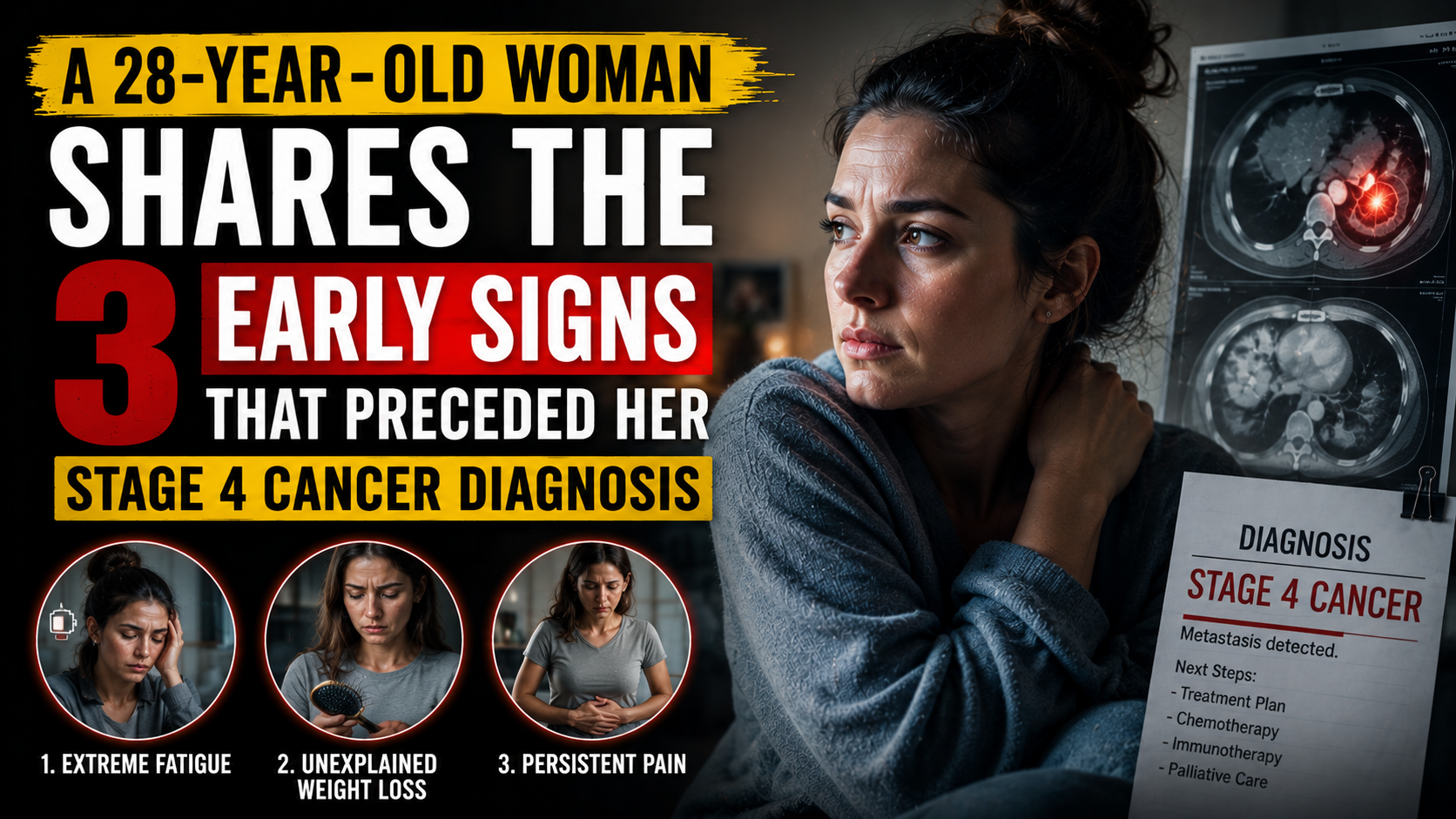
Woman Diagnosed With Stage 4 Cancer at 28 Reveals the Three Warning Signs She Ignored
When you’re young and generally healthy, it’s easy to assume serious illnesses happen to other people. For many, symptoms such as fatigue, itching, or recurring colds are often blamed on stress, a busy lifestyle, or minor health issues.
That was exactly the case for Georgie Swallow, a content creator from London, who never imagined that the symptoms she was experiencing could be linked to cancer.
At just 28 years old, Georgie was diagnosed with stage 4 Hodgkin lymphoma after more than a year of overlooking several warning signs. By the time she received answers, the disease had already advanced significantly.
Today, she is sharing her story to raise awareness about symptoms that are often dismissed and to encourage others to seek medical advice when something doesn’t feel right.

The Discovery That Changed Everything
Georgie’s diagnosis came after what initially seemed like a routine recovery from illness.
Following a severe bout of flu that kept her away from work for nearly two weeks, she returned to the office expecting life to return to normal. Instead, she noticed something unusual.
While sitting at her desk, she discovered a large lump on the side of her neck—roughly the size of a peach.
Even then, cancer wasn’t the first thing that crossed her mind.
Like many young adults, she assumed there had to be a less serious explanation and worried more about overreacting than about the possibility of a serious illness.
Eventually, medical tests revealed the shocking truth: she had stage 4 Hodgkin lymphoma, a cancer that affects the lymphatic system.
Symptom #1: Persistent Itching
One of Georgie’s earliest symptoms was intense itching, particularly on her legs.
The discomfort became so severe that she would scratch until her skin broke, often making it difficult to sleep through the night.
Concerned, she visited her doctor, but several possible explanations were considered before cancer entered the conversation. Stress, allergies, and skin conditions were all suggested as potential causes.
Despite trying various treatments and lifestyle adjustments, nothing provided lasting relief.
Looking back, the persistent itching was one of the earliest warning signs that something more serious was happening.
Symptom #2: Night Sweats
Another symptom Georgie experienced was frequent night sweats.
While occasional sweating during sleep can happen for many reasons, persistent episodes that drench clothing or bedding can sometimes signal an underlying medical condition.
At the time, however, she didn’t recognize the symptom as a potential red flag.
Because the episodes developed gradually, they became something she simply learned to live with rather than investigate further.
Night sweats are considered one of the more common symptoms associated with lymphoma, yet many people may not immediately connect them to a serious illness.
Symptom #3: Constant Exhaustion
Perhaps the most easily overlooked symptom was overwhelming fatigue.
Georgie found herself feeling tired almost all the time. She also noticed that she was getting sick frequently, dealing with what seemed like a never-ending cycle of colds, flu-like illnesses, and low energy.
However, instead of viewing these symptoms as warning signs, she attributed them to a hectic schedule and the pressures of daily life.
Many people experience periods of exhaustion due to work, family responsibilities, or stress, which can make it difficult to distinguish normal fatigue from something more serious.
For Georgie, the persistent tiredness was actually another indication that her body was struggling with an underlying disease.
Why Lymphoma Can Be Difficult to Detect
One of the challenges with Hodgkin lymphoma is that many of its symptoms can resemble everyday health issues.
Fatigue, itching, weight loss, recurring infections, and night sweats may develop gradually and can easily be explained away as stress, poor sleep, allergies, or a demanding lifestyle.
Because the symptoms often seem unrelated or relatively mild at first, diagnosis can sometimes be delayed.
This highlights the importance of paying attention to ongoing changes in your health, particularly when symptoms persist or worsen over time.
An Unexpected Consequence of Treatment
While the cancer diagnosis itself was life-changing, Georgie also faced another difficult reality during treatment.
The therapies used to fight her cancer triggered early menopause, dramatically affecting her future plans and emotional well-being.
One of the most painful consequences was the impact on her fertility.
For someone in her twenties who had not yet started a family, the experience was particularly difficult to process.
Beyond the physical changes, she also struggled with feelings of isolation. Few people her age could relate to what she was experiencing, making an already challenging situation even more emotionally complex.
Raising Awareness for Others
Now in her thirties, Georgie is using her platform to educate others about lymphoma symptoms and the often-overlooked emotional effects of early menopause.
She hopes that by sharing her experience, more people will feel empowered to seek medical advice when something feels unusual rather than dismissing symptoms as stress or everyday fatigue.
Her story serves as an important reminder that serious health conditions do not always present themselves dramatically. Sometimes the warning signs appear gradually, making them easy to overlook.
Key Takeaway
Georgie’s experience highlights the importance of listening to your body and paying attention to symptoms that persist over time.
The three warning signs she initially dismissed were:
- Persistent itching that didn’t respond to treatment
- Frequent night sweats
- Ongoing fatigue and recurring illnesses
While these symptoms do not automatically indicate cancer, persistent or unexplained changes in your health should always be discussed with a healthcare professional.
Early detection can make a significant difference, and seeking answers sooner rather than later may lead to faster diagnosis and treatment when it matters most.







