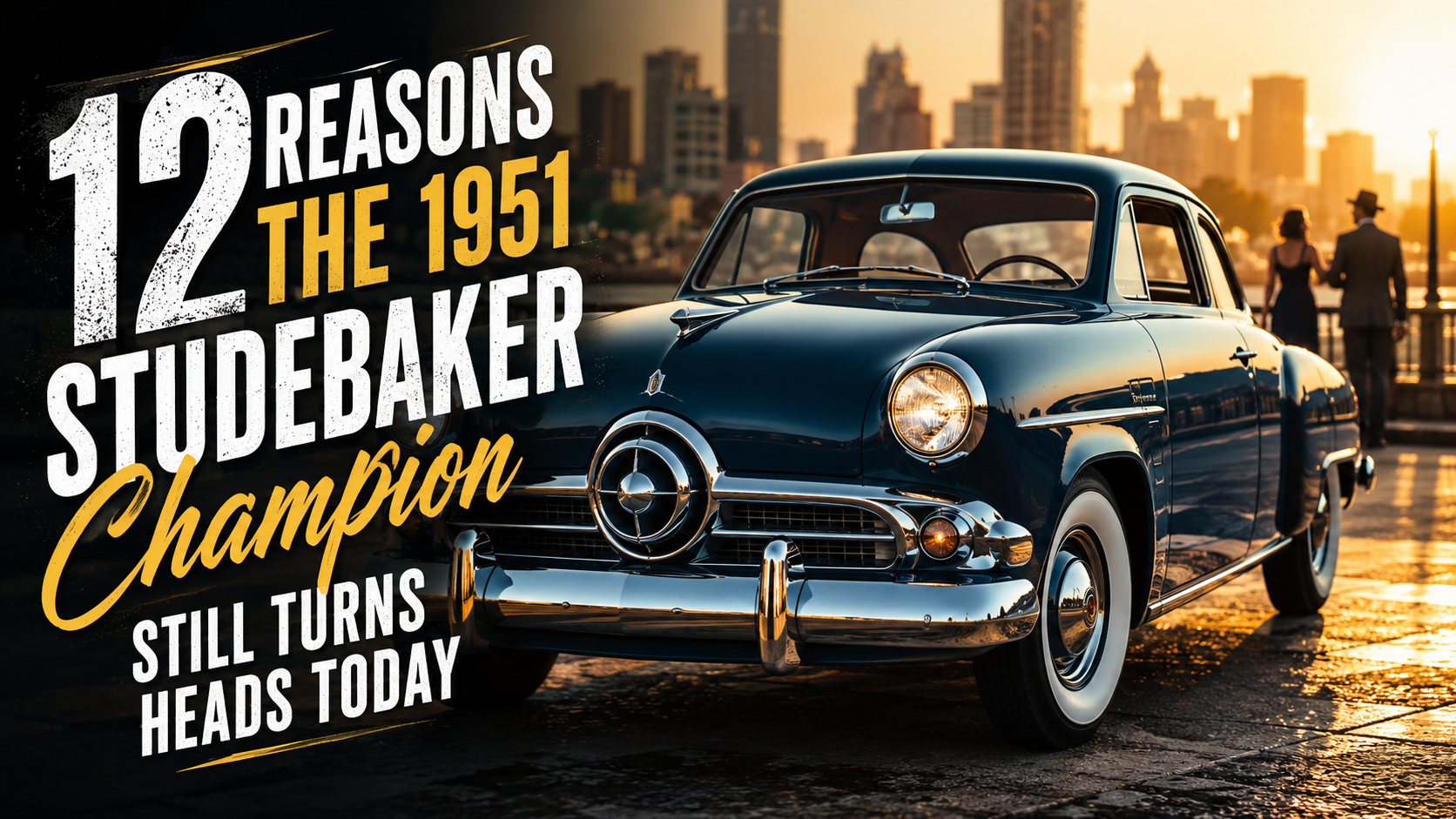
The automotive world is filled with legendary vehicles, but only a select few remain instantly recognizable decades after they first appeared. Among those enduring classics is the 1951 Studebaker Champion, a car that continues to fascinate collectors, historians, and vintage automobile enthusiasts alike.
While it may not enjoy the same level of mainstream recognition as some iconic American muscle cars or luxury cruisers, the Studebaker Champion holds a special place in automotive history. Its distinctive styling, innovative engineering, and forward-thinking design helped it stand apart from competitors during the early 1950s—and those same qualities still attract admiration today.
At classic car shows, auctions, and enthusiast gatherings, the sight of a well-preserved 1951 Studebaker Champion often draws curious onlookers. Many younger enthusiasts are surprised to learn that a vehicle designed more than seven decades ago can still look so fresh and unique.
So what explains its enduring appeal?
Here are 12 reasons the 1951 Studebaker Champion continues to turn heads and win admirers long after its production run ended.
1. Its Design Was Ahead of Its Time
One of the most remarkable aspects of the 1951 Studebaker Champion is how modern it looked compared to many of its contemporaries.
During the early 1950s, numerous American cars featured bulky styling, prominent chrome elements, and upright body designs. The Champion took a different approach.
Its sleek silhouette, integrated fenders, and streamlined appearance gave it a futuristic look that seemed years ahead of competing vehicles. Many automotive historians consider Studebaker one of the industry’s most innovative design leaders during this era.
Even today, the car’s proportions appear surprisingly refined, proving that great design can transcend generations.
2. The Iconic “Bullet Nose” Front End
Few automotive styling elements are as memorable as the Champion’s distinctive front-end design.
The prominent center-mounted nose, often referred to as the “bullet nose,” became one of Studebaker’s defining visual trademarks.
Inspired by aviation and postwar fascination with speed and technology, this feature helped the car stand out immediately from competing models.
At any classic car gathering, enthusiasts can identify a 1951 Studebaker Champion almost instantly thanks to this unmistakable design element.
It remains one of the most recognizable front-end treatments ever used on an American production vehicle.
3. It Represents Postwar American Optimism
The early 1950s were a period of tremendous growth and optimism in the United States.
Automobile manufacturers embraced futuristic styling, technological progress, and bold new ideas. The Studebaker Champion perfectly captured this spirit of innovation and confidence.
Its styling reflected a nation looking toward the future while celebrating advances in transportation, engineering, and industrial design.
Owning a Champion today offers more than driving a vintage car—it provides a tangible connection to a fascinating period in American history.
For many collectors, that historical significance is a major part of the vehicle’s appeal.
4. It Stands Out in a Crowd
One challenge faced by many classic cars is blending into a sea of similar vehicles.
The Studebaker Champion rarely suffers from this problem.
At most car shows, visitors may encounter dozens of classic Chevrolets, Fords, and Plymouths. A 1951 Champion, however, often becomes a conversation starter precisely because it is less common.
Its unique appearance attracts both experienced collectors and casual spectators.
People frequently stop to ask questions, take photographs, and learn more about the car’s history.
That rarity adds to its charm and ensures it remains memorable long after an event ends.
5. It Demonstrates Studebaker’s Independent Spirit
Unlike some larger manufacturers, Studebaker often pursued its own path.
The company gained a reputation for taking creative risks and introducing designs that challenged conventional industry thinking.
The 1951 Champion exemplifies that independent mindset.
Rather than following established trends, Studebaker embraced bold styling choices that helped define its identity.
Many enthusiasts appreciate the car because it represents a company willing to innovate rather than simply imitate competitors.
That spirit of originality continues to resonate with collectors who value uniqueness and creativity.
6. Its Aerodynamic Styling Was Innovative
Today, aerodynamic design is a standard consideration in vehicle development.
In the early 1950s, however, it was still a relatively advanced concept.
The Champion’s smooth body lines and streamlined shape reflected an increasing awareness of aerodynamic efficiency. While designers were certainly focused on appearance, the car’s contours also contributed to improved airflow compared to many boxier vehicles of the era.
This combination of style and function helped distinguish the Champion from competitors.
Its design demonstrated how aesthetics and engineering could work together to create a more refined automobile.
7. The Simplicity Makes It Appealing
Modern vehicles are packed with digital screens, sensors, and complex electronic systems.
For many classic car enthusiasts, the Studebaker Champion offers a refreshing alternative.
Its straightforward mechanical design allows drivers to experience motoring in a more direct and engaging way.
There are no touchscreen menus or advanced driver-assistance systems competing for attention.
Instead, the focus remains on the fundamentals of driving.
This simplicity creates a connection between driver and machine that many enthusiasts find deeply satisfying.
8. It Reflects a Unique Chapter in Automotive History
Studebaker occupies a distinctive place in American automotive history.
As one of the oldest vehicle manufacturers in the United States, the company played an important role in shaping the industry before eventually ceasing automobile production.
The 1951 Champion represents one of the brand’s most memorable achievements during a period of intense competition among manufacturers.
Collectors often appreciate vehicles that tell a story, and the Champion offers plenty of historical significance.
Owning one is like preserving a chapter of automotive innovation that might otherwise be forgotten.
9. Its Styling Continues to Inspire Designers
Great automotive design often influences future generations.
Many of the Champion’s design elements continue to be studied and admired by enthusiasts, historians, and automotive designers.
The vehicle’s streamlined appearance demonstrates how bold creativity can remain relevant long after contemporary trends have faded.
Designers frequently look to classic automobiles for inspiration, and the Champion serves as an excellent example of how originality can create lasting appeal.
Its continued popularity highlights the timeless value of thoughtful design.
10. It Encourages Nostalgia
Classic cars have a unique ability to evoke memories and emotions.
For some people, the Studebaker Champion recalls family road trips, childhood experiences, or stories shared by older relatives. For others, it represents a fascinating era they never personally experienced but admire from afar.
Nostalgia plays a significant role in the collector car hobby.
The Champion’s distinctive appearance instantly transports many enthusiasts back to the postwar years, creating an emotional connection that extends beyond mechanical specifications.
That emotional appeal helps explain why the car continues attracting admirers generation after generation.
11. It Remains a Conversation Piece
Some vehicles are appreciated primarily for their performance. Others earn attention through rarity or luxury.
The Studebaker Champion excels at something slightly different—it sparks curiosity.
Its unusual styling often leads people to ask questions about the manufacturer, the era in which it was built, and the inspiration behind its design.
This ability to generate conversation is one of the reasons owners enjoy bringing their cars to shows and community events.
The Champion creates opportunities to share automotive history with people who may have never encountered the brand before.
Few vehicles serve as ambassadors for their era quite as effectively.
12. It Represents the Timeless Appeal of Individuality
Perhaps the greatest reason the 1951 Studebaker Champion still turns heads is its individuality.
In an automotive landscape often dominated by familiar names and conventional styling, the Champion remains refreshingly different.
It was not designed to blend in.
Its creators embraced originality, experimentation, and bold visual identity. Decades later, those qualities continue to resonate with enthusiasts who appreciate vehicles that stand apart from the crowd.
The Champion reminds us that true design success is not about following trends. It’s about creating something memorable enough to endure long after those trends disappear.
Why the 1951 Studebaker Champion Still Matters Today
Automotive history is filled with vehicles that were popular in their own time but largely forgotten by future generations.
The Studebaker Champion avoided that fate.
Its enduring popularity stems from a combination of historical significance, innovative design, and visual character. While newer vehicles offer vastly superior performance, safety, and technology, few can match the Champion’s ability to spark curiosity and admiration.
Classic car enthusiasts often say that some automobiles possess personality.
The Champion certainly fits that description.
Every curve, chrome detail, and styling choice reflects a willingness to take risks and pursue a distinctive vision.
A Lasting Legacy on Four Wheels
The automotive industry has changed dramatically since 1951. Electric vehicles, autonomous driving technologies, and advanced engineering now dominate discussions about the future of transportation.
Yet despite these advances, the Studebaker Champion continues to attract attention wherever it appears.
Its appeal demonstrates that great design and originality never go out of style.
More than seventy years after its debut, the Champion remains a reminder that innovation isn’t always about cutting-edge technology. Sometimes, it’s about having the courage to think differently.
Final Thoughts
The 1951 Studebaker Champion remains one of the most distinctive American automobiles ever produced. From its iconic bullet-nose styling and futuristic appearance to its historical significance and enduring individuality, the car continues to captivate enthusiasts across generations.
Its lasting popularity proves that automotive greatness isn’t measured solely by speed, horsepower, or technological sophistication. It can also be defined by creativity, character, and the ability to leave a lasting impression.
That is exactly what the Studebaker Champion has done—and why it continues to turn heads more than seven decades after it first hit the road.







