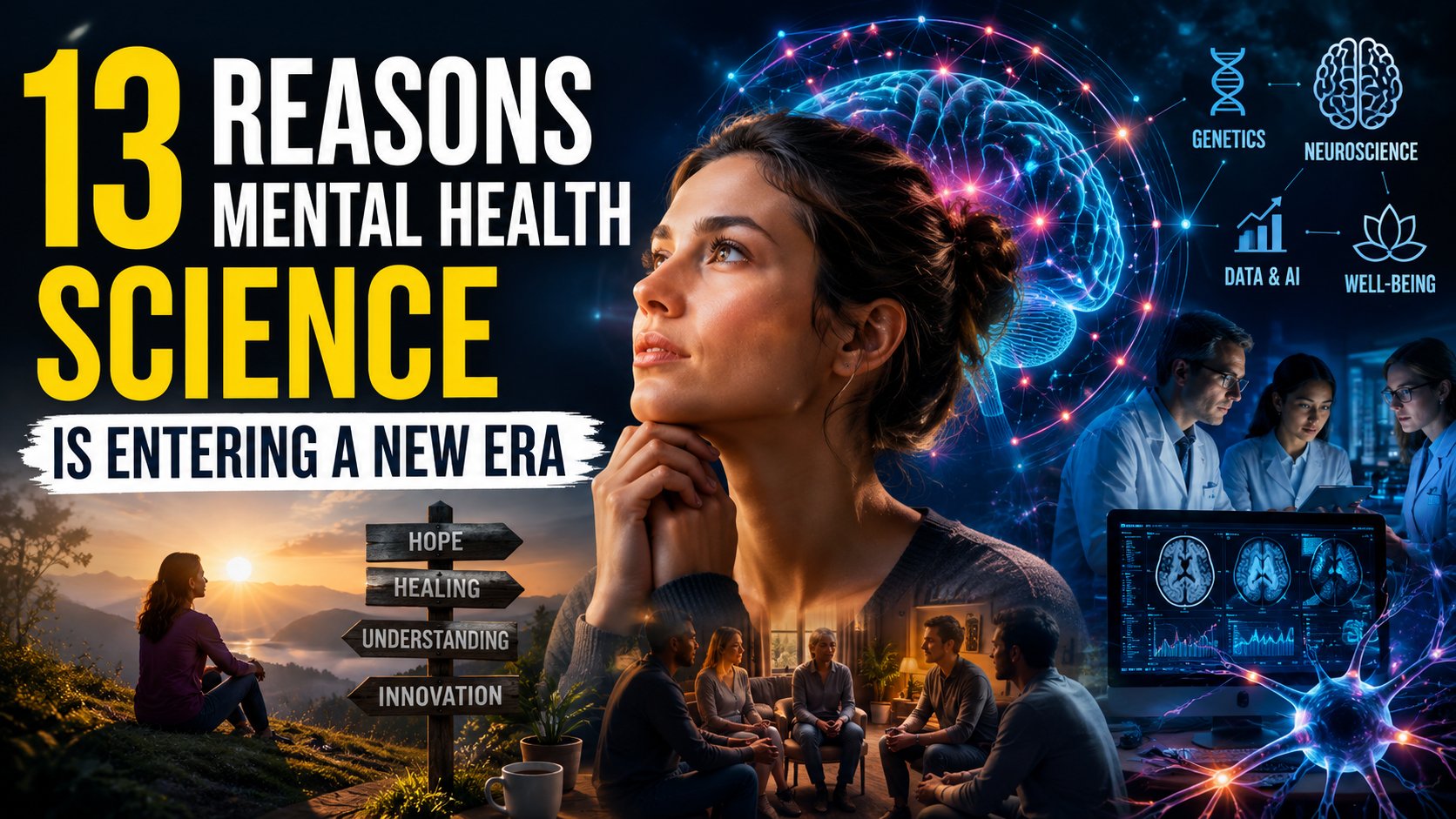
For decades, mental health was often misunderstood, overlooked, or treated as a secondary concern compared to physical health. While researchers, therapists, and healthcare professionals made steady progress over the years, many aspects of the human mind remained difficult to understand. Depression, anxiety, trauma, addiction, and other mental health conditions were frequently viewed through a limited lens, leaving countless questions unanswered.
Today, that landscape is changing rapidly.
Advances in neuroscience, psychology, genetics, technology, and medical research are transforming how experts understand mental health. Scientists are gaining unprecedented insights into how the brain works, how emotions develop, and why certain treatments help some individuals but not others.
The result is a growing sense that mental health science is entering a new era—one defined by innovation, personalization, and a deeper understanding of the connection between the mind and body.
Here are 13 reasons experts believe mental health research is undergoing one of the most significant transformations in its history.
1. Scientists Can Now Study the Brain in Greater Detail
One of the biggest drivers of progress is the remarkable advancement of brain imaging technology.
Researchers can now observe brain activity in ways that were impossible just a few decades ago. Tools such as functional magnetic resonance imaging (fMRI), PET scans, and other advanced imaging techniques allow scientists to examine how different regions of the brain communicate and respond during various mental processes.
These technologies have provided valuable insights into conditions such as depression, anxiety disorders, PTSD, ADHD, and schizophrenia.
The more researchers learn about the brain’s structure and function, the better equipped they become to develop effective treatments.
2. Mental Health Is Receiving More Public Attention
Not long ago, conversations about mental health often carried stigma and misunderstanding.
Today, public awareness has increased dramatically.
Athletes, actors, business leaders, healthcare professionals, and public figures regularly discuss their own mental health experiences. Social media, educational campaigns, and community initiatives have also helped normalize conversations about emotional well-being.
Greater awareness encourages people to seek help earlier, participate in research studies, and support continued investment in mental health science.
Cultural change is helping scientific progress move forward.
3. Researchers Better Understand Neuroplasticity
One of the most exciting discoveries in modern neuroscience is neuroplasticity—the brain’s ability to adapt, reorganize, and form new connections.
For many years, scientists believed the adult brain was relatively fixed. Research now suggests the brain remains capable of change throughout life.
This finding has major implications for mental health treatment because it suggests that learning, therapy, lifestyle changes, and certain medical interventions may help reshape patterns associated with emotional and behavioral challenges.
The concept of neuroplasticity has become a cornerstone of modern mental health research.
4. The Connection Between Physical and Mental Health Is Clearer
Mental and physical health are deeply interconnected.
Researchers increasingly understand that sleep, nutrition, exercise, inflammation, chronic illness, and stress all influence psychological well-being.
For example, poor sleep can affect mood regulation, while chronic stress may contribute to both emotional and physical health challenges.
This growing awareness has encouraged a more holistic approach to care—one that treats the entire person rather than focusing solely on symptoms.
The future of mental health science is becoming increasingly integrated with broader health research.
5. Personalized Treatment Is Becoming a Reality
Not everyone responds to treatment in the same way.
Two individuals with similar symptoms may experience very different outcomes from identical therapies or medications.
Researchers are now exploring how genetics, brain activity, life experiences, and biological markers can help predict treatment responses.
The goal is personalized mental health care—matching individuals with interventions that are more likely to work for their specific needs.
This shift could improve outcomes while reducing trial-and-error treatment approaches.
6. Digital Technology Is Expanding Access to Care
Technology has transformed nearly every aspect of life, including mental health services.
Teletherapy, mental health apps, online support platforms, digital assessments, and remote monitoring tools are helping people access care more conveniently than ever before.
These innovations can be particularly valuable for individuals living in rural areas or communities with limited mental health resources.
While technology is not a replacement for professional care, it is expanding opportunities for support and education.
Researchers continue studying how digital tools can complement traditional treatment methods.
7. Trauma Research Is Changing How Experts View Healing
Modern trauma research has revealed that traumatic experiences can affect both the mind and body in complex ways.
Scientists are learning more about how trauma influences brain function, nervous system regulation, memory processing, and emotional responses.
These discoveries have led to new therapeutic approaches that focus not only on thoughts and emotions but also on physical sensations, movement, and nervous system regulation.
As understanding of trauma deepens, treatment strategies continue to evolve.
8. The Gut-Brain Connection Is Receiving Serious Attention
One of the fastest-growing areas of mental health research involves the relationship between the digestive system and the brain.
Researchers are exploring how gut bacteria, diet, inflammation, and digestive health may influence mood, cognition, and emotional well-being.
Although this field remains relatively young, early findings suggest the gut-brain connection may play a more important role in mental health than previously recognized.
Scientists continue investigating how nutrition and microbiome health might contribute to future treatment strategies.
9. Researchers Are Exploring New Therapeutic Approaches
Mental health science is no longer limited to a small set of treatment options.
Researchers are investigating a wide range of emerging therapies and interventions designed to help individuals struggling with depression, anxiety, trauma, addiction, and other conditions.
Innovations in neuroscience have opened new pathways for understanding how different treatments affect brain function and emotional regulation.
This willingness to explore new ideas is helping expand the possibilities available to patients and clinicians.
10. Artificial Intelligence Is Accelerating Research
Artificial intelligence is becoming a powerful tool in mental health research.
AI systems can analyze enormous amounts of data, identify patterns, and generate insights much faster than traditional methods alone.
Researchers are using these technologies to study treatment effectiveness, predict outcomes, identify risk factors, and improve diagnostic processes.
While AI will not replace therapists or healthcare providers, it may help researchers uncover valuable information more efficiently.
Its influence on future mental health science is likely to continue growing.
11. Early Intervention Is Becoming a Priority
Researchers increasingly recognize the importance of identifying mental health concerns before they become severe.
Early intervention strategies aim to provide support during the earliest stages of emotional distress, potentially improving long-term outcomes.
Schools, workplaces, healthcare systems, and community organizations are adopting programs designed to promote mental wellness and identify individuals who may benefit from additional support.
Preventive care is becoming an important focus of modern mental health research.
12. Collaboration Across Scientific Fields Is Increasing
Mental health science no longer exists in isolation.
Today’s researchers often collaborate across multiple disciplines, including:
- Neuroscience
- Psychology
- Genetics
- Public health
- Data science
- Nutrition
- Immunology
- Sociology
This interdisciplinary approach allows experts to examine mental health from multiple perspectives simultaneously.
By combining knowledge from different fields, researchers can develop more comprehensive models of human behavior and emotional well-being.
13. There Is More Hope Than Ever Before
Perhaps the most important reason mental health science is entering a new era is the growing sense of possibility.
Every year, researchers uncover new information about how the brain functions, how mental health conditions develop, and how recovery occurs.
While significant challenges remain, today’s scientific landscape offers far more understanding than existed in previous generations.
People living with mental health conditions have access to more resources, more treatment options, and more evidence-based support than ever before.
Progress may not always be immediate, but it is unmistakable.
What This Means for the Future
The transformation occurring in mental health science is about more than new technologies or research papers.
It represents a shift in how society understands emotional well-being.
Future mental health care may become:
- More personalized
- More preventive
- More accessible
- More evidence-based
- More integrated with physical healthcare
- More focused on long-term wellness
These changes could help millions of people receive earlier support and more effective care.
Why Ongoing Research Matters
Mental health challenges affect individuals, families, workplaces, and communities around the world.
Continued research helps scientists answer critical questions about prevention, treatment, recovery, and resilience.
Every study contributes to a growing body of knowledge that may improve outcomes for future generations.
Progress often occurs through many small discoveries rather than a single breakthrough. Together, those discoveries can transform entire fields of medicine.
Final Thoughts
Mental health science is advancing at a remarkable pace. New discoveries in neuroscience, neuroplasticity, trauma research, digital health, genetics, artificial intelligence, and personalized medicine are reshaping how experts understand the human mind.
While there is still much to learn, the current era represents one of the most exciting periods in the history of mental health research. Scientists are uncovering connections that were once invisible and developing approaches that may lead to more effective, individualized care.
Most importantly, this new era brings hope. It reflects a growing recognition that mental health deserves the same scientific attention, innovation, and compassion as any other aspect of human health.
As research continues, the future of mental health care appears increasingly promising—not only for those seeking treatment today, but for generations to come.







