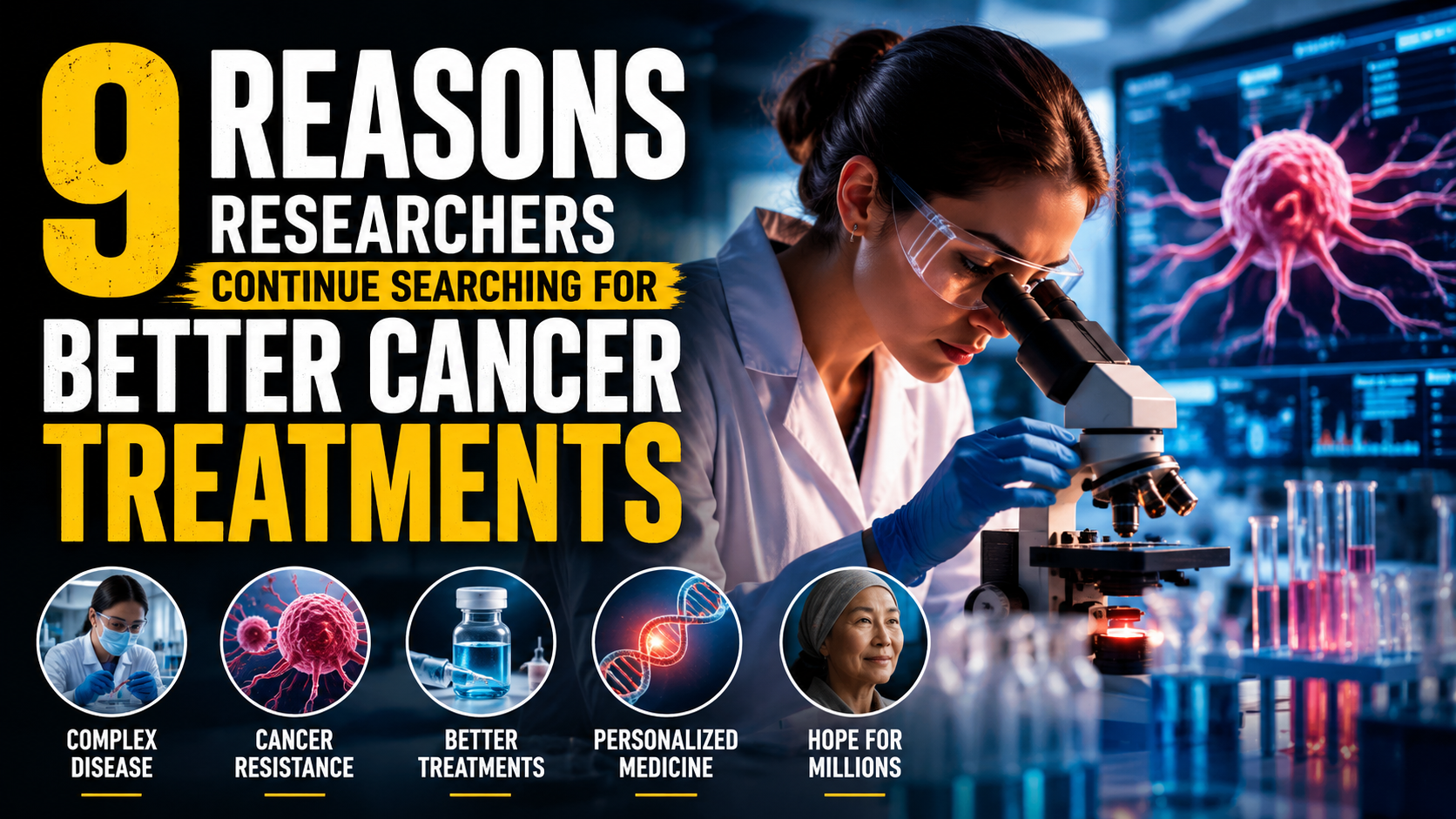
Cancer remains one of the most studied diseases in modern medicine. Over the past several decades, scientists have made remarkable progress in understanding how cancer develops, spreads, and responds to treatment. Advances in surgery, radiation therapy, chemotherapy, targeted drugs, and immunotherapy have helped improve outcomes for many patients and transformed cancer care in ways that would have seemed impossible just a generation ago.
Yet despite these achievements, researchers around the world continue investing enormous time, resources, and expertise into finding better cancer treatments. New therapies enter clinical trials every year, and scientists remain committed to improving how cancer is diagnosed, treated, and managed.
Why is this search still so important?
The answer lies in the complexity of cancer itself. It is not a single disease but a collection of hundreds of different conditions, each with unique characteristics and challenges. While current treatments save countless lives, there is still significant room for improvement.
Here are nine important reasons researchers continue searching for better cancer treatments—and why future discoveries could have a profound impact on millions of people worldwide.
1. Cancer Is Not Just One Disease
One of the biggest misconceptions about cancer is the idea that it is a single illness with a single solution.
In reality, cancer includes hundreds of different diseases that can develop in virtually any part of the body. Breast cancer, lung cancer, ovarian cancer, prostate cancer, leukemia, lymphoma, and many other forms of cancer behave differently and often require different treatment approaches.
Even patients diagnosed with the same type of cancer may have tumors with distinct genetic characteristics.
This complexity means that a treatment effective for one person may not work for another. Researchers continue searching for new therapies because cancer’s diversity requires a wide range of treatment options.
The more scientists learn about individual cancer types, the closer they get to developing highly personalized treatments.
2. Some Cancers Remain Difficult to Treat
Medical advances have significantly improved outcomes for many cancers, but some forms remain especially challenging.
Certain cancers are often detected at later stages, while others may grow aggressively or resist available therapies.
Researchers continue studying these difficult-to-treat cancers to identify new strategies that may improve survival and quality of life.
Areas receiving substantial research attention include:
- Pancreatic cancer
- Ovarian cancer
- Glioblastoma
- Certain lung cancers
- Some metastatic cancers
Progress in these areas could provide meaningful benefits for patients who currently have limited treatment options.
3. Treatment Side Effects Can Be Significant
Many cancer treatments affect not only cancer cells but also healthy tissues.
While modern therapies are often more precise than earlier approaches, side effects can still be physically and emotionally challenging for patients.
Common treatment-related issues may include:
- Fatigue
- Nausea
- Hair loss
- Appetite changes
- Nerve damage
- Cognitive difficulties
- Immune suppression
One major goal of cancer research is developing therapies that target tumors more accurately while minimizing effects on healthy cells.
Better treatments are not just about effectiveness—they are also about improving the patient experience.
4. Cancer Can Become Resistant to Treatment
A major challenge in oncology is treatment resistance.
Cancer cells are highly adaptable. In some cases, they can evolve over time and become less responsive to therapies that initially worked well.
This resistance can make treatment more difficult and may require physicians to explore alternative approaches.
Researchers are studying how resistance develops and how future therapies might overcome or prevent it.
Understanding these mechanisms could help extend treatment effectiveness and improve long-term outcomes.
5. Earlier Intervention Could Improve Outcomes
Researchers increasingly recognize that timing matters.
Many cancers are easier to treat when detected early, before they spread extensively throughout the body.
As a result, scientists are developing:
- Improved screening tools
- Advanced imaging technologies
- Blood-based detection methods
- Genetic testing techniques
- Artificial intelligence-assisted diagnostics
Better treatments often go hand in hand with earlier detection.
Finding cancer sooner may allow doctors to use less aggressive therapies while achieving better results.
6. Personalized Medicine Is Changing the Future of Care
Historically, cancer treatment often followed standardized protocols based primarily on cancer type and stage.
Today, medicine is becoming increasingly personalized.
Researchers now analyze genetic mutations, molecular markers, and biological characteristics unique to each patient’s tumor.
This information may help physicians select therapies that are more likely to work for a specific individual.
Personalized medicine has already influenced treatment strategies for several cancers, and researchers continue exploring ways to make precision care even more effective.
The goal is simple: provide the right treatment to the right patient at the right time.
7. The Immune System Holds Untapped Potential
One of the most exciting developments in cancer research involves the immune system.
For many years, treatment focused primarily on attacking cancer directly through surgery, radiation, or chemotherapy.
More recently, scientists have developed therapies designed to help the body’s own immune defenses recognize and fight cancer cells.
Immunotherapy has produced remarkable results in some patients and continues to be one of the fastest-growing areas of oncology research.
Researchers are now investigating:
- New immune-based therapies
- Cancer vaccines
- Combination treatments
- Personalized immune approaches
Many experts believe the immune system will play an increasingly important role in future cancer care.
8. Researchers Want to Improve Quality of Life
Successful cancer treatment involves more than eliminating disease.
Healthcare professionals increasingly recognize the importance of helping patients maintain physical, emotional, and social well-being throughout treatment and recovery.
Researchers continue studying ways to:
- Reduce side effects
- Improve symptom management
- Support mental health
- Enhance recovery
- Preserve daily functioning
Quality-of-life research helps ensure that advances in treatment benefit patients beyond clinical outcomes alone.
A longer life is important, but so is a better quality of life.
9. Scientific Progress Creates New Opportunities
Perhaps the most powerful reason researchers continue searching for better cancer treatments is that science keeps opening new doors.
Advances in fields such as:
- Genetics
- Molecular biology
- Artificial intelligence
- Nanotechnology
- Biotechnology
- Data science
are creating opportunities that did not exist even a decade ago.
New technologies allow scientists to study cancer with unprecedented detail. Researchers can analyze massive datasets, identify previously hidden patterns, and develop innovative therapies faster than ever before.
Many breakthroughs begin as small discoveries in laboratories before eventually becoming treatments that improve patient care worldwide.
Continued research ensures that these opportunities are fully explored.
How Cancer Research Has Already Changed Lives
It is important to remember how much progress has already been achieved.
Over the years, cancer research has contributed to:
- Earlier diagnosis
- Improved screening programs
- More precise surgeries
- Better radiation techniques
- Targeted therapies
- Immunotherapy advances
- Increased survival rates for many cancers
These improvements have helped countless patients live longer and healthier lives.
The ongoing search for better treatments builds upon this foundation of progress.
What the Future May Hold
While no one can predict exactly what future breakthroughs will emerge, several areas show considerable promise.
Researchers are actively exploring:
- Personalized cancer vaccines
- Next-generation immunotherapies
- Gene-editing technologies
- Blood-based cancer detection tests
- AI-assisted treatment planning
- Combination therapies
- Precision drug delivery systems
Many of these innovations remain under investigation, but they illustrate how rapidly cancer research continues to evolve.
The future of cancer treatment may look very different from today’s standard approaches.
Why Continued Research Matters
Cancer affects millions of individuals and families worldwide.
Every new discovery has the potential to improve diagnosis, treatment, prevention, or quality of life for future patients.
Scientific progress often happens gradually rather than through a single dramatic breakthrough. Small advances accumulate over time, leading to meaningful improvements in patient care.
This ongoing process is why researchers remain committed to asking new questions, testing new ideas, and exploring new possibilities.
Each study contributes another piece to a much larger puzzle.
Final Thoughts
The search for better cancer treatments continues because cancer remains one of medicine’s most complex challenges. Although significant progress has been made, many patients still face difficult diagnoses, treatment side effects, resistant tumors, and limited therapeutic options.
Researchers are working to develop treatments that are more precise, more effective, and less disruptive to everyday life. Advances in genetics, immunology, artificial intelligence, and personalized medicine are providing new tools and insights that could reshape cancer care in the years ahead.
While no single discovery will solve every challenge, the steady pace of scientific innovation offers reason for optimism. Each breakthrough brings researchers closer to treatments that not only extend life but also improve its quality.
For patients, families, healthcare professionals, and researchers alike, the pursuit of better cancer treatments represents more than scientific progress—it represents hope, possibility, and the continued effort to improve lives around the world.







