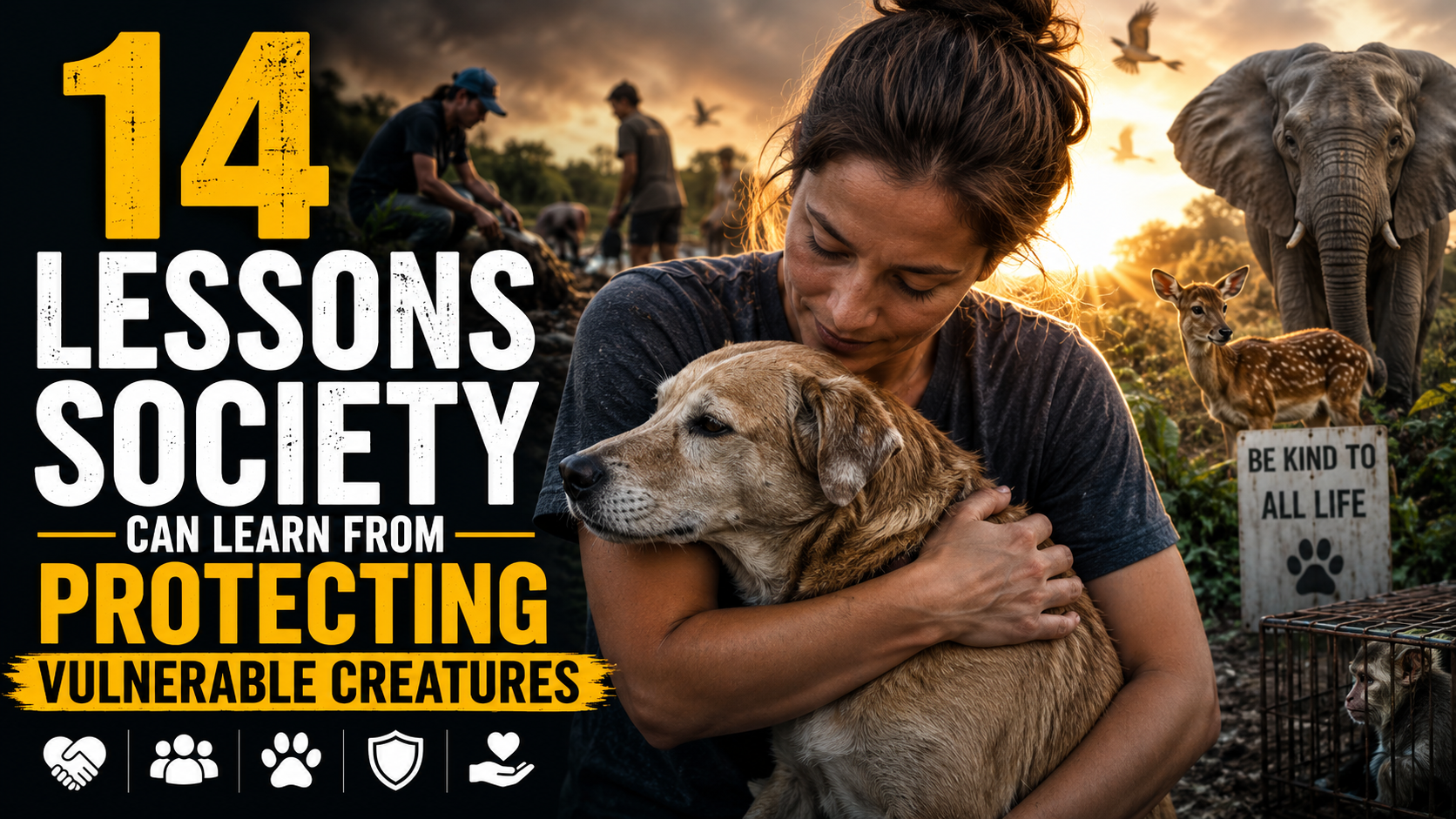
How a More Compassionate Approach to Animals Can Teach Us About Humanity
The way a society treats its most vulnerable members says a great deal about its values. While this idea is often discussed in relation to children, the elderly, or disadvantaged communities, it can also apply to animals and other defenseless creatures that share our world.
Across the globe, growing awareness of animal welfare has sparked important conversations about compassion, responsibility, and ethical behavior. Whether it’s rescuing abandoned pets, protecting endangered wildlife, preserving habitats, or strengthening laws against cruelty, efforts to protect vulnerable creatures reveal important lessons about human nature and the kind of society we want to build.
Interestingly, these lessons extend far beyond animals themselves. They touch on empathy, leadership, community, accountability, and even personal growth. When people learn to care for those who cannot advocate for themselves, they often develop values that improve relationships, communities, and society as a whole.
Here are 14 meaningful lessons society can learn from protecting vulnerable creatures.
1. Compassion Is a Strength, Not a Weakness
Some people mistakenly view compassion as a soft or emotional trait. In reality, genuine compassion requires awareness, courage, and action.
Protecting vulnerable animals often involves stepping in when others ignore suffering. It means recognizing distress and choosing to help rather than look away.
This lesson applies to everyday life as well. Compassion strengthens communities by encouraging people to support one another during difficult times. Rather than making people weaker, empathy often inspires some of the strongest acts of kindness and leadership.
2. Every Life Has Value
One of the most powerful ideas behind animal welfare is the belief that life has inherent worth.
Whether it’s a rescued dog, an injured bird, or an endangered species struggling to survive, efforts to protect vulnerable creatures remind us that value isn’t determined by status, wealth, or usefulness.
This perspective encourages greater respect for all living beings and helps create a culture where dignity and care become shared priorities.
3. Responsibility Extends Beyond Ourselves
Modern life often emphasizes personal goals and individual success. However, protecting vulnerable creatures teaches a broader view of responsibility.
Human actions affect countless forms of life. Urban development, pollution, habitat destruction, and climate change all influence the well-being of animals and ecosystems.
Recognizing this connection encourages people to think beyond immediate personal interests and consider how their choices affect the wider world.
4. Small Acts Can Make a Big Difference
Many people assume meaningful change requires large-scale action. Yet countless animal rescue stories begin with one person making a simple decision to help.
A single phone call can save an injured animal. A donation can support conservation efforts. Adopting a shelter pet can completely transform a life.
These examples highlight an important truth: positive change often starts with small actions that accumulate over time.
The same principle applies to human relationships, community service, and social progress.
5. Prevention Matters More Than Repair
Protecting vulnerable creatures teaches the importance of addressing problems before they become crises.
Preventing neglect, preserving habitats, promoting responsible pet ownership, and supporting conservation programs are often far more effective than attempting to reverse damage later.
Society benefits when this mindset is applied elsewhere. Investing in education, public health, and community support often prevents larger problems from developing in the future.
6. Empathy Can Be Learned and Strengthened
Empathy is not simply something people are born with. Like many skills, it can grow through experience and practice.
Caring for animals often helps individuals become more attentive to the needs and emotions of others. Children who learn kindness toward animals frequently develop stronger empathy toward people as well.
This lesson suggests that compassion can be cultivated through education, positive role models, and meaningful experiences.
7. The Vulnerable Deserve Protection
One of the most important roles of any society is safeguarding those who cannot fully protect themselves.
Animals rely on humans for safety in countless situations. The same principle applies to many people who depend on support, advocacy, or protection during vulnerable periods of life.
When societies prioritize protecting the vulnerable, they demonstrate a commitment to fairness, responsibility, and moral leadership.
8. Cooperation Produces Better Outcomes
Animal welfare efforts often involve collaboration among veterinarians, conservationists, volunteers, rescue organizations, educators, and local communities.
No single group can solve every challenge alone.
This cooperation serves as a reminder that many of society’s biggest problems require collective effort. Progress is often achieved when people work together toward shared goals rather than competing against one another.
9. Education Creates Lasting Change
Laws and regulations play an important role in protecting animals, but education may have an even greater long-term impact.
When people understand animal behavior, environmental issues, and responsible care practices, they make better decisions.
The same concept applies broadly throughout society. Education empowers individuals to think critically, make informed choices, and contribute positively to their communities.
Knowledge often becomes the foundation for lasting progress.
10. Accountability Encourages Better Behavior
Effective protection of vulnerable creatures requires accountability.
When neglect, abuse, or harmful practices face consequences, society sends a clear message about acceptable behavior.
Accountability helps establish standards and reinforces shared values.
This principle extends beyond animal welfare. Healthy communities rely on systems that encourage responsibility and discourage actions that harm others.
Without accountability, even well-intentioned rules lose much of their effectiveness.
11. Patience Is Essential for Meaningful Progress
Many conservation and animal welfare efforts require years or even decades to produce visible results.
Restoring habitats, rebuilding endangered populations, and changing public attitudes rarely happen overnight.
These challenges teach an important lesson about patience. Lasting improvements often develop gradually through consistent effort.
In an age that often prioritizes instant results, protecting vulnerable creatures reminds us that meaningful change frequently takes time.
12. Nature and Humanity Are Deeply Connected
People sometimes view themselves as separate from the natural world, but protecting wildlife demonstrates how interconnected everything truly is.
Healthy ecosystems provide clean air, clean water, food resources, and environmental stability. When species disappear or habitats are damaged, the effects often extend far beyond wildlife.
Recognizing this connection encourages a more balanced relationship with the environment and greater appreciation for the natural systems that support life.
13. Kindness Inspires More Kindness
Acts of compassion often have a ripple effect.
When people witness animal rescues, conservation successes, or stories of extraordinary care, they are frequently inspired to help in their own ways.
Psychologists have long observed that positive behaviors can spread through social influence. One act of kindness encourages another.
Over time, these small actions contribute to a culture where helping others becomes more common and more valued.
14. A Society’s Character Is Revealed by How It Treats the Defenseless
Perhaps the most important lesson is that treatment of vulnerable creatures reflects broader social values.
Protecting those who cannot speak for themselves demonstrates empathy, responsibility, and moral awareness. It shows a willingness to care for lives that offer little in return except their existence.
These values often extend into other areas of society, influencing how people treat neighbors, strangers, and future generations.
In many ways, compassion toward vulnerable creatures becomes a reflection of humanity’s best qualities.
Why These Lessons Matter Today
The modern world faces complex challenges, from environmental concerns and social divisions to public health issues and economic uncertainty. In times like these, lessons rooted in empathy and responsibility become increasingly valuable.
Protecting vulnerable creatures encourages people to think beyond short-term interests and consider long-term consequences. It promotes cooperation, accountability, and respect for life.
These qualities are not only beneficial for animals. They help build stronger communities, healthier relationships, and more resilient societies.
As public awareness grows, more people are recognizing that animal welfare is not a niche issue. It reflects broader principles that shape how societies function and evolve.
Putting These Lessons Into Practice
Applying these lessons doesn’t require dramatic changes.
Simple actions can make a meaningful difference:
- Supporting local animal shelters
- Practicing responsible pet ownership
- Respecting wildlife habitats
- Educating children about kindness toward animals
- Volunteering with rescue organizations
- Supporting conservation efforts
- Reducing environmental waste
- Speaking up against cruelty or neglect
These choices may seem small individually, but collectively they contribute to a more compassionate culture.
Final Thoughts
Protecting vulnerable creatures is about far more than animal welfare. It offers valuable insights into empathy, responsibility, cooperation, and the values that hold communities together.
When people choose to care for those who cannot defend themselves, they strengthen qualities that benefit society as a whole. Compassion becomes action. Responsibility becomes leadership. Kindness becomes a shared value.
The lessons learned from protecting vulnerable creatures remind us that progress is not measured solely by technology, wealth, or achievement. It is also measured by how we treat the lives entrusted to our care.
In the end, a society that protects its most vulnerable members—whether human or animal—creates a stronger, kinder, and more humane future for everyone.







