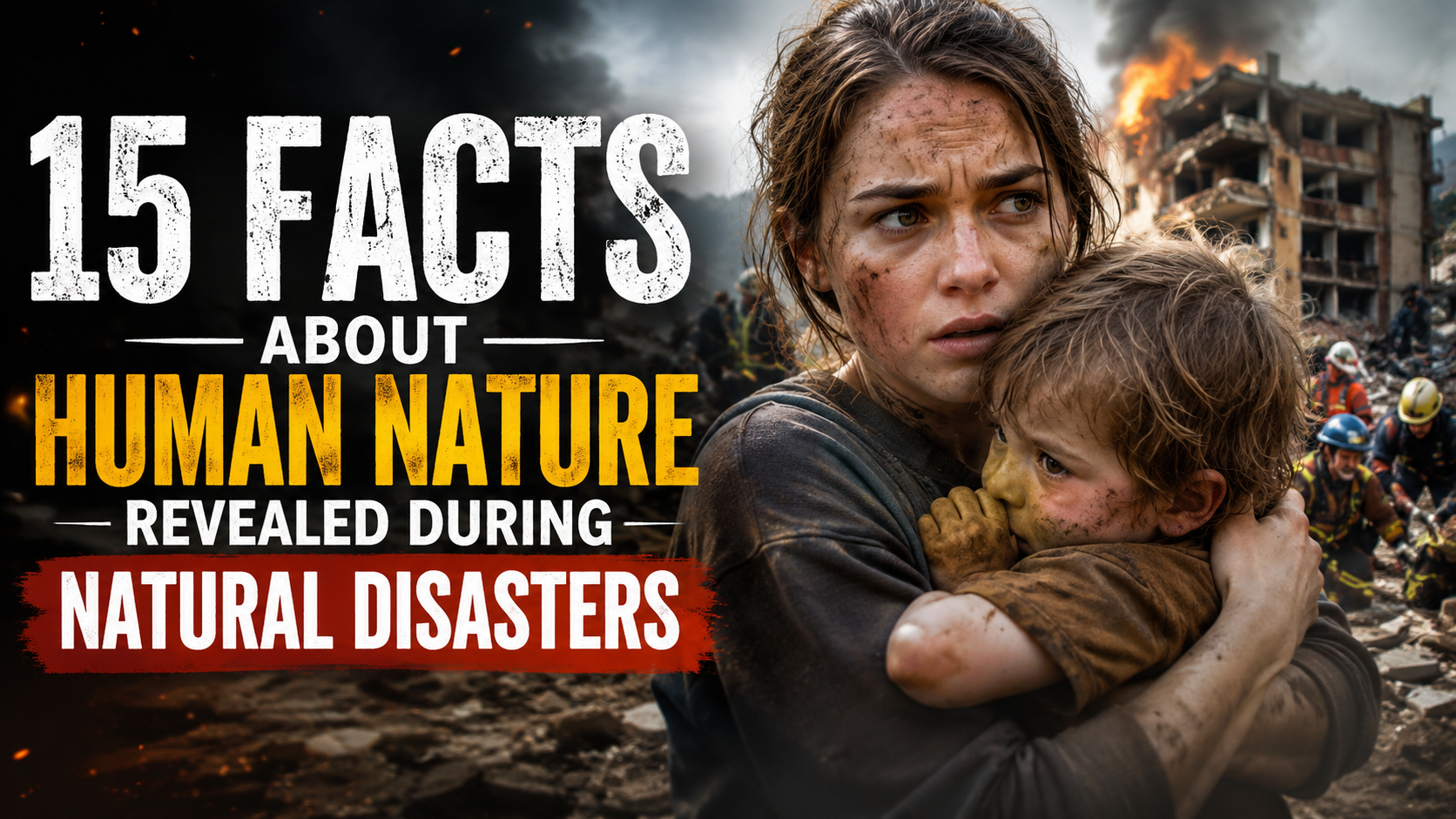
Natural disasters have a unique way of exposing the deepest parts of human behavior. Whether it’s a wildfire racing through a forest, a powerful hurricane flooding entire neighborhoods, or an earthquake shaking a city without warning, these events push people beyond their comfort zones and force them to react under extreme pressure.
While disasters often bring destruction and heartbreak, they also reveal remarkable truths about who we are. In moments when normal routines disappear and survival becomes the priority, people show behaviors that might otherwise remain hidden. Some acts reveal courage, compassion, and resilience, while others highlight fear, uncertainty, and the instinct to protect ourselves.
By observing how individuals and communities respond during crises, researchers have gained valuable insights into human nature. Here are 15 fascinating facts about human behavior that become especially visible during natural disasters.
1. Most People Are More Helpful Than We Think
One of the biggest misconceptions about disasters is that they bring out the worst in people. In reality, the opposite is often true.
When communities face floods, wildfires, or storms, countless individuals step forward to help complete strangers. People open their homes, donate supplies, volunteer at shelters, and risk their own safety to assist others.
Research consistently shows that cooperation becomes more common during emergencies. Rather than descending into chaos, many communities become more united and supportive.
2. Compassion Can Override Fear
Fear is a natural response to danger, but it isn’t always the strongest force driving human behavior.
There are countless stories of people rescuing animals, helping injured neighbors, or returning to dangerous areas to save loved ones. In many cases, empathy becomes more powerful than self-preservation.
This ability to act despite fear demonstrates the incredible influence compassion has on human decision-making.
3. Humans Are Naturally Social During Crises
When uncertainty strikes, people rarely want to face it alone.
Natural disasters often encourage individuals to seek comfort and reassurance from family, friends, neighbors, and even strangers. Communication becomes a critical tool for emotional survival.
Whether through phone calls, social media updates, or face-to-face interactions, people instinctively connect with others when confronting difficult situations.
4. Leadership Emerges in Unexpected Places
Disasters often reveal leaders who never considered themselves leaders before.
During emergencies, ordinary people frequently take charge, organize rescue efforts, distribute resources, and provide guidance to those around them. These individuals may have no formal authority, yet others naturally follow them.
This phenomenon highlights an important truth: leadership is often driven by action rather than position.
5. People Adapt Faster Than They Expect
Many individuals underestimate their ability to handle adversity.
When faced with disaster, people often develop new routines, learn unfamiliar skills, and adjust to challenging conditions much faster than they believed possible.
Human beings possess an extraordinary capacity for adaptation, especially when survival and recovery depend on it.
6. Community Bonds Become Stronger
Natural disasters frequently strengthen social connections.
Neighbors who barely spoke before may suddenly work together to clear debris, share food, or care for vulnerable residents. These shared experiences create a sense of unity that can last long after the crisis ends.
Difficult circumstances often remind people how interconnected they truly are.
7. People Look for Meaning in Tragedy
Humans naturally seek explanations for major events.
After disasters, many individuals reflect on life priorities, personal values, and future goals. Some become more grateful for what they have, while others develop a stronger sense of purpose.
Finding meaning in hardship can help people cope with loss and begin the recovery process.
8. Acts of Kindness Have a Powerful Ripple Effect
One generous action often inspires another.
A volunteer helping distribute supplies may motivate others to contribute. A family offering temporary shelter may encourage neighbors to do the same.
Psychologists call this social contagion, where positive behaviors spread through communities. During disasters, these ripple effects can dramatically improve collective resilience.
9. People Often Underestimate Risk
Despite increasing awareness of natural hazards, many individuals struggle to recognize danger until it becomes immediate.
Some residents delay evacuation orders because previous warnings turned out to be less severe than expected. Others assume disasters won’t affect them personally.
This tendency reflects a psychological bias known as normalcy bias, where people expect life to continue as usual even when evidence suggests otherwise.
10. Emotional Resilience Is More Common Than Expected
Although disasters can be emotionally devastating, many people recover more effectively than they anticipate.
Resilience does not mean avoiding sadness, fear, or stress. Instead, it involves adapting to challenges and gradually rebuilding after difficult experiences.
Studies show that most individuals demonstrate remarkable emotional strength when given support and resources.
11. Shared Struggles Create Stronger Connections
People who endure difficult experiences together often form deep bonds.
Survivors of hurricanes, earthquakes, and wildfires frequently describe feeling connected to others who lived through the same event. Shared hardships create understanding that can be difficult to explain to outsiders.
These relationships often provide long-term emotional support during recovery.
12. Humans Have a Strong Desire to Protect Vulnerable Lives
One of the most inspiring aspects of disaster response is the effort people make to protect those who cannot protect themselves.
Children, elderly individuals, pets, wildlife, and people with disabilities often become priorities during rescue efforts. Stories of individuals risking their lives to save animals or assist strangers demonstrate the depth of human empathy.
These actions reveal a powerful instinct to care for vulnerable members of society.
13. Hope Plays a Critical Role in Survival
Hope is more than just a positive emotion—it can be a survival tool.
People who maintain hope during difficult situations are often better able to make decisions, stay motivated, and continue working toward recovery.
Even small signs of progress can boost morale and help communities move forward after devastating events.
14. Cooperation Usually Outperforms Competition
In times of crisis, collaboration often proves more effective than individual effort.
Communities recover faster when residents share information, coordinate resources, and support one another. People naturally recognize that working together increases everyone’s chances of success.
This tendency demonstrates that cooperation is deeply rooted in human survival strategies.
15. Disasters Reveal the Best and Worst of Human Nature
Perhaps the most important lesson from natural disasters is that they expose human nature in its rawest form.
While fear, stress, and confusion can sometimes lead to poor decisions, acts of courage, generosity, and selflessness are far more common than many people realize.
Stories of neighbors helping neighbors, volunteers assisting strangers, and individuals risking their own safety for others remind us that humanity possesses an extraordinary capacity for kindness.
Final Thoughts
Natural disasters are among the most challenging experiences people can face, but they also provide a rare window into human behavior. When routines disappear and survival becomes uncertain, our true instincts emerge.
Again and again, these events reveal a remarkable pattern: people are often stronger, kinder, and more resilient than they imagine. Communities unite, strangers become allies, and acts of compassion shine through even the darkest circumstances.
While disasters leave behind destruction, they also leave behind powerful reminders of humanity’s greatest strengths. In moments of crisis, people frequently discover courage they didn’t know they possessed, proving that even in the face of overwhelming adversity, hope, empathy, and cooperation remain some of our most defining traits.







