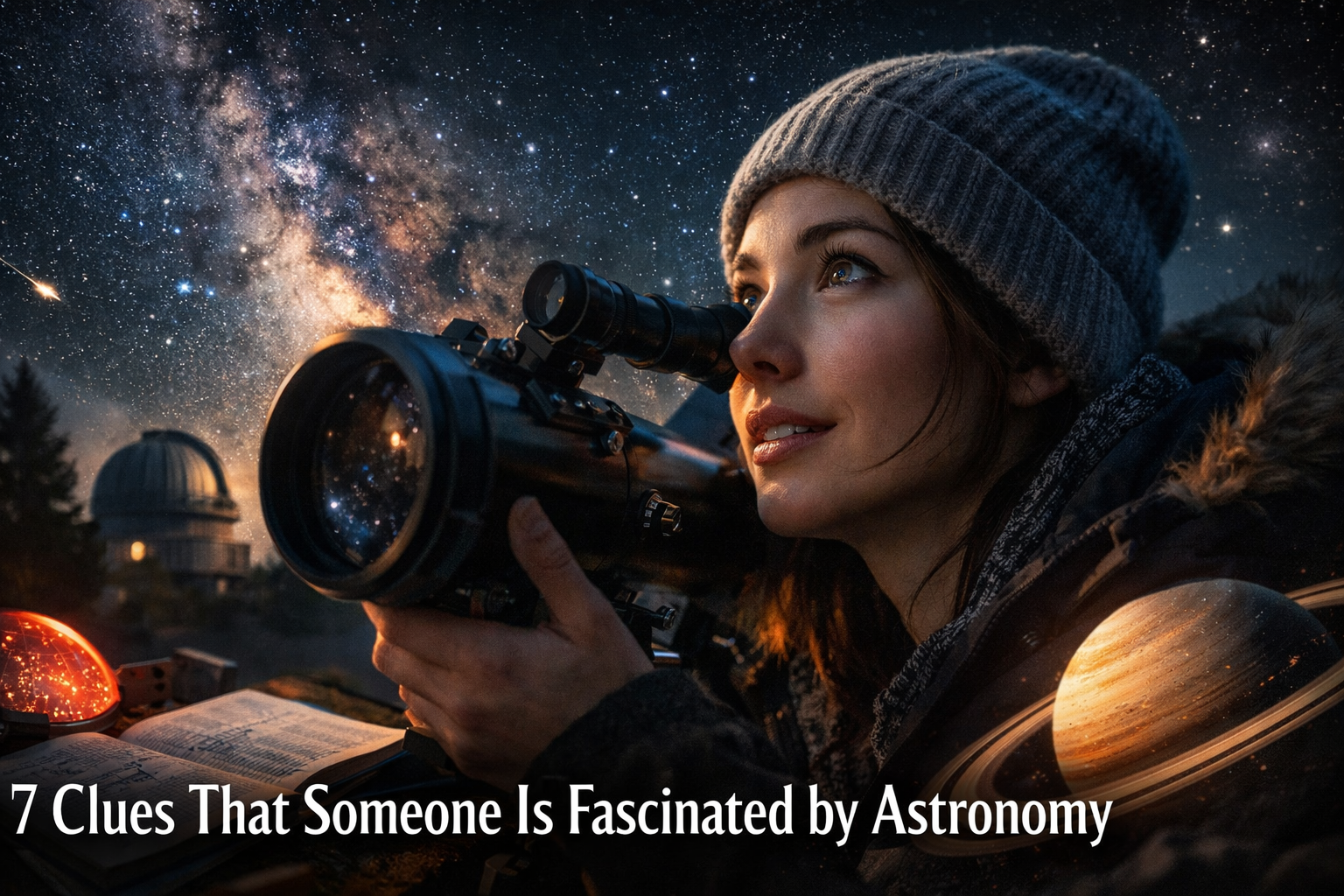
Some hobbies come and go. Others grow into lifelong passions that shape the way people see the world. Astronomy often falls into the second category. What may begin as a casual glance at the Moon or a passing interest in a meteor shower can evolve into a lasting fascination with the universe and everything it contains.
People who love astronomy aren’t always professional scientists or telescope owners. In fact, many enthusiasts simply enjoy learning about space, watching the night sky, and exploring the mysteries that lie beyond Earth. Their curiosity often reveals itself through subtle habits, conversations, and behaviors that others may not immediately notice.
Whether they’re staying up late to catch a lunar eclipse or getting excited about a newly discovered exoplanet, astronomy enthusiasts tend to share certain characteristics. Their interest goes beyond memorizing facts—it reflects a genuine sense of wonder about the cosmos.
Here are seven clues that often indicate someone is truly fascinated by astronomy.
1. They Frequently Look Up at the Sky
One of the most obvious signs of an astronomy enthusiast is surprisingly simple: they spend a lot of time looking upward.
While many people pass through their day without paying much attention to the sky, astronomy lovers rarely ignore it. They notice the phase of the Moon, the position of bright planets, unusual cloud formations, and changes in the stars throughout the year.
A clear night often becomes an invitation rather than just part of the background.
You might notice them stepping outside during evening gatherings, pausing during walks to admire a bright object overhead, or checking the sky before heading home.
For them, the sky is never just scenery. It’s an ever-changing display filled with things worth observing.
Why It Matters
Astronomy begins with observation. Long before telescopes existed, people learned about the universe simply by watching the heavens. Modern enthusiasts continue that tradition, often developing a habit of skywatching that becomes second nature.
2. They Get Excited About Celestial Events
Most people hear about astronomical events after they happen.
Astronomy enthusiasts usually know about them beforehand.
Whether it’s a meteor shower, a planetary conjunction, a lunar eclipse, or a rare comet appearance, they often keep track of upcoming events weeks or even months in advance.
You may hear them say things like:
- “There’s a meteor shower this weekend.”
- “Venus will be especially bright tonight.”
- “A lunar eclipse is coming next month.”
- “Jupiter and Mars will appear close together tomorrow.”
These events generate genuine excitement because they provide opportunities to witness something unique and often beautiful.
Why It Matters
People naturally pay attention to things they care about. Staying informed about astronomical events is a strong indication that someone actively engages with the subject rather than viewing it as occasional entertainment.
3. They Enjoy Learning About Space Beyond the Headlines
Someone fascinated by astronomy rarely stops at surface-level information.
When a news story mentions a newly discovered planet or a breakthrough in space exploration, they often want to know more. They read articles, watch documentaries, listen to podcasts, and follow scientific developments related to the universe.
Their curiosity extends beyond popular headlines.
Topics that often capture their interest include:
- Black holes
- Exoplanets
- Galaxies
- Cosmology
- Stellar evolution
- Space missions
- Astrobiology
They aren’t necessarily experts, but they enjoy expanding their understanding of how the universe works.
Why It Matters
A deep interest in astronomy is fueled by curiosity. People who continually seek new knowledge about space tend to maintain that fascination over time.
4. They See Perspective Differently
Astronomy has a unique way of influencing how people think about life.
Those who spend time learning about the universe often develop a broader perspective. When confronted with the immense scale of galaxies, stars, and cosmic time, everyday frustrations can seem smaller by comparison.
This doesn’t mean they ignore real-world problems. Instead, they often view challenges within a larger context.
Many astronomy enthusiasts appreciate ideas such as:
- Humanity’s place in the universe
- The interconnectedness of life
- The age of the cosmos
- The rarity of Earth-like conditions
Conversations with them may occasionally drift toward big-picture questions about existence, exploration, or the future of humanity.
Why It Matters
Astronomy encourages people to think beyond immediate concerns. That sense of perspective is often one of the most meaningful aspects of the hobby.
5. They Notice Details Others Overlook
People fascinated by astronomy tend to be attentive observers.
Because skywatching requires patience and attention, many enthusiasts become skilled at noticing subtle changes and patterns.
For example, they might immediately recognize:
- A particularly bright planet
- An unusual lunar halo
- A passing satellite
- Seasonal changes in star patterns
- The appearance of the International Space Station
While others may walk by without noticing, astronomy enthusiasts often spot these details quickly.
This observational mindset frequently extends into other areas of life as well.
Why It Matters
Astronomy rewards careful observation. The habit of paying attention to small details often becomes a defining characteristic of those who enjoy studying the night sky.
6. They Love Sharing Interesting Space Facts
People who are passionate about astronomy often enjoy discussing it with others.
You may find them enthusiastically explaining why the Moon appears larger near the horizon, describing how stars are born, or sharing an interesting fact about distant galaxies.
Their goal usually isn’t to impress anyone.
Instead, they’re genuinely excited by the subject and enjoy sharing that excitement.
Some favorite conversation starters might include:
- How long sunlight takes to reach Earth
- The possibility of life elsewhere in the universe
- The size of giant stars
- Recent space missions
- The age of the universe
Their enthusiasm often becomes contagious, inspiring curiosity in others.
Why It Matters
People naturally talk about things they love. A willingness to share astronomy-related facts is often a strong indicator of genuine interest.
7. They Experience Awe When Thinking About the Universe
Perhaps the strongest clue of all is a sense of wonder.
Astronomy enthusiasts are often captivated not just by scientific facts but by the emotional experience of contemplating the cosmos.
Looking at the Milky Way, witnessing an eclipse, or imagining distant galaxies can inspire feelings of awe that are difficult to describe.
Researchers have found that experiences of awe can influence how people think, encouraging curiosity, humility, and appreciation for the world around them.
For many astronomy lovers, that emotional connection is what keeps them engaged year after year.
Why It Matters
Facts can spark interest, but wonder sustains it. The feeling of awe is often at the heart of a lasting fascination with astronomy.
Why Astronomy Appeals to So Many People
Astronomy occupies a unique place among hobbies and scientific interests.
Unlike many subjects that require specialized training before they become enjoyable, astronomy is accessible to nearly everyone. All it takes is a clear sky and a willingness to look up.
The field combines several elements that naturally attract human curiosity:
Exploration
Space represents one of the last great frontiers.
Mystery
Countless questions about the universe remain unanswered.
Beauty
Stars, planets, nebulae, and galaxies create breathtaking sights.
Discovery
New findings continually reshape our understanding of the cosmos.
These qualities make astronomy appealing to people of all ages and backgrounds.
The Difference Between Casual Interest and Genuine Fascination
Many people enjoy learning occasional facts about space, but a deeper fascination often reveals itself through consistency.
Someone who is genuinely interested in astronomy tends to:
- Follow astronomical news regularly.
- Recognize major constellations.
- Watch significant celestial events.
- Spend time observing the sky.
- Continue learning over many years.
Their curiosity remains active even when no major event is occurring.
In other words, astronomy becomes part of how they experience the world rather than an occasional source of entertainment.
How Astronomy Shapes Everyday Life
An interest in astronomy can influence daily habits in surprising ways.
For example, enthusiasts may:
- Plan vacations around dark-sky locations.
- Wake up early to observe planetary alignments.
- Stay outside longer on clear nights.
- Join astronomy clubs or online communities.
- Use stargazing apps regularly.
Even small routines—such as checking the Moon’s phase or identifying bright planets—can become enjoyable parts of everyday life.
Over time, these habits strengthen the connection between the individual and the night sky.
The Role of Technology in Modern Astronomy Enthusiasm
Today’s astronomy enthusiasts have access to tools that previous generations could only imagine.
Smartphone apps can identify stars instantly. Space telescopes deliver stunning images from across the universe. Live streams allow people to follow rocket launches and astronomical events in real time.
These technologies make it easier than ever for beginners to deepen their interest.
At the same time, the fundamental appeal remains unchanged.
Whether using advanced equipment or simply observing with the naked eye, people are still motivated by the same desire to understand what lies beyond Earth.
Why Fascination with Astronomy Often Lasts a Lifetime
Unlike many hobbies, astronomy has no clear endpoint.
The universe is simply too vast and too complex to fully explore.
There is always something new to learn:
- A newly discovered exoplanet
- An unusual celestial event
- A breakthrough in cosmology
- A stunning image from a space telescope
This endless supply of discoveries helps keep curiosity alive.
Many enthusiasts who first became interested in astronomy as children remain passionate decades later.
Final Thoughts
A fascination with astronomy often reveals itself through simple but meaningful behaviors: looking up at the night sky, following celestial events, seeking knowledge about space, sharing discoveries with others, and maintaining a sense of wonder about the universe. While not every astronomy enthusiast owns a telescope or studies astrophysics, most share a common trait—a deep curiosity about what exists beyond our planet.
In a world filled with distractions, astronomy offers something rare: an opportunity to step back, look upward, and reflect on our place in a universe far larger than ourselves. If someone regularly displays these seven signs, there’s a good chance they aren’t just interested in astronomy—they’re genuinely captivated by it.







