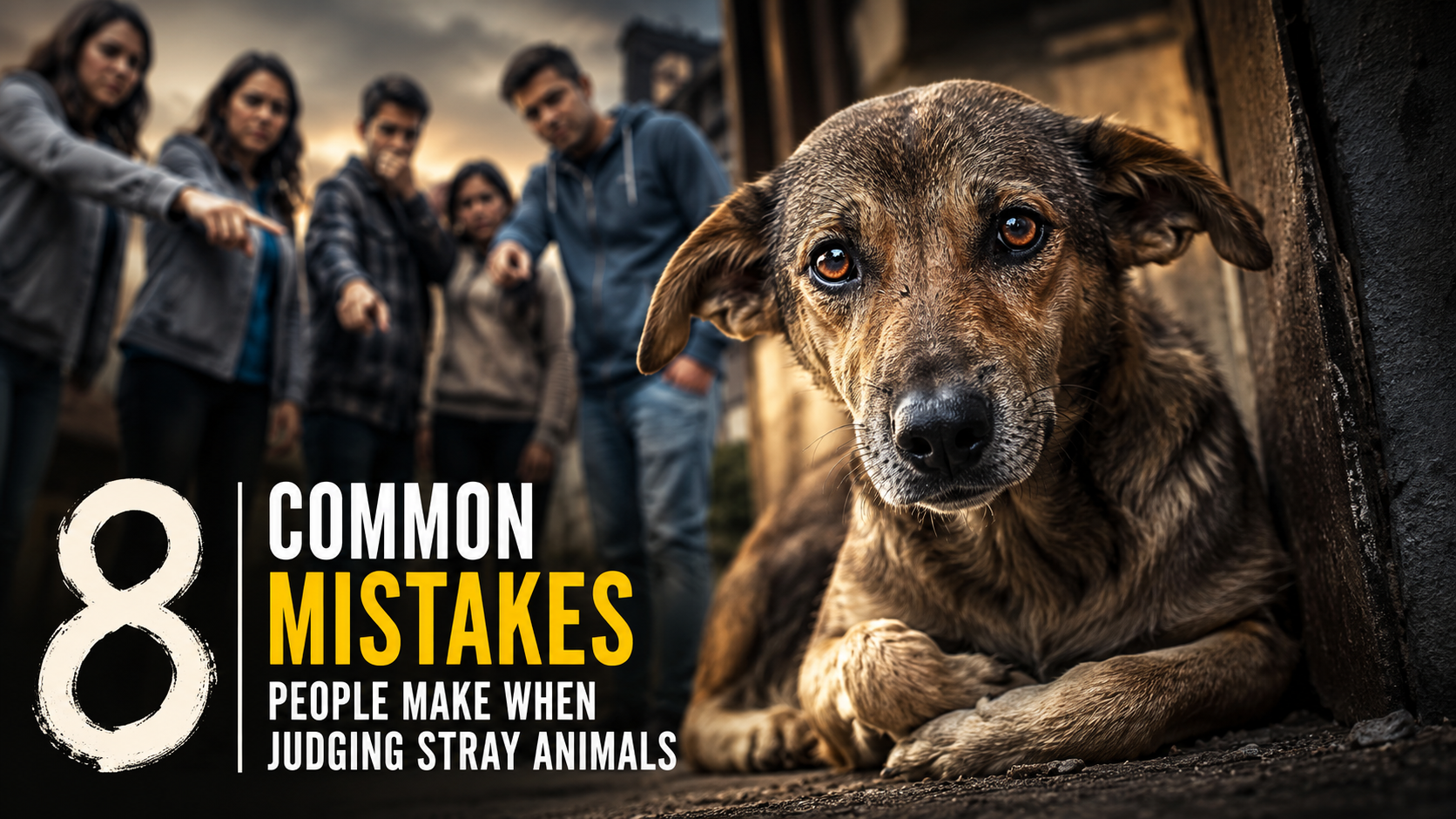
Stray animals are a familiar sight in many communities around the world. Whether it’s a cat wandering through an alley or a dog resting near a storefront, these animals often attract attention—and unfortunately, quick judgments. Many people make assumptions about stray animals based on appearance, behavior, or popular stereotypes without understanding the realities of life on the streets.
The truth is that stray animals are far more complex than many people realize. Their actions are often shaped by survival, past experiences, and environmental challenges rather than aggression, laziness, or lack of intelligence. Misunderstanding them can lead to fear, neglect, and missed opportunities to help animals in need.
If you’ve ever found yourself making assumptions about a stray animal, you’re not alone. Here are eight common mistakes people make when judging stray animals and why taking a closer look can change your perspective.
1. Assuming Every Stray Animal Is Dangerous
One of the most widespread misconceptions is that all stray animals are aggressive or dangerous. While caution is always important when approaching an unfamiliar animal, being homeless does not automatically make an animal threatening.
Many stray animals are simply trying to survive. They spend their days searching for food, water, and safe places to rest. In many cases, they avoid human interaction because they are scared, not because they want to attack.
Animals living on the streets often develop defensive behaviors to protect themselves. A growl, hiss, or bark may be a reaction to fear rather than a sign of aggression. Understanding this difference is essential.
It’s important to remember that every animal has a unique personality. Some may be cautious, while others can be surprisingly friendly and trusting despite difficult circumstances.
2. Believing Stray Animals Are Unhealthy by Nature
People often assume that stray animals are always sick, weak, or diseased. While some do suffer from health issues due to limited access to veterinary care, many stray animals are remarkably resilient.
Animals have strong survival instincts. Some strays manage to maintain good physical condition despite challenging environments. Their ability to find food sources, avoid dangers, and adapt to changing conditions is often impressive.
Judging an animal’s overall health based solely on its status as a stray can be misleading. A dirty coat or thin appearance may reflect temporary hardship rather than chronic illness.
At the same time, many stray animals would benefit greatly from medical care, vaccinations, and proper nutrition. The key is to avoid assuming that every stray is either perfectly healthy or severely sick without evidence.
3. Thinking Strays Are Strays Because Nobody Wanted Them
Another common mistake is assuming that every stray animal was abandoned because it was difficult to manage or undesirable as a pet.
In reality, animals become strays for many different reasons. Some get lost during storms, accidents, or natural disasters. Others escape from homes due to fear, curiosity, or damaged fences. Economic hardship, housing issues, or personal emergencies can also separate pets from their families.
Animal shelters frequently reunite lost pets with owners who have been desperately searching for them. This highlights an important truth: not every animal on the street was intentionally abandoned.
Making assumptions about an animal’s past can prevent people from seeing the bigger picture and understanding the many circumstances that can lead to homelessness.
4. Mistaking Fear for Aggression
Fear and aggression often look similar, especially to people unfamiliar with animal behavior.
A frightened dog may bark loudly, while a scared cat may arch its back, flatten its ears, or hiss. These reactions can appear threatening, but they are often attempts to create distance and avoid conflict.
Imagine being in an unfamiliar environment surrounded by larger creatures you don’t trust. Most animals respond to uncertainty by becoming defensive.
When people misinterpret fear as hostility, they may react harshly or avoid helping an animal that desperately needs assistance. Learning to recognize signs of stress and anxiety can lead to safer and more compassionate interactions.
Patience and understanding often reveal a very different side of animals initially perceived as aggressive.
5. Assuming Stray Animals Lack Intelligence
Some people view stray animals as less intelligent because they live outside traditional homes. In reality, surviving on the streets often requires remarkable problem-solving skills.
Stray animals learn where food can be found, identify safe routes through busy areas, avoid potential threats, and adapt to changing conditions. They develop strategies that help them survive day after day.
Many stray cats and dogs demonstrate exceptional memory, awareness, and adaptability. They can recognize friendly individuals, remember feeding schedules, and navigate complex environments.
Their survival depends heavily on observation and quick decision-making. Far from being unintelligent, many stray animals possess practical skills that allow them to thrive in difficult circumstances.
6. Judging Animals Based Solely on Appearance
Appearance can be deceiving, especially when it comes to stray animals.
A tangled coat, scars, missing fur, or a thin frame may cause people to view an animal negatively. However, these physical signs often tell a story of survival rather than worth.
Animals living outdoors face numerous challenges, including weather extremes, injuries, food shortages, and territorial conflicts. Their appearance may reflect these hardships rather than their personality, health potential, or ability to become loving companions.
Many rescue organizations have transformed neglected-looking animals into healthy, happy pets through proper care and attention. Stories of dramatic recoveries remind us that outward appearance rarely tells the whole story.
Judging an animal solely by how it looks can lead people to overlook incredible opportunities for companionship and connection.
7. Believing Stray Animals Cannot Become Good Pets
A common myth is that stray animals are impossible to train, socialize, or integrate into family life. While some animals require extra patience, many adapt extremely well to loving homes.
Animal shelters around the world are filled with former strays that have become loyal, affectionate companions. Given consistent care, routine, and positive experiences, many animals quickly learn to trust people.
Some strays even appear especially grateful for stability after experiencing uncertainty for long periods.
Of course, every animal is different. Some may need behavioral support, while others adjust almost immediately. The important thing is recognizing that a difficult past does not automatically determine an animal’s future.
Countless families have discovered that rescued strays can become some of the most devoted pets imaginable.
8. Forgetting That Stray Animals Feel Fear, Stress, and Comfort
Perhaps the biggest mistake people make is forgetting that stray animals experience emotions and sensations much like other animals.
They feel hunger, thirst, fear, loneliness, and discomfort. They also experience relief when they find shelter, safety, food, and kindness.
Because stray animals are often seen from a distance, it’s easy to view them as part of the background rather than as living beings facing daily challenges. This emotional disconnect can reduce empathy and understanding.
Recognizing that these animals have experiences and needs encourages more compassionate choices. Whether that means supporting local shelters, reporting injured animals, providing food responsibly, or simply treating them with respect, small actions can make a meaningful difference.
Why Our Judgments Matter
The way people perceive stray animals influences how communities respond to them. Misconceptions can lead to fear, neglect, or harmful treatment, while understanding can inspire rescue efforts, adoption programs, and humane solutions.
When people take time to learn about animal behavior and the realities of life on the streets, they often discover that many of their assumptions were inaccurate. Compassion grows when knowledge replaces stereotypes.
Every stray animal has a story. Some were lost, some were abandoned, and some were born without homes. Regardless of their background, they are individuals navigating challenges most people never experience.
Final Thoughts
Stray animals are often judged quickly and unfairly. Assumptions about aggression, intelligence, health, or worth can prevent people from seeing these animals for what they truly are—living creatures doing their best to survive difficult circumstances.
The next time you encounter a stray cat or dog, consider looking beyond first impressions. What may appear to be an aggressive, unhealthy, or unwanted animal could actually be a frightened survivor, a lost pet, or a future companion waiting for a second chance.
By replacing judgment with understanding, we not only help animals—we also become more compassionate and informed members of our communities.







