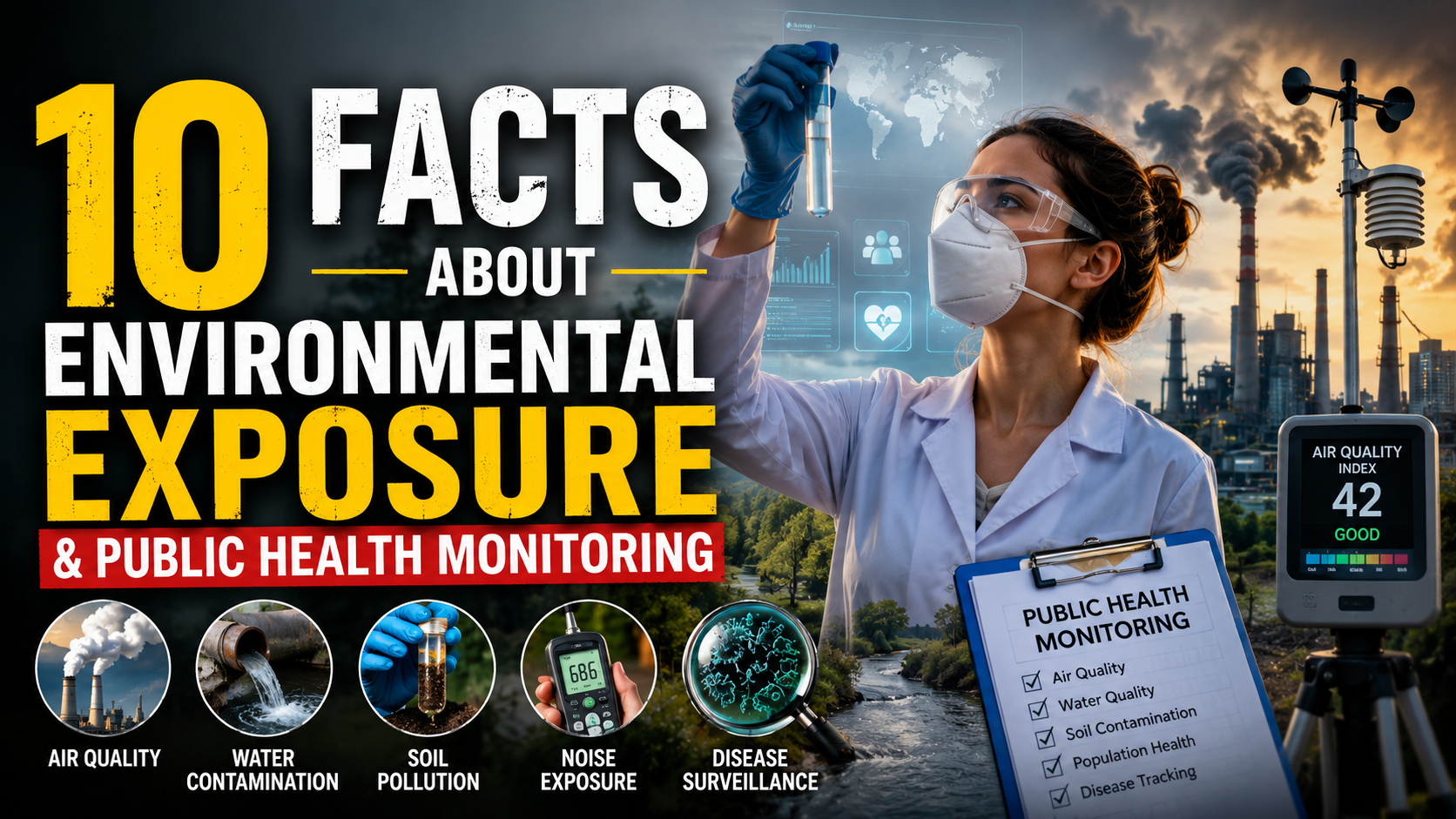
Every day, people interact with the environment in countless ways. We breathe the air around us, drink water from local sources, eat food grown in different regions, and spend time in homes, workplaces, and communities that can influence our overall health. Most of these interactions happen without a second thought. However, scientists and public health experts know that environmental conditions can play an important role in long-term well-being.
This is why environmental exposure and public health monitoring have become increasingly important topics around the world. Governments, researchers, healthcare professionals, and environmental agencies work continuously to understand how environmental factors may affect human health and how potential risks can be identified early.
While environmental health research is often discussed during major news events, many people know surprisingly little about how these investigations actually work. Public health monitoring is a complex field that combines science, data analysis, environmental testing, medicine, and community engagement.
Here are 10 important facts about environmental exposure and public health monitoring that everyone should understand.
1. Environmental Exposure Happens Every Day
When people hear the term “environmental exposure,” they often imagine rare industrial accidents or major pollution events. In reality, environmental exposure is something everyone experiences daily.
Environmental exposure simply refers to contact with substances or conditions in the surrounding environment. These may include:
- Air quality
- Drinking water
- Soil conditions
- Noise levels
- Sunlight
- Household products
- Workplace environments
- Traffic-related pollution
Not all exposures are harmful. In fact, many environmental influences support health and well-being. Fresh air, green spaces, clean water, and natural environments can provide significant benefits.
The goal of environmental health research is not to eliminate exposure altogether but to understand which exposures may affect health and under what circumstances.
2. Public Health Monitoring Relies on Data Collection
One of the most important tools in public health is data.
Public health agencies gather information from hospitals, clinics, laboratories, environmental monitoring stations, health surveys, and scientific studies. This information helps researchers identify trends, patterns, and potential areas of concern.
Without data collection, it would be difficult to detect changes in disease rates, environmental conditions, or population health outcomes.
Monitoring systems allow experts to track health indicators over time and compare findings across different locations and populations.
In many ways, public health monitoring functions as an early warning system for communities.
3. Finding a Pattern Doesn’t Automatically Prove a Cause
This is one of the most misunderstood aspects of environmental health research.
Sometimes researchers notice unusual patterns, such as an increase in certain illnesses within a particular area. While these observations are important, identifying a pattern does not automatically reveal the cause.
Scientists must investigate numerous factors before drawing conclusions.
For example, researchers may examine:
- Age demographics
- Lifestyle habits
- Occupational exposures
- Medical histories
- Genetic factors
- Environmental conditions
- Population changes
Establishing a direct link between an environmental factor and a health outcome often requires years of research and multiple studies.
This careful approach helps ensure findings are accurate and evidence-based.
4. Air Quality Is Closely Monitored
Air pollution remains one of the most widely monitored environmental health concerns worldwide.
Public health agencies use specialized equipment to measure particles, gases, and pollutants in the atmosphere. Monitoring stations collect data that helps experts understand air quality trends and identify areas that may require further investigation.
Air quality monitoring can help communities:
- Track pollution levels
- Inform public health recommendations
- Support environmental regulations
- Identify long-term trends
Many regions now provide real-time air quality information to residents, allowing people to make informed decisions about outdoor activities.
5. Water Testing Plays a Major Role in Public Health
Access to safe drinking water is one of the most significant public health achievements in modern history.
Water monitoring programs routinely test supplies for contaminants, microorganisms, chemical compounds, and other indicators of quality.
Regular testing helps identify potential issues before they become larger problems.
Public health agencies, environmental regulators, and local water authorities work together to maintain water safety standards and respond when concerns arise.
Ongoing monitoring helps protect millions of people every day.
6. Communities Often Help Identify Potential Concerns
Public health investigations do not always begin in laboratories.
In many cases, residents are the first to notice unusual patterns or raise questions about environmental conditions in their communities.
People may observe changes such as:
- Unusual odors
- Water quality concerns
- Air quality issues
- Increases in certain health conditions
- Changes in local ecosystems
Community observations can provide valuable information that helps guide further investigation.
While community concerns alone do not establish scientific conclusions, they often play an important role in identifying areas that deserve closer examination.
7. Technology Is Transforming Environmental Monitoring
Modern technology has dramatically improved how environmental data is collected and analyzed.
Researchers now use advanced tools such as:
- Satellite imagery
- Geographic information systems (GIS)
- Remote sensors
- Artificial intelligence
- Predictive modeling
- Real-time monitoring equipment
These technologies allow scientists to detect patterns more quickly and study environmental conditions with greater precision than ever before.
As technology continues to advance, environmental monitoring systems are becoming increasingly sophisticated and informative.
8. Long-Term Studies Are Often Necessary
Many environmental health questions cannot be answered overnight.
Some health outcomes develop slowly over years or even decades. As a result, researchers often conduct long-term studies to better understand potential relationships between environmental exposures and health outcomes.
These studies may follow populations over extended periods while tracking changes in health, behavior, and environmental conditions.
Although long-term research requires patience, it often provides the strongest evidence for understanding complex public health issues.
This is one reason environmental investigations sometimes take longer than the public expects.
9. Public Health Monitoring Focuses on Prevention
One of the primary goals of public health is prevention.
Rather than waiting for health problems to emerge, public health professionals aim to identify potential risks early and reduce exposure whenever possible.
Prevention strategies may include:
- Educational campaigns
- Safety guidelines
- Environmental regulations
- Infrastructure improvements
- Community health programs
- Workplace protections
Preventive efforts have contributed to major improvements in public health throughout history, including cleaner water, safer workplaces, reduced infectious disease transmission, and improved environmental standards.
Many of the health protections people benefit from today began with public health monitoring and preventive action.
10. Environmental Health Is a Shared Responsibility
Protecting public health involves cooperation across many sectors.
Government agencies, healthcare providers, researchers, environmental organizations, businesses, and community members all play important roles in identifying and addressing environmental health challenges.
Individuals also contribute through everyday actions such as:
- Staying informed
- Reporting concerns
- Following public health guidance
- Supporting environmental stewardship
- Participating in community discussions
Effective public health monitoring works best when scientific expertise and community engagement come together.
Why Environmental Health Matters More Than Ever
Modern society offers many benefits, but it also introduces new environmental challenges. Rapid urban development, industrial growth, changing technologies, and evolving lifestyles create complex questions that researchers continue to explore.
At the same time, advances in science have dramatically improved our ability to detect, measure, and understand environmental influences on health.
This combination of growing challenges and improving technology makes environmental health one of the most important fields in public policy and scientific research today.
As populations grow and environmental conditions continue to change, public health monitoring will remain essential for identifying potential risks and protecting community well-being.
How Public Health Monitoring Protects Communities
Many of the safeguards people take for granted exist because of ongoing monitoring efforts.
Examples include:
- Clean drinking water standards
- Food safety inspections
- Air quality alerts
- Disease surveillance programs
- Workplace safety regulations
- Environmental testing initiatives
These systems operate largely behind the scenes, yet they play a vital role in supporting public health every day.
Their purpose is not simply to respond to problems but to anticipate and prevent them whenever possible.
Final Thoughts
Environmental exposure and public health monitoring are closely connected parts of modern health protection. From air and water quality to disease tracking and environmental research, monitoring systems help scientists and public health professionals understand how environmental conditions may affect communities over time.
Although environmental investigations can be complex and sometimes take years to complete, they serve an essential purpose: providing reliable evidence that supports informed decisions and protects public well-being.
The more people understand how environmental health monitoring works, the better equipped they are to participate in conversations about community health, environmental stewardship, and public safety.
Ultimately, public health monitoring is not just about collecting data. It’s about using science, technology, and collaboration to build healthier communities and create safer environments for future generations.







