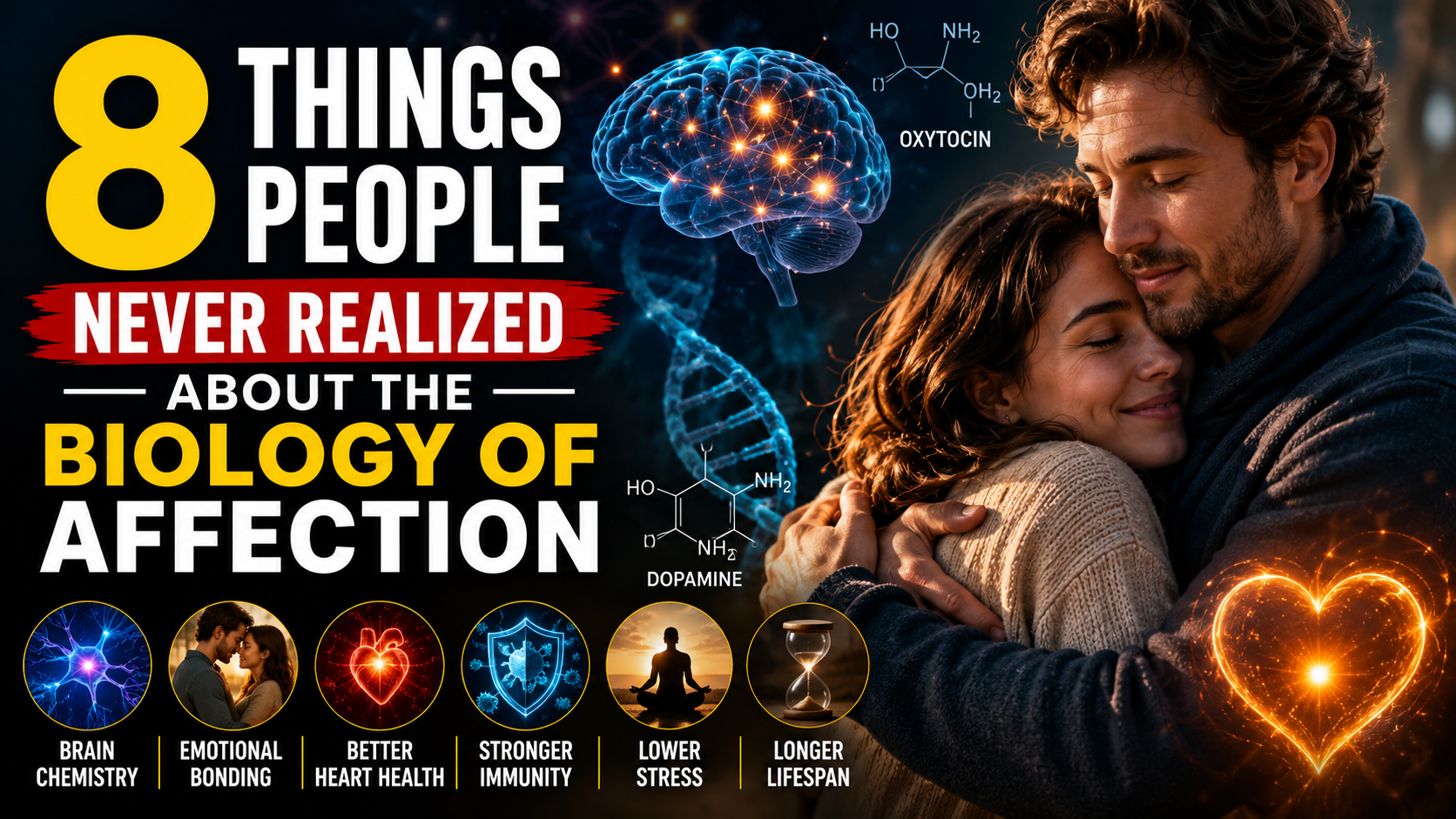
Affection is one of the most fundamental human experiences. It shapes how we connect, how we form relationships, and even how we regulate stress and emotions. While affection often feels like a simple emotional response—such as a hug, a kind word, or a moment of closeness—science shows that it is deeply rooted in biology.
Behind every gesture of care or emotional bond, there is a complex interaction of hormones, brain activity, and evolutionary mechanisms. Researchers have spent decades studying how affection works at a biological level, and their findings reveal that it is far more powerful than most people realize.
Here are eight surprising things people often don’t realize about the biology of affection.
1. Affection Triggers Powerful Brain Chemicals
One of the most important discoveries in neuroscience is that affectionate interactions directly influence brain chemistry.
When people experience affection—whether through touch, conversation, or emotional connection—the brain releases chemicals such as:
- Oxytocin, often called the “bonding hormone”
- Dopamine, associated with pleasure and reward
- Serotonin, which contributes to mood stability
These chemicals work together to create feelings of warmth, trust, and emotional safety.
What feels like a simple moment of closeness is actually a coordinated neurochemical response that strengthens human connection.
2. Physical Touch Plays a Major Biological Role
Touch is one of the most powerful forms of affection, and its effects go far beyond emotional comfort.
Scientific studies show that safe, positive physical contact can:
- Lower heart rate
- Reduce cortisol (stress hormone) levels
- Increase feelings of trust
- Improve emotional regulation
Even brief physical gestures such as a handshake, hug, or pat on the back can activate the parasympathetic nervous system, which helps the body relax.
This is why touch is often considered a biological need rather than just a social behavior.
3. Affection Helps Regulate Stress Hormones
Stress is a natural response to challenges, but chronic stress can negatively affect both physical and mental health.
Research suggests that affectionate interactions can help regulate the body’s stress response system.
When people feel emotionally supported, cortisol levels tend to decrease, allowing the body to return to a calmer state more quickly.
This biological effect explains why talking to a loved one or receiving emotional support often feels physically relieving.
Affection does not eliminate stress, but it helps the body manage it more effectively.
4. The Brain Treats Social Bonding Like Reward
The human brain is wired to seek connection.
Neuroscientific research shows that social bonding activates the brain’s reward system, particularly areas associated with pleasure and motivation.
Dopamine plays a key role in this process. It reinforces behaviors that lead to positive social interactions, encouraging people to seek relationships and maintain emotional bonds.
This reward system explains why affection feels naturally satisfying and why humans are motivated to build close relationships throughout life.
5. Early Affection Shapes Emotional Development
Affection in early childhood plays a critical role in long-term emotional development.
Studies in developmental psychology suggest that children who receive consistent emotional warmth and care tend to develop:
- Stronger emotional regulation skills
- Greater resilience to stress
- Healthier social relationships later in life
Early affectionate experiences help shape the developing brain, influencing how individuals respond to emotions as adults.
This does not mean that lack of early affection determines outcomes permanently, but it can influence developmental pathways.
6. Affection Strengthens the Immune System
One of the most surprising findings in biological research is the connection between emotional connection and immune function.
Studies suggest that people who experience strong social bonds and affectionate relationships often show:
- Better immune response
- Faster recovery from illness
- Lower levels of inflammation
While the exact mechanisms are still being studied, researchers believe that reduced stress levels and improved emotional well-being play a major role.
In short, affection may not only make people feel better emotionally—it may also support physical health.
7. The Body Responds to Emotional Safety
Affection is not only about emotional closeness—it is also about perceived safety.
When a person feels emotionally secure, the body shifts into a calmer physiological state. This includes:
- Slower heart rate
- Decreased blood pressure
- Reduced stress hormone activity
- Improved digestion and recovery functions
This state is often referred to as “rest and restore” mode, where the body prioritizes healing and balance.
Emotional safety created through affection is therefore essential for overall well-being.
8. Human Beings Are Biologically Wired for Connection
Perhaps the most important insight from research is that humans are inherently social creatures.
From an evolutionary perspective, survival depended on cooperation, bonding, and group living. As a result, the human brain developed systems that reward connection and discourage isolation.
Affection is not just a cultural behavior—it is a biological necessity shaped by evolution.
Without social bonding, humans experience increased stress, emotional distress, and even physical health risks over time.
This explains why loneliness is now considered a significant health concern in modern society.
The Science Behind Affection and Connection
Modern neuroscience, psychology, and biology all point to the same conclusion: affection is deeply embedded in human biology.
It influences:
- Brain chemistry
- Hormonal balance
- Emotional regulation
- Physical health
- Social behavior
Rather than being a simple emotional experience, affection is a complex biological system designed to support survival and well-being.
Why Affection Matters More Than Ever
In today’s fast-paced and often digitally connected world, genuine affection can sometimes be overlooked. However, research suggests that human connection is more important than ever for maintaining mental and physical health.
Even small moments of affection—such as kind words, active listening, or supportive gestures—can have meaningful biological effects.
These interactions help reinforce emotional stability and create a sense of belonging.
Final Thoughts
The biology of affection reveals a powerful truth: human connection is not optional—it is fundamental.
From brain chemistry to immune system function, affection influences nearly every aspect of human health. It shapes how we think, how we feel, and how we interact with the world around us.
Understanding this biological foundation helps explain why relationships matter so deeply and why emotional connection is essential for a healthy life.
In the end, affection is more than a feeling—it is a biological system that supports survival, resilience, and well-being across the human lifespan.







