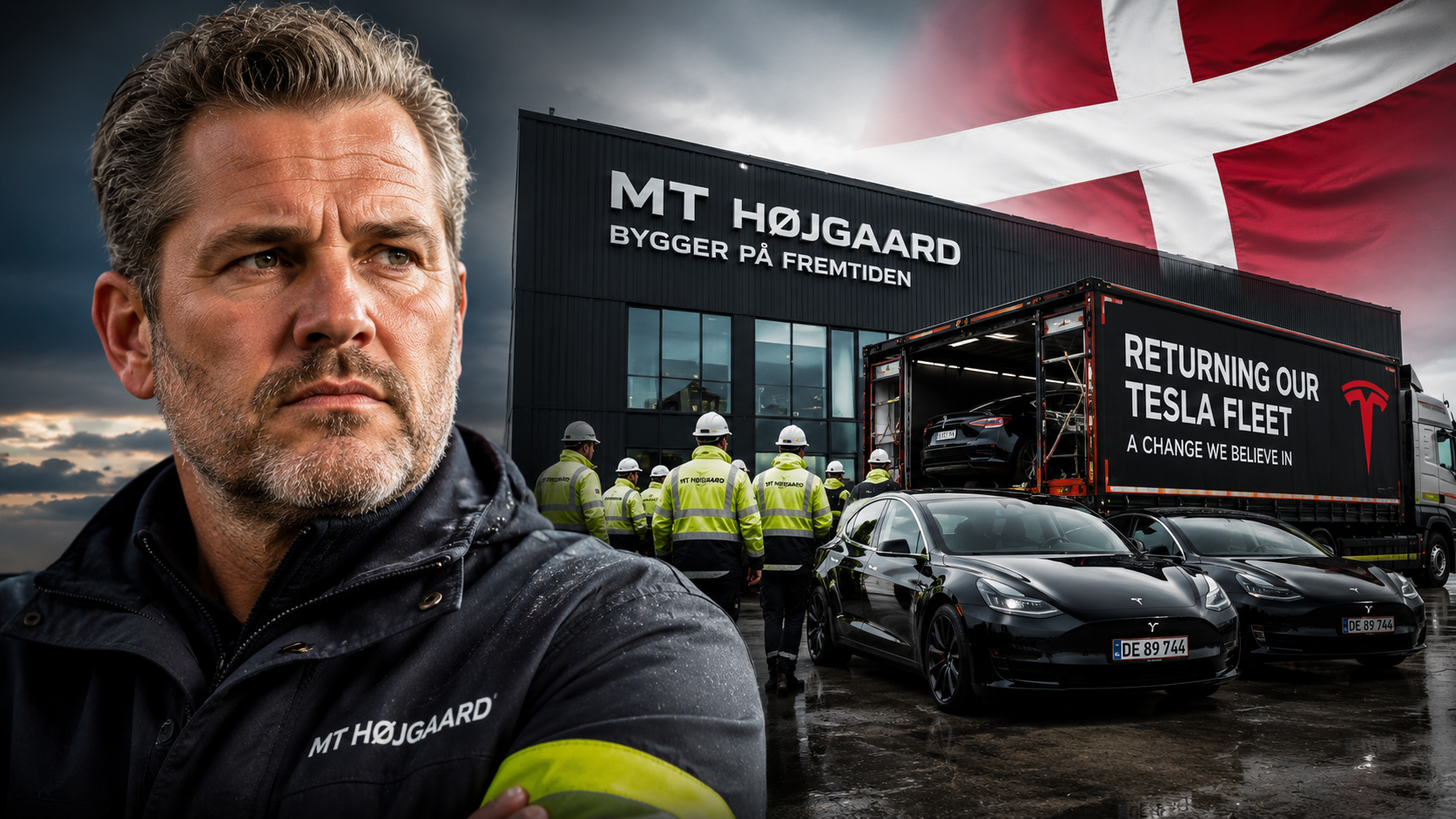
In recent years, electric vehicles have become a major part of corporate sustainability strategies. Businesses across Europe and beyond have invested heavily in electric fleets to reduce emissions, lower fuel costs, and demonstrate their commitment to environmental responsibility. Among the most popular choices has been Tesla, a brand that helped redefine the electric vehicle industry and accelerate the transition away from fossil fuels.
However, one decision by Denmark’s largest construction company sparked widespread discussion across the business world. The firm made headlines after returning its entire fleet of Tesla vehicles and choosing alternative electric car manufacturers instead.
At first glance, the move seemed surprising. Tesla remains one of the most recognized names in the EV market, known for innovation, performance, and extensive charging infrastructure. Yet large organizations often evaluate vehicles based on a broader range of factors than individual consumers.
The company’s decision highlighted important issues surrounding corporate values, employee expectations, brand reputation, operational needs, and long-term business strategy.
While every organization has its own reasons for fleet management decisions, the case offers valuable insights into how modern companies choose business partners and suppliers. Here are seven key reasons that help explain why Denmark’s largest construction firm decided to part ways with its Tesla fleet.
1. Corporate Values Have Become a Major Business Consideration
In the past, fleet purchasing decisions were largely based on cost, performance, and reliability. Today, many organizations evaluate suppliers through a much wider lens.
Large companies increasingly consider environmental policies, workplace culture, governance standards, and public reputation when selecting partners.
For businesses operating in highly visible industries, every purchasing decision sends a message to employees, customers, investors, and the public.
As corporate social responsibility becomes more important, companies are paying closer attention to whether their suppliers reflect the values they want associated with their own brand.
In this context, vehicle purchases are no longer viewed solely as transportation decisions. They have become extensions of a company’s identity and public image.
The Danish construction firm’s move demonstrates how values can influence purchasing decisions just as strongly as technical specifications.
2. Employee Sentiment Matters More Than Ever
Modern businesses recognize that employee satisfaction extends beyond salaries and benefits.
Workers increasingly expect their employers to make decisions that align with ethical standards and organizational principles. When employees feel strongly about a particular issue, management often takes those opinions seriously.
Corporate vehicle fleets are highly visible within organizations. Employees drive them daily, interact with clients in them, and often associate them with company culture.
If a significant portion of a workforce expresses concerns about a supplier or brand, leadership may reevaluate existing partnerships.
This reflects a broader shift in workplace dynamics. Employees today want to feel proud of the organizations they work for and the choices those organizations make.
As a result, internal feedback can play a surprisingly important role in procurement decisions.
3. Brand Reputation Has Real Business Consequences
A company’s reputation is one of its most valuable assets.
Construction firms, particularly large ones, depend heavily on trust. Clients want assurance that projects will be completed responsibly, safely, and professionally. Public perception can influence contract opportunities, stakeholder relationships, and long-term growth.
When a supplier becomes the subject of controversy or public debate, businesses sometimes assess whether that association could affect their own reputation.
This doesn’t necessarily mean a product is inadequate. Rather, organizations often consider how external perceptions might impact their brand image.
For companies operating in competitive markets, reputation management has become a strategic priority.
The decision to replace a vehicle fleet may therefore involve factors that go far beyond vehicle performance alone.
4. Fleet Diversity Reduces Dependence on a Single Supplier
One of the most common principles in corporate procurement is diversification.
Relying too heavily on one supplier can create operational risks. Supply chain disruptions, service issues, pricing changes, or future uncertainty can all affect business operations.
By working with multiple manufacturers, organizations gain greater flexibility and bargaining power.
The electric vehicle market has matured significantly in recent years. Companies now have access to a growing number of competitive alternatives from European, Asian, and American manufacturers.
This expanded selection allows businesses to compare features, service networks, pricing structures, and long-term support options more effectively than ever before.
Returning an entire fleet may have been part of a broader strategy aimed at reducing dependence on a single automotive brand.
Diversification often strengthens resilience and creates more options for future growth.
5. The EV Market Has Become Far More Competitive
A decade ago, Tesla dominated conversations about electric vehicles.
Today, the landscape looks very different.
Major automakers have invested billions of dollars into electric vehicle development. As a result, businesses can choose from a wide range of EVs that offer competitive range, advanced technology, strong safety ratings, and attractive pricing.
Manufacturers across Europe have introduced vehicles specifically designed for commercial and fleet use. Many of these models provide features tailored to business operations, including fleet management tools, service agreements, and regional support networks.
The increased competition means organizations are no longer limited to a handful of options.
Instead, they can evaluate dozens of models that meet operational requirements while aligning with company objectives.
This competitive environment gives businesses more freedom to select vehicles based on their unique needs rather than brand recognition alone.
6. Sustainability Strategies Are Becoming More Sophisticated
At first glance, replacing one electric vehicle brand with another may seem unusual from a sustainability perspective.
However, modern sustainability programs involve much more than simply reducing emissions.
Many organizations now evaluate the entire lifecycle of products, including manufacturing practices, supply chains, labor policies, resource sourcing, and long-term environmental impact.
Companies increasingly seek partnerships that support broader sustainability goals rather than focusing on a single metric.
This means fleet decisions may be influenced by complex assessments involving environmental, social, and governance considerations—often referred to as ESG factors.
For large corporations, sustainability strategies are becoming more comprehensive and data-driven.
As these frameworks evolve, procurement decisions naturally become more nuanced.
The Danish firm’s decision reflects how businesses are broadening their definition of sustainability beyond vehicle electrification alone.
7. Companies Want Greater Control Over Their Public Identity
One of the most significant lessons from this situation is the growing importance of corporate independence.
Organizations spend years building their reputations, defining their values, and establishing trust with stakeholders. Many prefer to maintain clear control over how their brand is perceived.
When a supplier’s public image becomes highly prominent, businesses may find themselves unintentionally associated with conversations unrelated to their core operations.
To avoid potential distractions, some companies choose suppliers whose brands complement rather than dominate their own identity.
This allows organizations to keep attention focused on their products, services, and mission.
For large construction firms managing major infrastructure projects, maintaining a clear and consistent corporate image can be especially important.
Fleet decisions therefore become part of a broader communication strategy aimed at reinforcing organizational priorities.
What This Decision Says About Modern Business
The story of Denmark’s largest construction company returning its Tesla fleet is ultimately about much more than cars.
It reflects a broader transformation in how businesses make decisions.
Historically, procurement departments focused primarily on price, performance, and operational efficiency. While these factors remain important, modern organizations now consider a much wider range of variables.
Corporate values, stakeholder expectations, employee sentiment, sustainability goals, risk management, and brand reputation all play a role in major purchasing decisions.
This shift illustrates how interconnected today’s business environment has become.
A fleet vehicle is no longer just a mode of transportation. It can influence recruitment efforts, investor confidence, public perception, and organizational culture.
As a result, companies increasingly approach procurement with a long-term strategic perspective.
The Bigger Picture for Electric Vehicles
Importantly, the decision should not be interpreted as a rejection of electric vehicles themselves.
In fact, many organizations that move away from one EV manufacturer continue expanding their electric fleets through other brands.
The transition toward electric transportation remains a central component of corporate sustainability plans across Europe and much of the world.
Businesses continue investing heavily in zero-emission vehicles, charging infrastructure, and clean transportation technologies.
What is changing is the level of scrutiny applied to supplier relationships.
Companies are no longer asking only, “Is this vehicle electric?” They are also asking, “Does this supplier align with our long-term goals and values?”
That distinction is becoming increasingly important in corporate decision-making.
Final Thoughts
Denmark’s largest construction firm’s decision to return its entire Tesla fleet generated attention because it highlighted the changing nature of business leadership in the modern era.
The move was likely influenced by a combination of factors, including corporate values, employee perspectives, reputation management, supplier diversification, sustainability objectives, market competition, and brand strategy.
Whether one agrees with the decision or not, it offers a fascinating glimpse into how organizations evaluate partnerships in today’s business environment.
The story also demonstrates that procurement decisions are no longer based solely on products themselves. Increasingly, they reflect broader questions about identity, responsibility, and long-term strategy.
As companies continue adapting to evolving expectations from employees, customers, and investors, decisions like this may become more common.
In the end, the lesson is clear: in modern business, what a company buys can say just as much about its values as what it sells.