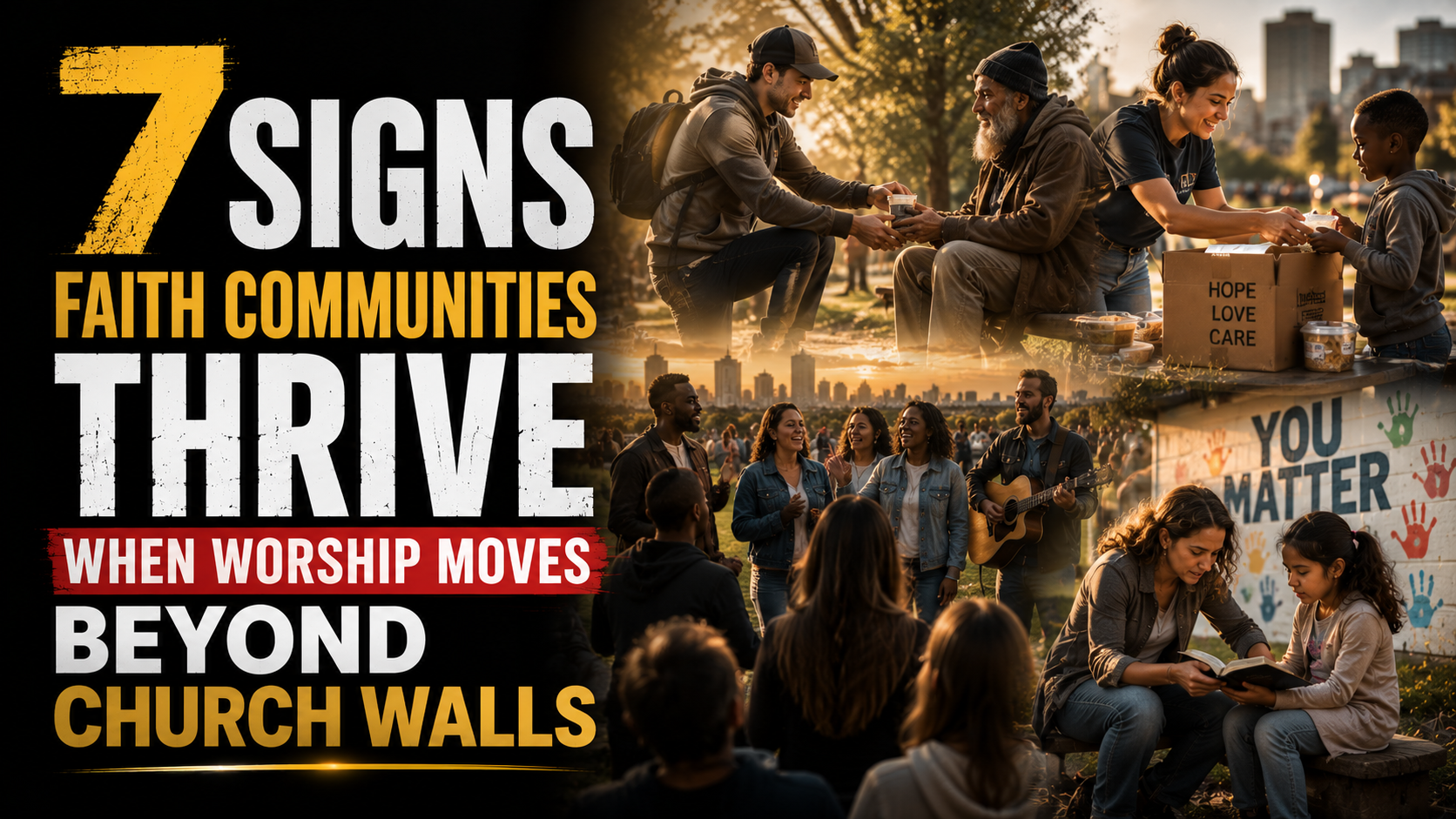
For centuries, worship has been closely associated with physical places—church buildings, sanctuaries, chapels, and designated sacred spaces. But in many modern faith communities, something important is shifting. Worship is no longer confined strictly to church walls. Instead, it is increasingly taking place in homes, neighborhoods, workplaces, online spaces, and community gatherings.
This expansion does not replace traditional worship. Rather, it extends it, allowing faith to become more integrated into everyday life. For many believers and leaders, this shift reflects a deeper understanding of spirituality—one that is lived, not just observed once a week.
When worship moves beyond church buildings, it often signals a thriving and evolving faith community. It shows that spiritual life is not limited to rituals or locations but is active in daily actions, relationships, and service.
Here are seven clear signs that faith communities thrive when worship extends beyond church walls.
1. Faith Becomes Part of Daily Life
One of the strongest indicators of a thriving faith community is when spiritual practices are woven into everyday routines.
Instead of being limited to Sunday services, prayer, reflection, gratitude, and moral reflection become part of daily habits.
This integration helps believers see faith not as a separate activity but as a continuous way of living.
When spirituality influences everyday decisions, it becomes more meaningful and sustainable.
2. Community Gatherings Extend Into Homes and Neighborhoods
As worship expands beyond church buildings, smaller gatherings often begin to take place in homes, parks, and local spaces.
These informal settings allow for deeper conversation, stronger relationships, and more personal expressions of faith.
People often feel more comfortable sharing openly in these environments compared to larger formal settings.
This shift helps build stronger, more connected communities.
3. Service Becomes a Form of Worship
In thriving faith communities, acts of service are seen as an extension of worship itself.
Helping neighbors, volunteering, supporting local charities, and caring for those in need become spiritual expressions.
This understanding transforms faith from something practiced only in words into something demonstrated through action.
Service-based worship strengthens both individual purpose and community impact.
4. Digital Spaces Become Places of Connection
Modern faith communities increasingly use digital platforms to share teachings, prayers, and encouragement.
Online Bible studies, livestreamed services, and social media discussions allow people to stay connected regardless of physical location.
For many, digital spaces have become meaningful extensions of spiritual life.
This accessibility helps faith communities reach wider and more diverse audiences.
5. Personal Spiritual Growth Is Encouraged
When worship moves beyond traditional walls, individuals often take greater responsibility for their own spiritual development.
Rather than relying solely on structured services, believers may engage in personal study, reflection, and prayer.
This encourages deeper internal growth and a more personal relationship with faith.
It also helps individuals develop spiritual independence while staying connected to their community.
6. Faith Influences Social Action and Justice
Thriving faith communities often express their beliefs through engagement with social issues.
This can include supporting humanitarian efforts, advocating for justice, or addressing local community needs.
When worship extends into real-world action, faith becomes more visible and impactful.
This connection between belief and action strengthens the relevance of spiritual teachings in modern society.
7. Relationships Become the Center of Worship
Perhaps the most important sign of a thriving faith community is a shift in focus toward relationships.
Instead of emphasizing location or formality, worship becomes centered on how people treat one another.
Kindness, forgiveness, support, and empathy become core expressions of faith.
When relationships are prioritized, communities often become more inclusive, compassionate, and resilient.
Why Worship Beyond Church Walls Matters
The movement of worship beyond traditional spaces reflects a broader transformation in how people understand spirituality.
Rather than being limited to a specific time or place, faith becomes something lived continuously and expressed in multiple ways.
This approach allows communities to adapt to modern life while maintaining their core beliefs and values.
It also encourages greater participation, accessibility, and authenticity in spiritual practice.
Final Thoughts
When worship moves beyond church walls, it often signals a healthy and evolving faith community.
It shows that spirituality is not confined to buildings or rituals but is present in everyday actions, relationships, and choices.
The seven signs above highlight how faith can thrive when it becomes more integrated into daily life and shared spaces.
Ultimately, thriving faith communities are those where belief is not just spoken on Sundays but lived throughout the week—in homes, neighborhoods, digital spaces, and acts of service that reflect compassion and connection.