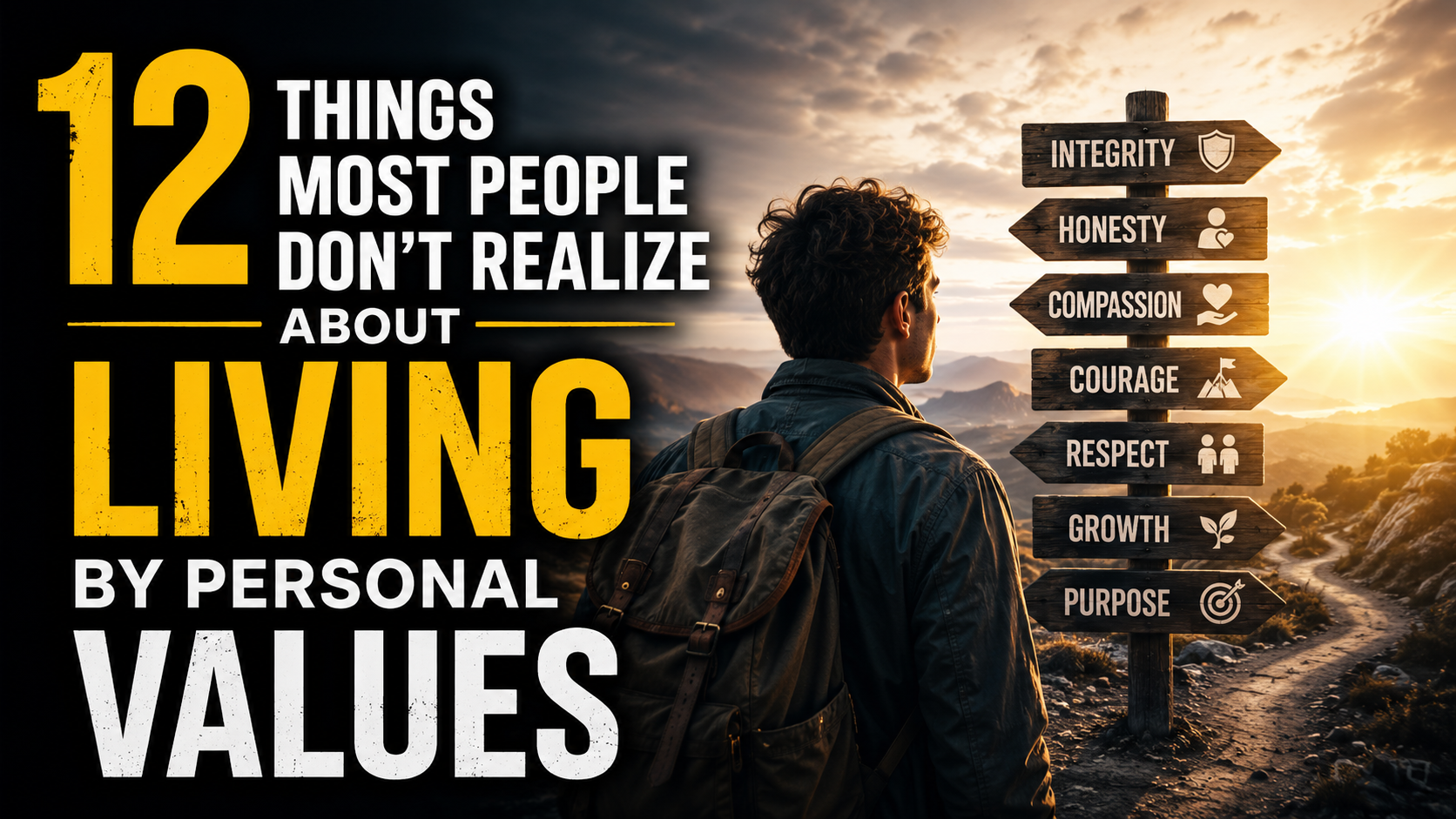
In a world filled with opinions, expectations, trends, and constant comparison, staying true to yourself can be surprisingly difficult. Every day, people are influenced by social media, workplace pressures, family expectations, cultural norms, and countless messages about what success should look like.
Yet beneath all of these external influences lies something much more important: personal values.
Values are the principles and beliefs that guide how we live, make decisions, and treat others. They shape our priorities, influence our relationships, and help determine the direction of our lives. Whether someone values honesty, compassion, faith, family, growth, integrity, service, or responsibility, these principles often act as an internal compass.
Many people understand that values matter, but fewer realize how deeply they affect happiness, confidence, resilience, and long-term fulfillment.
Living according to personal values is not always easy. In fact, it often requires difficult choices, courage, and self-awareness. However, psychologists consistently find that people who align their actions with their values tend to experience greater life satisfaction and emotional well-being.
Here are twelve things most people don’t realize about living by personal values.
1. Values Simplify Difficult Decisions
Life presents countless decisions, both large and small.
Some choices are straightforward. Others involve competing priorities, uncertainty, or pressure from others.
When people have a clear understanding of their values, decision-making becomes easier.
Imagine someone who deeply values family. When faced with a career opportunity that requires sacrificing important family relationships, their values provide guidance.
Similarly, someone who values integrity may find it easier to reject opportunities that conflict with their principles.
Values act as filters.
Instead of evaluating every decision from scratch, people can ask:
“Does this align with what matters most to me?”
That simple question often provides clarity during complicated situations.
2. Living by Values Builds Self-Respect
Many people seek confidence through external achievements.
They believe confidence comes from success, recognition, status, or approval.
While these factors can feel rewarding, genuine self-respect often comes from something deeper.
People develop trust in themselves when their actions consistently match their beliefs.
Every time someone honors a personal value, they reinforce their sense of integrity.
Over time, this creates internal confidence.
They know they can rely on themselves because they consistently act according to their principles.
This type of confidence tends to be more stable than confidence based solely on external validation.
3. Values Reduce the Need for Constant Approval
One of the biggest challenges in modern life is the desire to please everyone.
Many people spend significant energy worrying about what others think.
Living by personal values helps reduce this pressure.
When individuals have a strong understanding of what matters to them, they become less dependent on outside approval.
This doesn’t mean they ignore feedback or stop caring about others.
It simply means their decisions are guided primarily by their principles rather than public opinion.
Psychologists often describe this as developing an internal source of validation.
People feel more secure because their self-worth is tied to values rather than popularity.
4. Values Create Consistency
Trust is built through consistency.
Whether in friendships, families, workplaces, or communities, people tend to trust those whose actions align with their words.
Values create that consistency.
When individuals repeatedly act according to their principles, others begin to understand what they stand for.
Their behavior becomes predictable in a positive way.
People know what to expect.
This consistency strengthens relationships and reinforces credibility.
It also reduces internal conflict because actions and beliefs remain aligned.
5. Living by Values Doesn’t Always Feel Comfortable
One common misconception is that following your values always feels good.
In reality, values often require difficult choices.
Honesty may require uncomfortable conversations.
Responsibility may require sacrifice.
Courage may require facing fear.
Compassion may require helping others when it is inconvenient.
Values are most meaningful when they are tested.
If living according to your principles were always easy, they would carry far less significance.
Purposeful living often involves choosing what is right over what is comfortable.
6. Values Help People Recover From Setbacks
Challenges and disappointments are unavoidable.
Careers encounter obstacles.
Relationships experience difficulties.
Personal goals sometimes fall short.
During these moments, values provide stability.
When external circumstances become uncertain, internal principles remain available.
People who stay connected to their values often find it easier to recover because they retain a sense of direction.
Their identity is not entirely dependent on success or failure.
Instead, they can continue focusing on living according to their principles regardless of circumstances.
This flexibility supports resilience.
7. Values Shape Long-Term Happiness
Many people chase temporary satisfaction.
A purchase, promotion, achievement, or accomplishment may create happiness for a short period.
However, lasting fulfillment often comes from alignment.
Psychologists frequently describe well-being as the result of living in harmony with what matters most.
Someone who values helping others may experience deep fulfillment through service.
Someone who values creativity may find meaning through artistic expression.
Someone who values family may feel happiest when investing time in loved ones.
The source of happiness differs from person to person.
The common factor is alignment between values and actions.
8. Values Influence Relationships More Than Most People Realize
Strong relationships are often built on shared or compatible values.
People naturally connect with those who view important aspects of life in similar ways.
This doesn’t mean friends, partners, or coworkers must agree on everything.
However, shared values often create a stronger foundation for trust, communication, and mutual respect.
Conflicts frequently arise when values clash.
For example:
- One person prioritizes stability while another prioritizes adventure.
- One values honesty above all else while another avoids difficult conversations.
- One values family time while another prioritizes career achievement.
Understanding values helps explain many relationship dynamics and improves communication.
9. Values Encourage Purposeful Living
Without values, life can feel reactive.
People simply respond to whatever demands attention.
Values create direction.
They help individuals decide how to spend their:
- Time
- Energy
- Money
- Attention
- Talents
Purpose often emerges from consistently living according to personal principles.
People who feel fulfilled typically have a clear understanding of what matters most and actively organize their lives around those priorities.
Values transform daily actions into meaningful choices.
10. Values Become More Important During Difficult Times
Anyone can talk about values when life is easy.
The real test comes during adversity.
Pressure often reveals what people truly prioritize.
When challenges arise, values provide guidance.
They help individuals make decisions even when outcomes remain uncertain.
A person who values integrity may refuse to compromise ethical standards under pressure.
Someone who values compassion may continue helping others despite personal struggles.
Difficult moments often strengthen values because they require people to actively practice them.
11. Living by Values Improves Mental Well-Being
Psychological research consistently shows that people experience less internal conflict when their behavior aligns with their beliefs.
In contrast, acting against personal values often creates stress, guilt, frustration, or dissatisfaction.
This phenomenon is sometimes called value incongruence.
When individuals regularly compromise what matters most, emotional discomfort often follows.
Living according to values creates a sense of authenticity.
People feel more comfortable with themselves because their actions reflect their true priorities.
This alignment supports emotional well-being and personal satisfaction.
12. Values Shape the Legacy You Leave Behind
At the end of life, people rarely remember every purchase, promotion, or accomplishment.
More often, they remember how they treated others, what they stood for, and the impact they made.
Values influence that legacy.
They shape decisions that affect families, communities, friendships, workplaces, and future generations.
A person known for kindness leaves a different legacy than someone known only for achievement.
A person remembered for integrity creates a different impact than someone remembered solely for success.
Values determine how people are experienced by others.
Over time, that influence becomes part of the story they leave behind.
Why So Many People Struggle to Live by Their Values
If values are so important, why do people sometimes ignore them?
Several factors can interfere:
- Fear of judgment
- Desire for approval
- Social pressure
- Short-term temptations
- Financial concerns
- Lack of self-awareness
Modern culture often rewards immediate results.
Values frequently require patience and long-term thinking.
As a result, people may occasionally drift away from their principles without realizing it.
This is why regular reflection matters.
Revisiting personal values helps maintain alignment and intentionality.
How to Identify Your Core Values
For those unsure of their values, psychologists often recommend asking questions such as:
- What qualities do I admire most in others?
- What experiences make me feel fulfilled?
- What principles would I refuse to compromise?
- What motivates my most meaningful decisions?
- How do I want people to remember me?
The answers often reveal recurring themes.
These themes become clues to the values that matter most.
Once identified, values can serve as a guide for future choices.
Final Thoughts
Living by personal values is about far more than following rules or maintaining a certain image.
It is about creating a life that reflects what genuinely matters to you.
Values simplify decisions, strengthen relationships, improve resilience, support mental well-being, and provide a sense of direction in an increasingly complex world.
Perhaps most importantly, they help people live authentically.
While external circumstances constantly change, values provide a stable foundation that remains available through success, failure, uncertainty, and growth.
In the end, the most fulfilling lives are often not defined by what people accumulated but by what they stood for.
And what they stand for is determined by the values they choose to live by every day.







