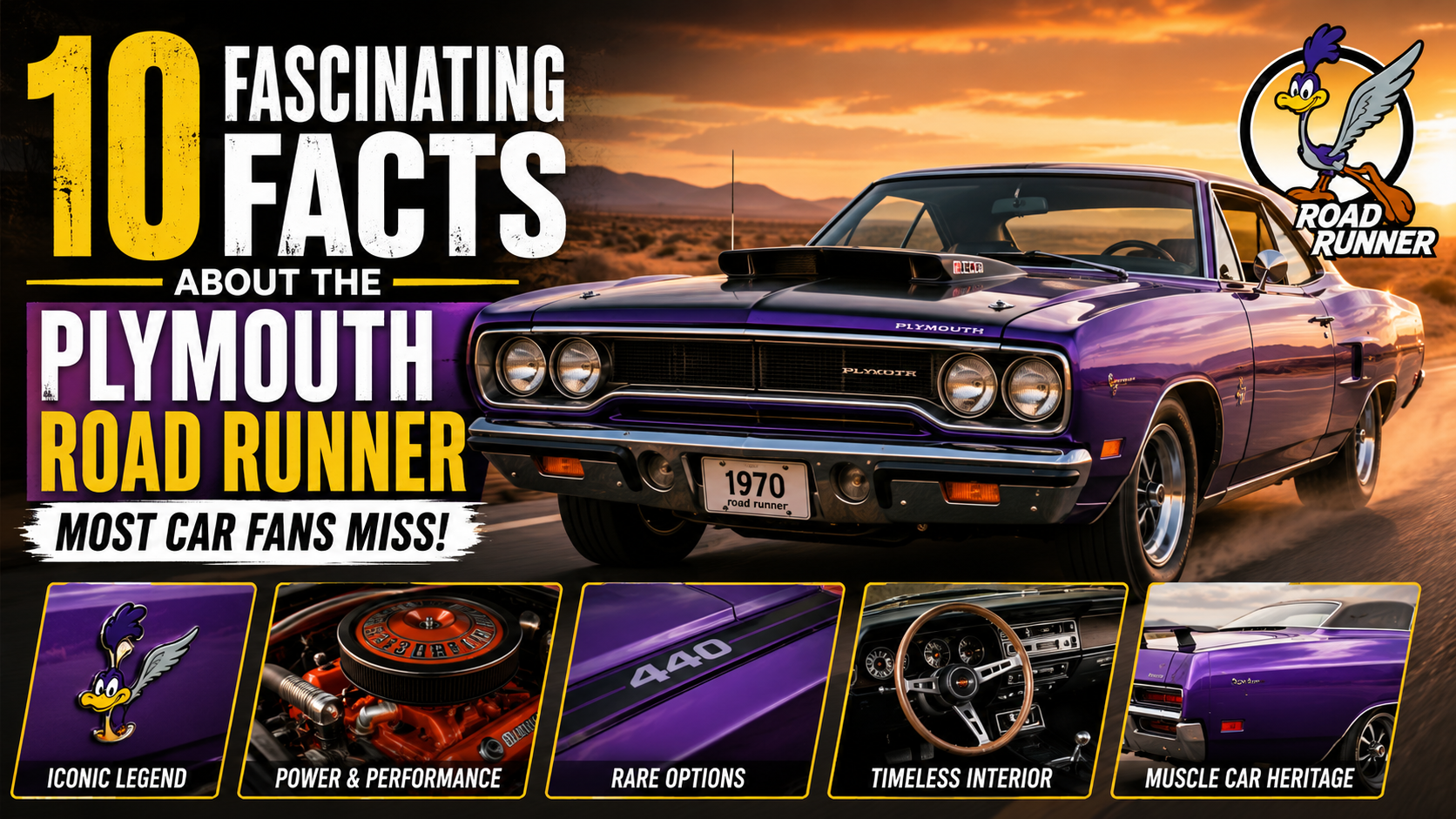
When people talk about the golden age of American muscle cars, a few legendary names almost always enter the conversation. The Ford Mustang, Chevrolet Camaro, Dodge Charger, and Pontiac GTO often dominate the spotlight. Yet among these icons sits a machine that quietly rewrote the rules of performance during the late 1960s and early 1970s—the Plymouth Road Runner.
At first glance, the Road Runner might seem like a straightforward muscle car built for speed. But beneath its bold styling and tire-smoking reputation lies a fascinating story filled with clever marketing, engineering decisions, and surprising historical details that many enthusiasts overlook.
Introduced during the height of the horsepower wars, the Road Runner wasn’t designed to be luxurious or sophisticated. Instead, it was created with a simple mission: deliver maximum performance for the money. That formula helped make it one of the most successful muscle cars of its era and a favorite among collectors today.
Whether you’re a lifelong Mopar enthusiast or simply curious about automotive history, here are ten fascinating facts about the Plymouth Road Runner that many car fans never realize.
1. The Road Runner Was Created as a Budget Muscle Car
One of the most surprising facts about the Plymouth Road Runner is that it wasn’t originally intended to be a premium performance vehicle.
During the late 1960s, muscle cars were becoming increasingly expensive. Manufacturers often added luxury features, upgraded interiors, and styling enhancements that pushed prices higher.
Plymouth saw an opportunity.
The company realized there was a growing market for buyers who cared more about performance than comfort.
Instead of loading the car with unnecessary extras, Plymouth stripped away many luxury features and focused on delivering raw power at an affordable price.
The result was a car that offered impressive performance without the premium price tag.
That value-oriented approach became one of the Road Runner’s biggest selling points.
2. It Was Named After a Cartoon Character
Few production cars can claim they were named after a cartoon bird.
The Road Runner earned its name through a licensing agreement with Warner Bros., the company behind the famous Looney Tunes character.
At the time, this was a highly unusual move.
Automakers rarely licensed fictional characters for vehicle branding.
Plymouth executives believed the cartoon’s reputation for speed and quick escapes perfectly matched the image they wanted for their new muscle car.
The gamble paid off.
The association gave the Road Runner a memorable identity that helped it stand out in a crowded marketplace.
Even today, the connection remains one of the most recognizable examples of entertainment and automotive marketing working together successfully.
3. The Famous “Beep-Beep” Horn Was Real
The cartoon influence extended beyond the name.
One of the Road Runner’s most distinctive features was an optional horn designed to mimic the famous “beep-beep” sound from the animated character.
While most cars of the era used traditional horns, Plymouth offered something completely different.
Drivers could press the horn and hear a sound instantly recognizable to fans of the cartoon.
This playful feature helped give the car personality and reinforced its unique branding.
Today, functioning original horns are highly prized among collectors seeking authentic restorations.
4. The Car Outsold Plymouth’s Expectations
When Plymouth launched the Road Runner in 1968, expectations were relatively modest.
The company believed the vehicle would appeal primarily to younger buyers seeking affordable performance.
Instead, demand exploded.
The Road Runner quickly became one of Plymouth’s biggest successes.
Sales dramatically exceeded projections, proving that consumers wanted muscle cars focused on speed rather than luxury.
Its popularity surprised industry observers and demonstrated the effectiveness of Plymouth’s straightforward performance-first strategy.
The unexpected success also encouraged competitors to rethink their own performance offerings.
5. It Won Motor Trend’s Car of the Year Award
Muscle cars were often criticized for prioritizing speed over refinement.
The Road Runner challenged that perception.
In 1969, it earned Motor Trend’s prestigious Car of the Year award.
This achievement was significant because the Road Runner wasn’t marketed as a luxury vehicle or technological showcase.
Instead, judges recognized the car’s combination of value, performance, and market impact.
Winning the award helped elevate the Road Runner’s status and further cemented its place in automotive history.
It proved that a relatively simple performance machine could earn industry-wide respect.
6. The Legendary Hemi Version Was Extremely Rare
Among collectors, few Road Runners generate more excitement than those equipped with Chrysler’s legendary 426 Hemi engine.
Nicknamed the “Elephant Engine” because of its massive size and power, the Hemi became one of the most feared engines on American roads.
Road Runner models fitted with the Hemi delivered extraordinary performance for their era.
However, they were also expensive.
As a result, relatively few buyers ordered the Hemi option.
Today, authentic Hemi Road Runners are among the most valuable and sought-after Mopar vehicles in existence.
Their rarity has transformed them into highly desirable collector cars.
7. Performance Was the Priority From Day One
Many muscle cars attempted to balance performance, comfort, and style.
The Road Runner took a more focused approach.
Virtually every aspect of the vehicle was designed with performance in mind.
The base engine itself was powerful by contemporary standards.
Buyers could also choose increasingly potent engine options depending on their budget and performance goals.
The philosophy was simple:
Eliminate unnecessary extras and invest in horsepower.
This approach resonated strongly with enthusiasts who valued speed above all else.
The Road Runner became a symbol of unapologetic muscle-car engineering.
8. Special Editions Increased Its Collectibility
Over the years, Plymouth introduced several limited-production variants that added excitement to the Road Runner lineup.
One of the most famous examples was the Superbird.
Designed primarily to improve aerodynamic performance in NASCAR competition, the Superbird featured a dramatically extended nose cone and towering rear wing.
Its appearance was unlike anything else on American roads.
While initially considered unconventional, the Superbird eventually became one of the most recognizable muscle cars ever produced.
Today, special-edition Road Runners command substantial interest among collectors due to their rarity and historical significance.
9. It Played a Major Role in the Muscle Car Wars
The late 1960s represented the peak of the American horsepower race.
Manufacturers competed aggressively to produce faster and more powerful vehicles.
The Road Runner became one of Plymouth’s most important weapons in this battle.
Its combination of affordability and performance forced competitors to respond.
Other automakers began introducing stripped-down performance models aimed at budget-conscious enthusiasts.
In many ways, the Road Runner helped reshape the muscle-car market by proving that buyers valued horsepower just as much as luxury features.
Its influence extended far beyond Plymouth showrooms.
10. Its Legacy Remains Strong Decades Later
Many vehicles fade from public memory after production ends.
The Road Runner has done the opposite.
Decades after its introduction, it remains one of the most respected names in American automotive history.
Collectors continue searching for original examples.
Restoration projects remain popular.
Auction prices for rare models often reach impressive figures.
Meanwhile, younger enthusiasts continue discovering the car through automotive events, online communities, and classic car media.
The Road Runner’s enduring popularity reflects more than nostalgia.
It represents a philosophy that still resonates today: straightforward performance, bold character, and an emphasis on driving excitement.
Why the Road Runner Stands Out Among Muscle Cars
What separates the Road Runner from many of its competitors is its clarity of purpose.
Some muscle cars attempted to be everything at once.
The Road Runner embraced a simpler identity.
It wasn’t designed primarily for luxury.
It wasn’t intended to showcase cutting-edge technology.
Instead, it focused on delivering affordable speed and an unforgettable driving experience.
That honesty helped create a loyal following that continues decades later.
Car enthusiasts often appreciate vehicles that stay true to their mission, and few cars embodied their mission more completely than the Road Runner.
The Marketing Genius Behind Its Success
The Road Runner’s success wasn’t based solely on engineering.
Marketing played an enormous role.
The connection to the cartoon character made the car instantly memorable.
The playful branding distinguished it from competitors that relied on more traditional advertising approaches.
From the distinctive horn to the decals and logos, every element reinforced the vehicle’s personality.
The result was a muscle car that felt approachable and fun while still delivering serious performance.
Many automotive historians consider it one of the most successful branding efforts of the muscle-car era.
Why Collectors Still Love the Road Runner
Several factors continue driving collector interest.
First, the Road Runner represents an important chapter in automotive history.
Second, many models were driven hard during their original lifespans, making surviving examples increasingly valuable.
Third, rare engine combinations and special editions remain highly sought after.
Collectors also appreciate the vehicle’s authenticity.
The Road Runner wasn’t trying to imitate luxury cars or grand touring machines.
It proudly embraced its role as a performance-focused street machine.
That authenticity gives it lasting appeal.
Lessons From the Road Runner’s Success
The Road Runner’s story offers interesting lessons beyond the automotive world.
Its success demonstrates the value of understanding customer priorities.
Rather than adding complexity, Plymouth focused on delivering exactly what buyers wanted.
The company identified a demand for affordable performance and built a vehicle specifically to meet that need.
This clear vision helped transform the Road Runner from an experimental idea into a muscle-car legend.
Sometimes simplicity becomes a competitive advantage.
Final Thoughts
The Plymouth Road Runner remains one of the most fascinating vehicles of the muscle-car era. While many enthusiasts know its name, fewer understand the full story behind its creation, success, and enduring legacy.
From its surprising cartoon origins and famous “beep-beep” horn to its budget-friendly philosophy and legendary Hemi-powered variants, the Road Runner offered far more than raw horsepower.
It challenged industry assumptions, influenced competitors, and created a loyal fan base that continues to celebrate the car decades later.
For classic car enthusiasts, the Road Runner represents more than a vintage muscle machine. It symbolizes a unique moment in automotive history when performance, personality, and value combined to create something truly unforgettable.
And that’s why, even after all these years, the Road Runner continues to race through the memories—and garages—of car lovers around the world.







