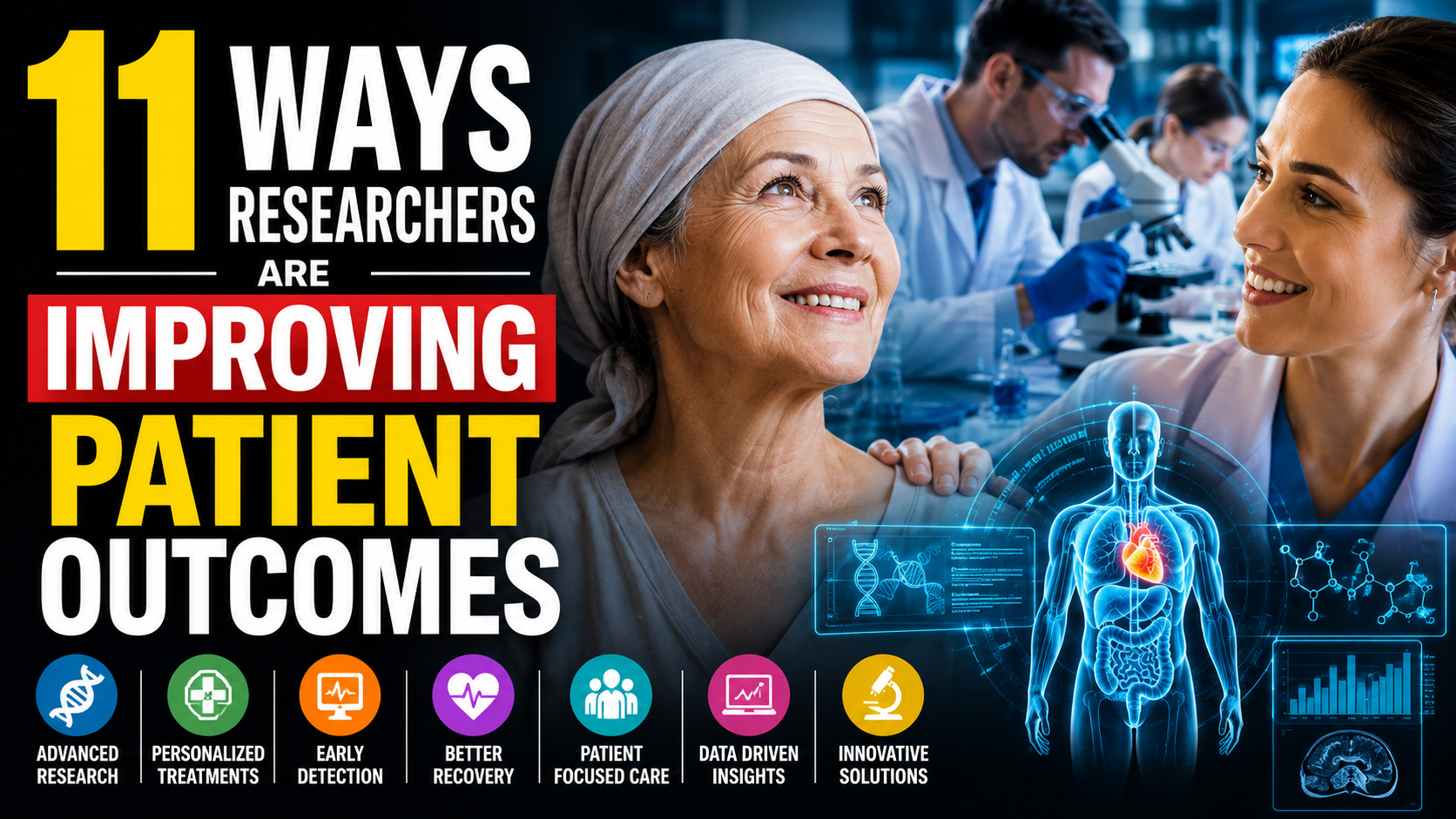
Modern medicine has achieved remarkable progress over the last few decades. Diseases that were once considered untreatable can now be managed effectively, survival rates for many serious illnesses have improved, and patients today have access to more advanced healthcare options than ever before.
Yet researchers are not stopping there.
Around the world, scientists, physicians, engineers, and healthcare innovators continue searching for better ways to help people live longer, recover faster, and enjoy a higher quality of life. Their efforts are transforming how diseases are diagnosed, treated, monitored, and even prevented.
The ultimate goal is simple: improve patient outcomes.
Patient outcomes refer to the results people experience after receiving medical care. These outcomes include survival rates, symptom improvement, quality of life, recovery speed, treatment safety, and long-term health.
Thanks to ongoing scientific advances, researchers are finding new ways to improve these outcomes across nearly every area of healthcare.
Here are 11 important ways research is helping patients achieve better results.
1. Developing More Personalized Treatments
One of the biggest changes in modern healthcare is the move toward personalized medicine.
Traditionally, patients with the same diagnosis often received similar treatments. Researchers now understand that individuals can respond very differently to the same therapy due to genetics, lifestyle factors, biological differences, and environmental influences.
Personalized treatment strategies aim to match therapies to each person’s unique characteristics.
In fields such as cancer care, doctors increasingly use genetic information to identify therapies that target specific mutations driving disease. Similar approaches are emerging for heart disease, neurological disorders, and autoimmune conditions.
By tailoring care to the individual, researchers hope to improve effectiveness while reducing unwanted side effects.
2. Improving Early Detection Methods
Early diagnosis is often one of the most powerful factors influencing health outcomes.
When diseases are identified at earlier stages, treatment options are usually more effective and less invasive.
Researchers are developing advanced screening technologies capable of detecting illness sooner than ever before.
Innovations include highly sensitive imaging tools, blood-based diagnostic tests, genetic screening methods, and artificial intelligence systems that identify subtle warning signs.
These technologies may allow healthcare providers to begin treatment before symptoms become severe, improving survival rates and long-term recovery.
In many cases, earlier intervention can make a life-changing difference.
3. Using Artificial Intelligence to Support Medical Decisions
Healthcare generates enormous amounts of data every day.
Medical records, laboratory results, imaging scans, wearable devices, genetic profiles, and treatment histories all contain valuable information. Analyzing these datasets manually can be difficult and time-consuming.
Artificial intelligence is helping researchers and clinicians process this information more efficiently.
AI systems can identify patterns, predict risks, assist with diagnosis, and recommend treatment strategies based on complex data analysis.
While human expertise remains essential, AI is becoming an increasingly valuable tool for improving decision-making and supporting more accurate, personalized care.
4. Advancing Precision Medicine
Precision medicine builds upon personalized healthcare by focusing on the specific biological mechanisms involved in disease.
Researchers are learning that illnesses often behave differently at the molecular level, even when symptoms appear similar.
By understanding these underlying mechanisms, scientists can develop therapies that target disease more accurately.
For example, precision medicine has already transformed certain areas of cancer treatment, allowing doctors to focus on specific genetic changes within tumors.
As scientific understanding expands, precision medicine may improve outcomes for many other conditions as well.
5. Enhancing Drug Development
The process of developing new medications has become increasingly sophisticated.
Researchers now have access to advanced laboratory technologies, powerful computing systems, and deeper biological knowledge than previous generations.
These tools help scientists identify promising drug candidates more efficiently and evaluate their safety and effectiveness with greater precision.
Modern drug development also increasingly focuses on reducing side effects while maximizing therapeutic benefits.
The result is a growing pipeline of treatments designed to address unmet medical needs and improve patient experiences.
Many of today’s most effective therapies are the direct result of decades of research and innovation.
6. Expanding Access to Minimally Invasive Procedures
Surgical techniques have improved dramatically in recent years.
Researchers and medical device developers continue creating technologies that allow doctors to perform procedures with smaller incisions, greater precision, and reduced trauma to surrounding tissues.
Minimally invasive approaches often result in shorter hospital stays, less pain, faster recovery, and lower complication rates.
Robotic-assisted surgery, advanced imaging guidance, and innovative surgical instruments are helping make these procedures increasingly effective.
For patients, these improvements can significantly enhance recovery experiences and overall outcomes.
7. Strengthening Preventive Healthcare
Researchers increasingly recognize that preventing disease can be just as important as treating it.
Preventive healthcare focuses on identifying risks and encouraging healthy behaviors before serious medical problems develop.
Studies continue revealing how nutrition, exercise, sleep, stress management, environmental factors, and lifestyle choices influence long-term health.
Researchers are also improving vaccination strategies, screening programs, and risk assessment tools.
By helping people stay healthier in the first place, preventive healthcare can reduce disease burden and improve overall well-being across populations.
8. Improving Rehabilitation and Recovery Programs
Recovery does not end when treatment is completed.
For many patients, rehabilitation plays a crucial role in regaining function, independence, and quality of life.
Researchers are constantly refining rehabilitation strategies based on new insights into human physiology, neuroscience, and behavioral science.
Technologies such as virtual reality, robotic-assisted therapy, wearable sensors, and digital health platforms are helping personalize rehabilitation programs.
These innovations can make recovery more engaging, more effective, and better tailored to individual needs.
Improved rehabilitation ultimately helps patients achieve stronger long-term outcomes.
9. Expanding the Use of Remote Monitoring
The rise of digital health technology is changing how patients interact with healthcare providers.
Wearable devices, mobile applications, and remote monitoring systems allow doctors to track health information outside traditional clinical settings.
Researchers are studying how continuous monitoring can improve disease management and identify problems before they become serious.
For patients with chronic conditions such as diabetes, heart disease, or respiratory illnesses, real-time health data may help support earlier intervention and more personalized care.
Remote monitoring also increases convenience and accessibility, especially for individuals living far from healthcare facilities.
10. Focusing More on Patient-Centered Care
Healthcare outcomes are influenced by more than medical treatments alone.
Researchers increasingly recognize the importance of patient experiences, communication, emotional well-being, and individual preferences.
Patient-centered care emphasizes collaboration between healthcare providers and patients.
This approach encourages shared decision-making, improved communication, and treatment plans that align with a patient’s goals and values.
Studies suggest that patients who feel informed, supported, and involved in their care often experience better satisfaction and stronger health outcomes.
As a result, many healthcare systems are placing greater emphasis on the patient experience.
11. Exploring Regenerative and Future Therapies
Some of the most exciting research focuses on therapies that could help repair or restore damaged tissues and organs.
Regenerative medicine, stem cell research, tissue engineering, and gene-based therapies are opening new possibilities for conditions that were once considered irreversible.
Scientists are exploring ways to regenerate nerve tissue, restore organ function, repair damaged joints, and address diseases at their biological roots.
Although many of these treatments remain under investigation, they represent a promising frontier in healthcare innovation.
The potential to restore function rather than simply manage symptoms could dramatically improve outcomes for future patients.
Why Better Patient Outcomes Matter
Improving patient outcomes benefits far more than individual patients.
Better outcomes can reduce healthcare costs, decrease hospital readmissions, improve workforce participation, strengthen families, and enhance overall public health.
When people recover more quickly, experience fewer complications, and maintain higher quality of life, entire communities benefit.
Healthcare research is ultimately about helping people live healthier, longer, and more fulfilling lives.
Every advancement contributes to that mission.
Challenges Researchers Continue to Face
Despite remarkable progress, healthcare remains complex.
Many diseases involve intricate biological processes that researchers are still working to understand. New therapies require extensive testing to ensure safety and effectiveness.
Cost, accessibility, and healthcare disparities also remain important challenges.
Ensuring that medical innovations reach diverse populations is essential for maximizing their impact.
Researchers must balance innovation with affordability, accessibility, and ethical responsibility.
These challenges are significant, but they also drive continued improvement across the healthcare system.
Looking Ahead
The future of healthcare appears increasingly promising.
Advances in artificial intelligence, personalized medicine, precision therapies, digital health technologies, regenerative medicine, and preventive care are reshaping how diseases are managed and treated.
Researchers are moving beyond simply treating illness toward creating healthcare systems that are predictive, personalized, proactive, and patient-centered.
This evolution has the potential to improve outcomes across virtually every area of medicine.
Final Thoughts
The pursuit of better patient outcomes is at the heart of medical research.
From earlier diagnosis and personalized treatments to advanced rehabilitation and emerging regenerative therapies, scientists continue finding new ways to improve how people experience healthcare.
While challenges remain, the pace of innovation is accelerating. Every discovery brings healthcare closer to a future where treatments are more effective, recovery is faster, and patients enjoy better quality of life.
For patients, families, and healthcare providers alike, that future represents one of the most important goals in medicine—and researchers around the world are working every day to make it a reality.







