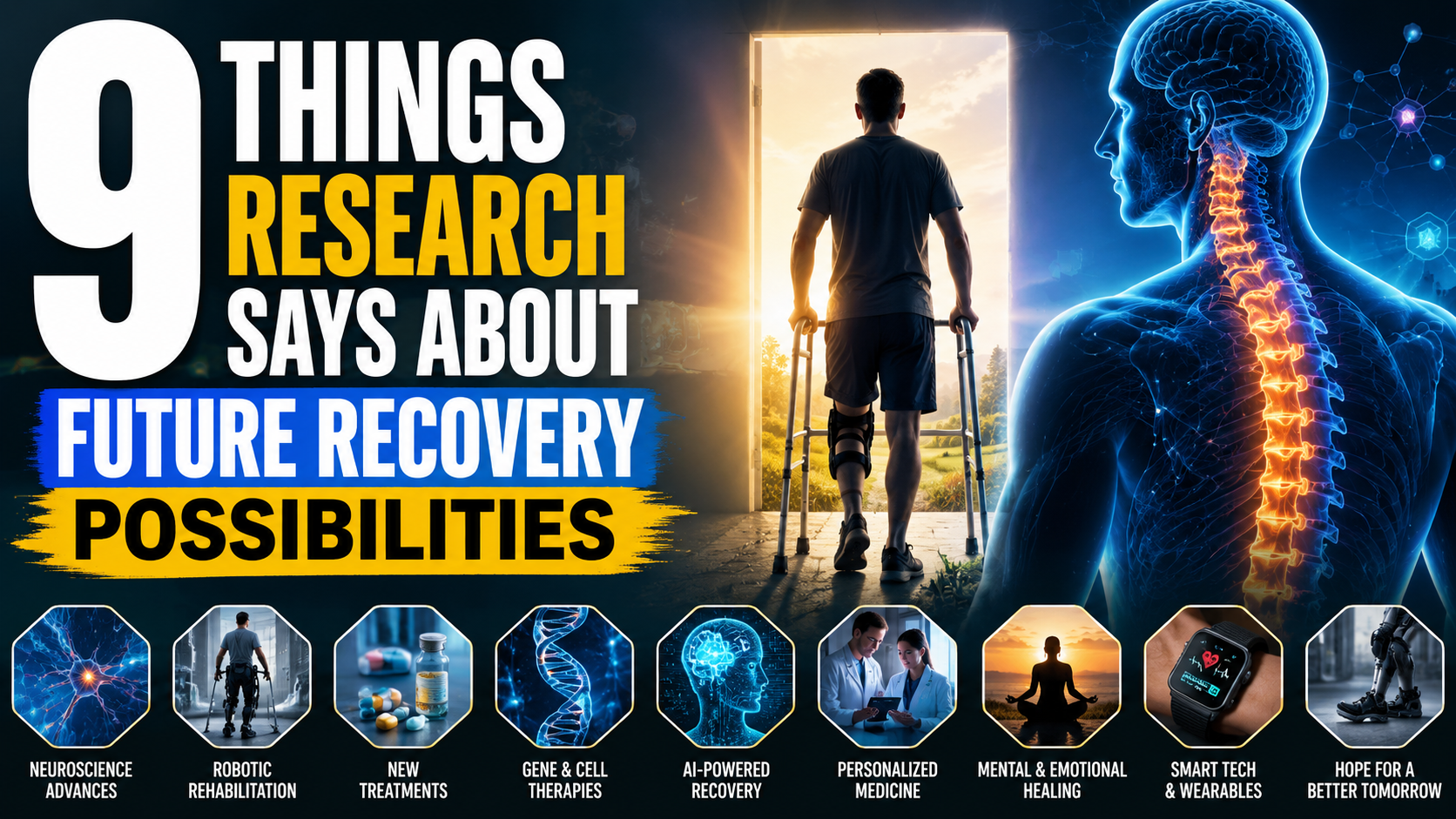
For much of modern medical history, certain injuries and diseases were considered permanent. Damage to the brain, spinal cord, nerves, or major organs often meant living with lifelong limitations. However, scientific research is rapidly changing that outlook.
Advances in regenerative medicine, biotechnology, genetics, artificial intelligence, and neuroscience are opening doors that once seemed impossible. Scientists are discovering new ways to repair damaged tissues, restore lost functions, and improve recovery outcomes for people facing serious health challenges.
While many of these innovations are still being studied, they provide a glimpse into a future where recovery may be faster, more effective, and more personalized than ever before.
Here are nine exciting recovery possibilities that researchers believe could transform healthcare in the years ahead.
1. Regenerative Medicine Could Help the Body Repair Itself
One of the most promising areas of medical research focuses on regenerative medicine.
Rather than simply treating symptoms, regenerative therapies aim to repair or replace damaged tissues and organs. Scientists are exploring ways to stimulate the body’s natural healing mechanisms, encouraging cells to rebuild structures that were once thought impossible to restore.
Researchers are investigating treatments that may help repair damaged cartilage, muscle tissue, skin, blood vessels, and even certain parts of the nervous system.
The long-term goal is to shift medicine from disease management toward true tissue restoration. If successful, regenerative therapies could dramatically improve recovery after injury, surgery, or chronic illness.
2. Stem Cell Research Continues to Expand Recovery Options
Stem cells have attracted attention for years because of their unique ability to develop into different types of specialized cells.
Scientists are studying how these cells might help repair tissues damaged by injury, disease, or aging.
Current research is examining potential applications in spinal cord injuries, heart disease, neurological disorders, and orthopedic conditions.
Although challenges remain, stem cell therapies have already shown encouraging results in certain areas of medicine. Researchers believe future advances may unlock even broader treatment possibilities.
The ability to replace or regenerate damaged cells could become one of the most significant medical developments of the 21st century.
3. Nerve Regeneration Research Is Advancing
For decades, scientists believed severe nerve damage could rarely be reversed.
Today, that assumption is being challenged.
Researchers are developing new approaches aimed at encouraging nerve cells to regrow and reconnect. Experimental therapies include growth factors, bioengineered materials, electrical stimulation techniques, and cellular therapies designed to support nerve repair.
While restoring complex nerve networks remains difficult, progress in neuroscience is providing new hope for individuals affected by spinal cord injuries, stroke-related disabilities, and neurological diseases.
The possibility of improving mobility, sensation, and independence continues to drive intensive research efforts worldwide.
4. Personalized Medicine Could Improve Recovery Outcomes
Every person responds differently to illness, injury, and treatment.
Genetic differences, lifestyle factors, medical history, and environmental influences all affect recovery.
This realization has fueled the rise of personalized medicine.
Using genetic testing and advanced data analysis, healthcare providers are increasingly able to tailor treatments to individual patients rather than relying solely on standardized approaches.
Future recovery plans may be customized based on a person’s biological profile, improving effectiveness while reducing side effects.
Experts believe this personalized approach could significantly improve outcomes across many areas of healthcare.
5. Artificial Intelligence Is Helping Predict Better Treatments
Artificial intelligence is becoming one of the most powerful tools in modern medicine.
Healthcare systems generate enormous amounts of information, including medical imaging, laboratory results, patient histories, and treatment outcomes. AI can analyze these complex datasets far more quickly than traditional methods.
Researchers are using artificial intelligence to identify treatment patterns, predict recovery outcomes, and recommend personalized therapies.
In rehabilitation settings, AI may eventually help clinicians develop highly individualized recovery programs tailored to each patient’s unique needs.
As technology continues to improve, AI could become an important partner in helping patients achieve better recovery results.
6. Brain Plasticity Research Is Changing What We Know About Healing
The human brain possesses a remarkable ability known as neuroplasticity.
This refers to the brain’s capacity to reorganize itself by creating new neural connections throughout life.
Researchers now understand that the brain can adapt far more than previously believed.
Following injury or illness, healthy regions of the brain can sometimes take over functions previously handled by damaged areas. This discovery has transformed approaches to stroke rehabilitation, traumatic brain injury recovery, and neurological therapy.
Modern rehabilitation programs increasingly focus on harnessing neuroplasticity through targeted exercises, cognitive training, and specialized therapies.
Future advances may unlock even greater potential for recovery by strengthening the brain’s natural ability to adapt.
7. Advanced Prosthetics and Neurotechnology Are Expanding Possibilities
Technology is redefining what recovery can look like.
Modern prosthetic devices are becoming more sophisticated, allowing users to perform movements that were once impossible. Some advanced prosthetics can respond directly to signals from the nervous system, creating more natural control and movement.
Researchers are also developing brain-computer interfaces that may allow individuals to interact with technology using neural activity alone.
Although many of these innovations remain in development, they represent a major step forward for people living with physical disabilities.
Future neurotechnology could help restore communication, mobility, and independence for millions worldwide.
8. Gene-Based Therapies May Address Disease at Its Source
Traditional treatments often focus on managing symptoms after a disease has already developed.
Gene-based therapies offer a different approach.
Scientists are studying ways to modify, repair, or replace faulty genes that contribute to illness. Technologies such as gene editing may eventually allow doctors to target certain conditions at their biological origin.
Research is underway for a wide range of disorders, including inherited diseases, neurological conditions, and some forms of cancer.
While these therapies remain relatively new, experts believe they could fundamentally change how many diseases are treated in the future.
By addressing underlying causes rather than symptoms alone, gene-based medicine may create entirely new recovery opportunities.
9. Rehabilitation Science Is Becoming More Effective
Recovery is not solely dependent on medical treatments. Rehabilitation plays a crucial role in helping patients regain function and improve quality of life.
Researchers are continually refining rehabilitation strategies based on new insights into human physiology, movement, and learning.
Virtual reality, robotic-assisted therapy, wearable sensors, and digital health platforms are enhancing traditional rehabilitation methods.
These technologies provide more precise feedback and allow therapy programs to be customized to individual needs.
As rehabilitation science evolves, patients may benefit from more efficient, engaging, and effective recovery experiences.
Why Recovery Research Matters
The importance of these discoveries extends far beyond scientific curiosity.
Every year, millions of people worldwide experience injuries, illnesses, and medical conditions that affect their ability to live independently.
Improving recovery outcomes can have profound effects on quality of life, emotional well-being, family relationships, and long-term health.
Advances in recovery science also have significant economic implications. Faster and more complete recovery can reduce healthcare costs, increase workforce participation, and lessen the burden on caregivers and support systems.
For many patients, recovery represents more than physical healing—it represents the opportunity to regain freedom, confidence, and purpose.
Challenges Researchers Still Face
Despite remarkable progress, many challenges remain.
Human biology is incredibly complex, and repairing damaged tissues or restoring lost functions is often more difficult than anticipated.
Researchers must carefully evaluate the safety and effectiveness of emerging therapies through rigorous clinical testing. Some treatments that show promise in laboratories may not perform as expected in large-scale human studies.
Cost and accessibility are also important concerns. Advanced therapies can be expensive to develop and distribute.
Ensuring that future innovations benefit broad populations rather than a limited number of patients will require continued investment and collaboration across healthcare systems.
The Future Looks More Hopeful Than Ever
Although no medical breakthrough offers guaranteed results, the overall direction of recovery research is encouraging.
Scientists today possess tools and technologies that previous generations could scarcely imagine. Advances in genetics, regenerative medicine, neuroscience, artificial intelligence, and rehabilitation science are creating new possibilities across nearly every field of healthcare.
Many experts believe the coming decades will bring significant improvements in how injuries and diseases are treated—and how recovery is achieved.
What once seemed irreversible may eventually become manageable. Conditions once associated with permanent disability may see new treatment options emerge. And patients facing serious health challenges may have more opportunities than ever before to regain function and improve their quality of life.
Final Thoughts
The future of recovery medicine is being shaped by innovation, collaboration, and a deeper understanding of the human body than ever before.
From stem cell therapies and nerve regeneration to personalized medicine and advanced rehabilitation technologies, researchers are exploring multiple paths toward better healing outcomes.
While challenges remain, the momentum behind these discoveries continues to grow. Each breakthrough brings medicine one step closer to helping more people recover from injury, illness, and disability in ways that were once thought impossible.
For patients, families, and healthcare professionals alike, that future offers something invaluable: hope.







