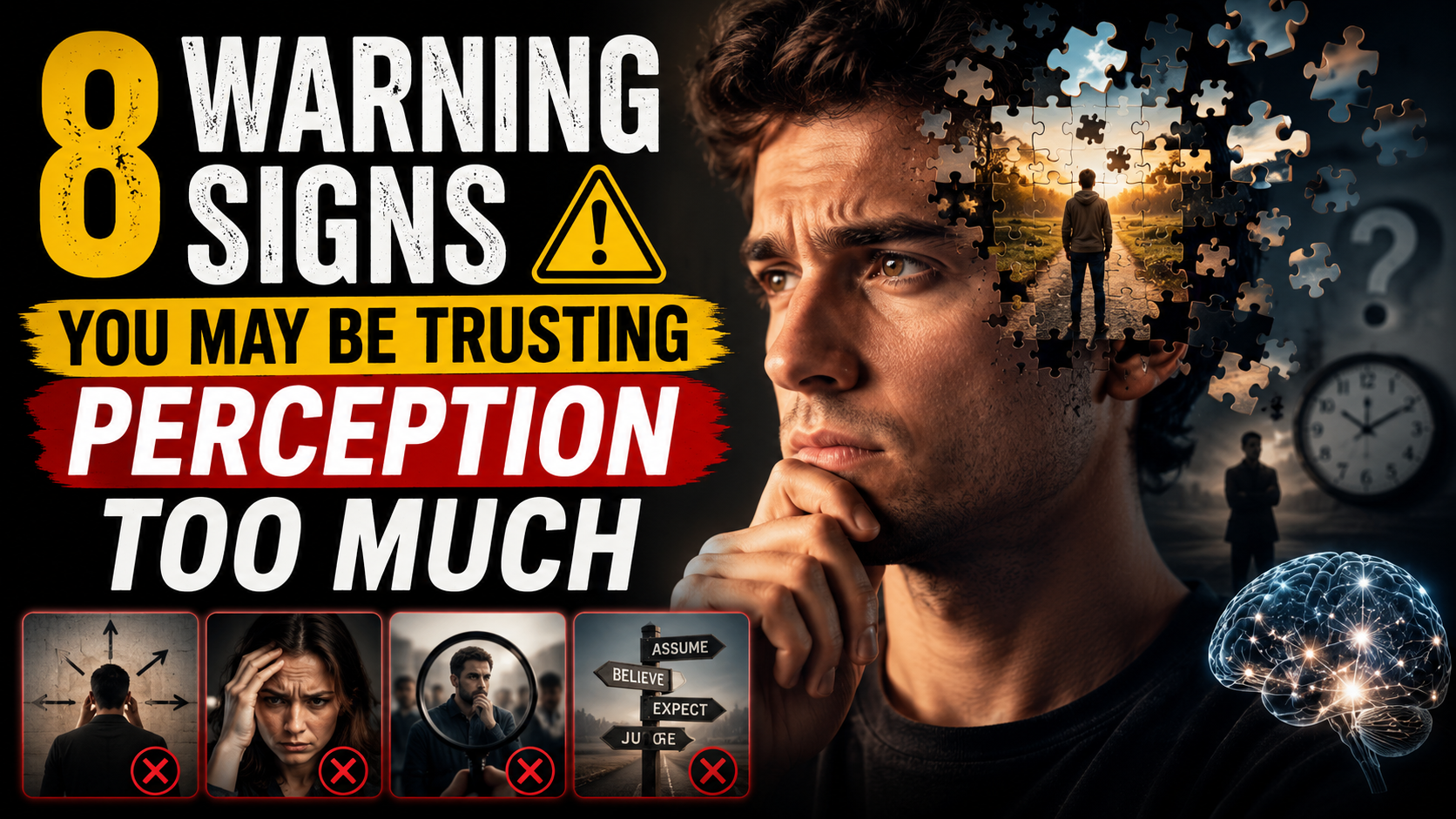
Most of us like to believe we see the world as it truly is.
We trust our eyes, rely on our memories, and assume our experiences provide an accurate picture of reality. After all, perception feels immediate and convincing. When we witness an event, form an opinion, or remember a conversation, it often seems obvious that our interpretation is correct.
But modern psychology and neuroscience tell a different story.
The human brain is not a passive recording device. It constantly filters information, fills in gaps, makes predictions, and simplifies complex situations. This process helps us navigate everyday life efficiently, but it can also create blind spots, misunderstandings, and inaccurate assumptions.
In other words, what we perceive is not always the same as what is actually happening.
Researchers have spent decades studying how perception influences behavior, decision-making, relationships, and beliefs. Their findings reveal that even intelligent, thoughtful people can be misled by the brain’s shortcuts.
Here are eight warning signs that you may be trusting your perception more than you should—and why learning to question your assumptions can lead to better decisions and deeper understanding.
1. You Assume Your First Impression Is Always Correct
First impressions happen quickly.
Within seconds of meeting someone, your brain begins forming opinions about their personality, trustworthiness, competence, and intentions.
These judgments often feel surprisingly accurate.
However, research suggests that first impressions are influenced by numerous factors that may have little to do with reality, including:
- Facial expressions
- Clothing
- Body language
- Tone of voice
- Personal biases
- Previous experiences
While first impressions can sometimes provide useful information, they are far from infallible.
People are complex, and initial judgments often fail to capture the full picture.
If you rarely reconsider your first opinions about others, you may be placing too much trust in perception.
A Better Approach
Treat first impressions as starting points rather than final conclusions. Allow time and evidence to shape your understanding.
2. You Rarely Question Your Own Memories
Many people think of memory as a mental recording system.
In reality, memory is far more flexible.
Psychologists have discovered that memories are reconstructed rather than replayed. Each time we recall an event, the brain pieces together information from various sources.
As a result, memories can change over time.
Details may be added, removed, or altered without our awareness.
This doesn’t mean memories are useless. It simply means they are not perfect.
If you automatically assume every memory is completely accurate, you may overlook how easily recollections can be influenced by emotions, expectations, and later experiences.
Why It Matters
Memory errors can affect relationships, workplace decisions, and personal beliefs.
Healthy skepticism about memory can reduce unnecessary conflict and improve communication.
3. You Believe Seeing Is Always Believing
Visual information feels reliable because it seems direct.
Yet some of the most famous psychological experiments demonstrate that the brain frequently misinterprets what it sees.
Optical illusions are a simple example. Even when people know an illusion is misleading, their brains continue perceiving it incorrectly.
The same principle applies to everyday life.
Attention is limited. The brain filters enormous amounts of visual information, often focusing only on what appears most relevant.
As a result, people can miss important details that are directly in front of them.
The Invisible Reality
Researchers studying selective attention have shown that individuals often fail to notice unexpected events when focused on another task.
This phenomenon reveals how perception can create a false sense of completeness.
4. You Assume Other People See Situations the Same Way
One of the most common perception traps involves believing that others interpret events exactly as we do.
In reality, every person experiences life through a unique combination of:
- Personal history
- Cultural background
- Education
- Values
- Emotions
- Expectations
These factors influence how information is processed and interpreted.
Two people can witness the same event and walk away with completely different conclusions.
Neither person is necessarily dishonest or irrational. They may simply be viewing the situation through different psychological filters.
Why This Matters in Relationships
Many misunderstandings occur because people assume their perception is objective while others are mistaken.
Recognizing that multiple perspectives can exist simultaneously often improves communication and empathy.
5. You Seek Information That Supports Existing Beliefs
The brain naturally prefers consistency.
Once people form an opinion, they often pay greater attention to information that supports it while overlooking evidence that challenges it.
Psychologists refer to this tendency as confirmation bias.
Confirmation bias can affect decisions involving:
- Politics
- Relationships
- Health
- Finances
- Career choices
- Social issues
The more strongly someone identifies with a belief, the more difficult it can become to evaluate opposing viewpoints objectively.
A Simple Test
Ask yourself:
“When was the last time I seriously considered evidence that contradicted my opinion?”
If the answer is difficult to recall, confirmation bias may be influencing your perception.
6. You Trust Emotional Reactions as Objective Facts
Emotions provide valuable information.
Fear can signal danger. Joy can reinforce rewarding experiences. Anger can highlight perceived unfairness.
However, emotions are not always reliable indicators of objective reality.
Stress, fatigue, anxiety, and previous experiences can shape emotional responses in ways that distort perception.
For example:
- A stressful day may make neutral comments seem critical.
- Anxiety may increase perceptions of risk.
- Past disappointments may create expectations of failure.
When emotions are intense, they can feel like proof.
Yet feelings and facts are not always the same thing.
Developing Emotional Awareness
Learning to pause before drawing conclusions allows people to separate emotional reactions from objective evidence.
This skill can improve decision-making significantly.
7. You Rarely Change Your Mind
Confidence feels good.
Changing your mind can feel uncomfortable.
Unfortunately, excessive confidence may prevent learning and growth.
Researchers consistently find that people tend to overestimate how accurate their beliefs are.
This phenomenon is sometimes referred to as overconfidence bias.
Individuals who rarely revise their opinions may unintentionally ignore valuable information.
By contrast, intellectually flexible people understand that updating beliefs is a sign of strength rather than weakness.
The Value of Adaptability
Science itself is built on revision and refinement.
New evidence leads to new conclusions.
Applying this mindset to everyday life can help reduce perception errors.
8. You Assume Your Perspective Is the Complete Picture
Perhaps the biggest warning sign is believing your perception represents reality in its entirety.
The brain constantly filters information to simplify an incredibly complex world.
Without these filters, everyday functioning would be overwhelming.
However, the same filters that help us navigate life also limit what we notice.
No individual sees everything.
No one possesses complete information.
Every perspective contains blind spots.
The most accurate understanding often comes from combining multiple viewpoints, gathering additional evidence, and remaining open to uncertainty.
Why Humility Matters
Intellectual humility is not about doubting everything.
It is about recognizing that perception has limits.
People who acknowledge those limits are often better equipped to learn, adapt, and make thoughtful decisions.
Why the Brain Relies on Perception Shortcuts
At first glance, these limitations might seem like flaws.
In reality, they are part of the brain’s design.
Every second, your senses gather far more information than conscious awareness can process.
To handle this overwhelming flow of data, the brain uses shortcuts known as heuristics.
These mental shortcuts allow quick decisions and efficient action.
Without them, everyday tasks would become exhausting.
The trade-off is that shortcuts occasionally lead to errors.
Understanding this balance helps explain why perception is both powerful and imperfect.
How to Become a Better Observer
Improving perception does not require abandoning instincts or second-guessing every thought.
Instead, it involves developing greater awareness of how the mind works.
Practical strategies include:
- Seeking diverse viewpoints
- Asking clarifying questions
- Reviewing assumptions
- Reading broadly
- Practicing mindfulness
- Reflecting before reacting emotionally
- Remaining curious rather than certain
- Welcoming constructive disagreement
These habits encourage more accurate understanding without creating unnecessary doubt.
The Connection Between Perception and Personal Growth
Many self-improvement efforts focus on changing behaviors.
But meaningful growth often begins with changing perception.
The way people interpret events influences:
- Relationships
- Career decisions
- Confidence
- Emotional well-being
- Problem-solving abilities
- Communication skills
When perception becomes more flexible, opportunities for growth often expand as well.
Learning to question assumptions can reveal possibilities that were previously overlooked.
Final Thoughts
Your brain performs an extraordinary task every moment of every day. It filters massive amounts of information, predicts outcomes, interprets experiences, and helps you navigate an incredibly complex world. Without these processes, daily life would be impossible.
Yet the same mental systems that make life manageable can also create blind spots.
Trusting perception completely may lead to inaccurate memories, premature judgments, confirmation bias, emotional reasoning, and overconfidence. Recognizing these tendencies does not mean becoming skeptical of everything—it means becoming more thoughtful about how conclusions are formed.
The most insightful people are not necessarily those who see the most. They are often the ones who understand the limits of what they see.
By questioning assumptions, remaining open to new evidence, and embracing intellectual humility, you can develop a richer, more accurate understanding of the world—and of yourself.







