Success stories often capture public attention, but the most memorable ones usually involve more than fame, wealth, or career achievements. They reveal something deeper about how people think, what they value, and how they respond when their principles are tested.
The story of Neal McDonough has attracted interest for exactly that reason. Known for his roles in film and television, McDonough has spoken openly over the years about his commitment to personal values, family priorities, and professional decisions that sometimes came with significant consequences.
Whether people agree with every choice he has made or not, his journey raises fascinating questions about human behavior. Why do some people remain committed to their beliefs even when it costs them opportunities? Why are individuals willing to make sacrifices for principles they consider important? And what can these decisions teach us about ourselves?
Beyond the entertainment headlines, McDonough’s story offers insights into several enduring aspects of human nature. These lessons extend far beyond Hollywood and touch on challenges people face in everyday life.
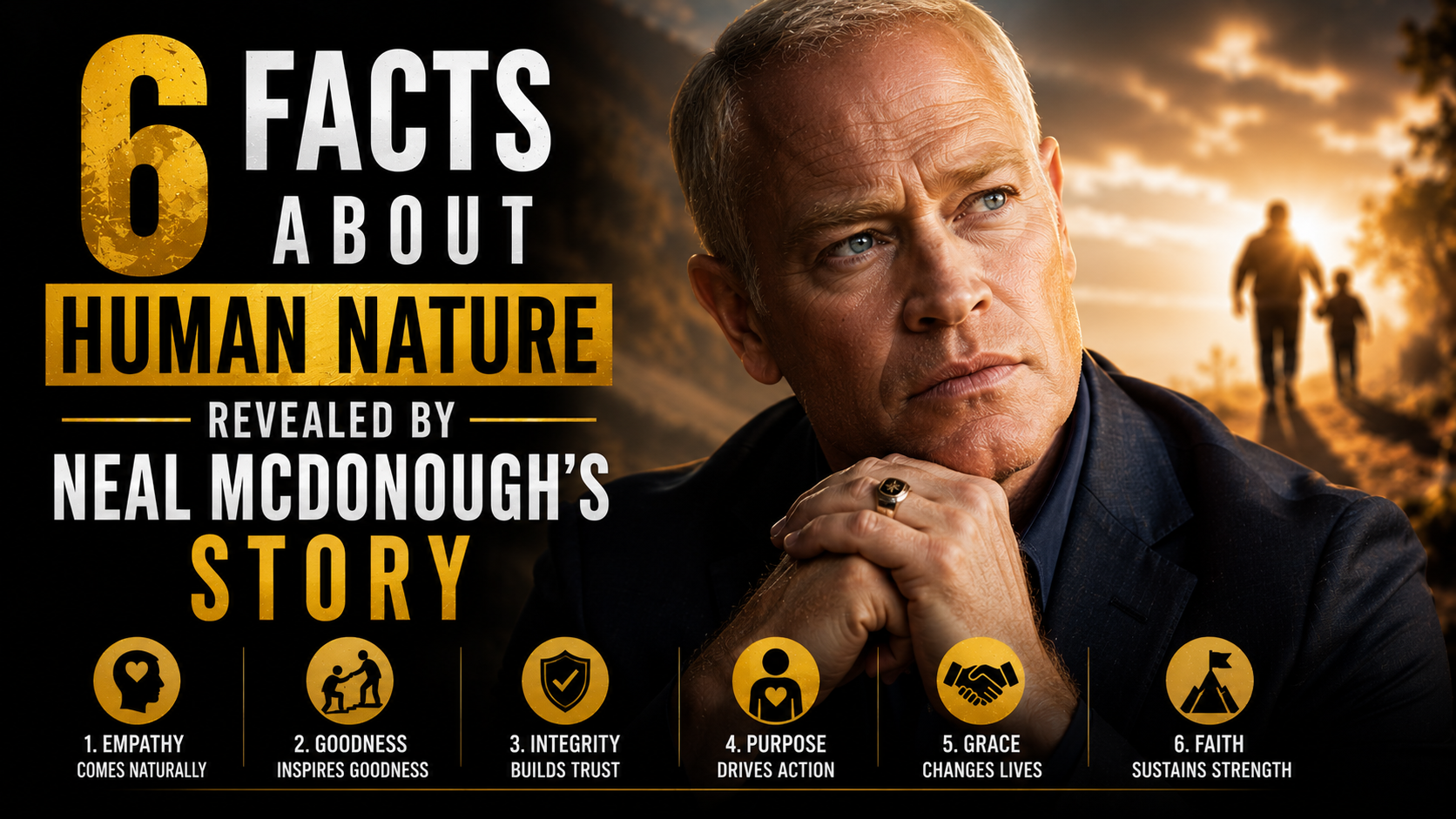
Here are six revealing facts about human nature reflected in Neal McDonough’s experiences.
1. People Crave Consistency Between Their Values and Their Actions
One of the strongest psychological needs humans experience is the desire for alignment.
Most people want their actions to match their beliefs.
When those two things conflict, discomfort often follows.
Psychologists sometimes refer to this as cognitive dissonance—the tension that occurs when behavior and values don’t align.
McDonough’s public comments about maintaining personal principles, even when doing so affected career opportunities, highlight this dynamic.
For many individuals, inner peace comes not from avoiding conflict but from acting consistently with deeply held convictions.
This principle appears across all areas of life.
People often feel most fulfilled when their choices reflect their values.
That doesn’t mean the choices are easy.
It means they feel authentic.
Human beings generally prefer integrity over internal contradiction.
2. Purpose Often Matters More Than Convenience
Convenience is powerful.
People naturally gravitate toward options that make life easier, faster, and more comfortable.
Yet history repeatedly shows that purpose can be an even stronger motivator.
Many of the most significant decisions people make involve sacrifice.
Parents sacrifice for children.
Athletes sacrifice for goals.
Entrepreneurs sacrifice for dreams.
Individuals who prioritize purpose often accept short-term discomfort because they believe something more important is at stake.
McDonough’s story reflects this reality.
Whether in career decisions or personal priorities, the willingness to endure challenges for the sake of principle demonstrates a broader truth about human nature.
People are often willing to sacrifice convenience when they believe they are protecting something meaningful.
Purpose creates resilience.
3. Relationships Frequently Shape Major Life Decisions
Modern culture often emphasizes individual achievement.
Career success, personal accomplishments, and financial milestones receive significant attention.
Yet when people reflect on life’s most important decisions, relationships frequently emerge as the central influence.
Family, friendships, mentors, and loved ones often shape priorities more than professional ambitions alone.
McDonough has consistently spoken about the importance of family in his life.
This emphasis reflects a broader human tendency.
People naturally seek connection.
They want belonging.
They want meaningful relationships.
Research consistently shows that strong relationships contribute significantly to long-term happiness and life satisfaction.
Human beings are social by nature.
Even highly ambitious individuals often organize their lives around the people they care about most.
4. People Respect Authenticity Even When They Disagree
One of the more interesting aspects of public perception is the way authenticity influences respect.
People do not always agree with one another’s beliefs.
Differences in values, opinions, and priorities are inevitable.
Yet many individuals still admire consistency and sincerity.
Why?
Because authenticity signals honesty.
It suggests a person is acting according to genuine convictions rather than external pressure.
This trait often earns respect even among those who hold different viewpoints.
McDonough’s story illustrates this principle.
Supporters and critics may interpret his choices differently, but many observers recognize the consistency behind them.
Authenticity remains one of the most valued qualities in human relationships.
People are naturally drawn to individuals who appear genuine.
5. Adversity Often Reveals Character
Comfort rarely provides a complete picture of who someone is.
Challenges do.
When circumstances become difficult, people face decisions that reveal priorities, values, and resilience.
This is one reason stories involving hardship often resonate so strongly.
They show how individuals respond when easy options disappear.
Psychologists have long noted that adversity can function as a test of character.
Pressure exposes strengths and weaknesses that might otherwise remain hidden.
McDonough’s experiences highlight this idea.
Moments of professional difficulty often become opportunities to demonstrate commitment, perseverance, and self-belief.
The same principle applies in everyday life.
Many people discover their strongest qualities during periods they would never have chosen.
Growth frequently emerges through challenge.
6. Humans Need Something Bigger Than Success Alone
Society often equates success with achievement.
Career advancement.
Financial rewards.
Public recognition.
Personal accomplishments.
While these goals can be meaningful, many people eventually discover that achievement alone does not guarantee fulfillment.
This realization appears repeatedly across different professions and backgrounds.
People seek purpose.
They seek meaning.
They seek connection.
They want their lives to stand for something beyond external accomplishments.
McDonough’s public reflections frequently touch on themes of faith, family, values, and personal identity.
These themes point toward a broader truth about human nature.
Most people desire more than success.
They want significance.
Achievement answers the question, “What have I done?”
Meaning answers the question, “Why does it matter?”
The second question often proves more important.
Why Stories Like This Capture Public Attention
Celebrity stories attract attention every day.
Yet only a small percentage resonate beyond entertainment news.
The stories that endure usually reveal something universal.
They reflect challenges that ordinary people recognize in their own lives.
Choosing between principles and opportunity.
Balancing career and family.
Facing criticism.
Navigating uncertainty.
Searching for purpose.
These experiences are not limited to actors or public figures.
They are part of the human experience.
People connect with stories when they see pieces of themselves reflected within them.
That emotional connection often matters more than fame itself.
The Psychology of Staying True to Personal Values
Remaining committed to personal values is rarely simple.
Social pressure can be intense.
Financial incentives can be persuasive.
Fear of criticism can influence decision-making.
Yet many individuals continue prioritizing principles despite these challenges.
Why?
Psychologists suggest that strongly held values become part of personal identity.
When people view certain beliefs as central to who they are, compromising those beliefs can feel like compromising themselves.
This helps explain why some individuals remain steadfast under pressure.
Their decisions are not merely about preferences.
They are about identity.
The stronger the connection between values and identity, the stronger the commitment tends to become.
What Human Nature Looks Like Under Pressure
Pressure reveals priorities.
When options are unlimited, values can remain theoretical.
When sacrifices become necessary, values become visible.
This is why moments of decision often attract so much attention.
Observers are not merely evaluating outcomes.
They are evaluating character.
People want to know what matters most to someone when circumstances become difficult.
The answer often reveals deeper truths.
Whether in business, sports, politics, entertainment, or everyday life, pressure exposes what individuals genuinely believe.
Character becomes visible through action.
The Balance Between Success and Fulfillment
One lesson that emerges repeatedly from stories like McDonough’s is the distinction between success and fulfillment.
The two are related but not identical.
Success often involves external achievements.
Fulfillment tends to involve internal satisfaction.
A person can experience one without the other.
Many people spend years pursuing goals only to discover that accomplishment alone does not provide lasting happiness.
Fulfillment usually requires alignment between actions, values, relationships, and purpose.
This realization often becomes more important with age and experience.
People begin asking different questions.
Not just “How far can I go?”
But also “What kind of life do I want to build?”
Lessons Everyone Can Apply
Regardless of profession or personal beliefs, several practical lessons emerge from these observations.
People can benefit from:
- Clarifying their core values.
- Building strong relationships.
- Prioritizing long-term meaning over short-term convenience.
- Remaining authentic under pressure.
- Learning from adversity.
- Defining success in broader terms.
These principles are not limited to public figures.
They apply to careers, families, friendships, and personal growth.
The situations may differ, but the underlying human dynamics remain remarkably similar.
Final Thoughts
Neal McDonough’s story is ultimately about more than acting or Hollywood.
It highlights several enduring truths about human nature.
The six key lessons include:
- People seek alignment between beliefs and actions.
- Purpose often outweighs convenience.
- Relationships shape major decisions.
- Authenticity earns respect.
- Adversity reveals character.
- Meaning matters more than success alone.
These themes resonate because they reflect challenges that nearly everyone encounters at some point in life.
We all face decisions involving priorities, values, sacrifice, and identity.
We all wrestle with questions about what truly matters.
And perhaps that is why stories like this continue to attract attention.
They remind us that behind every public journey lies something deeply human: the ongoing effort to live a life that feels meaningful, authentic, and true to our deepest convictions.







