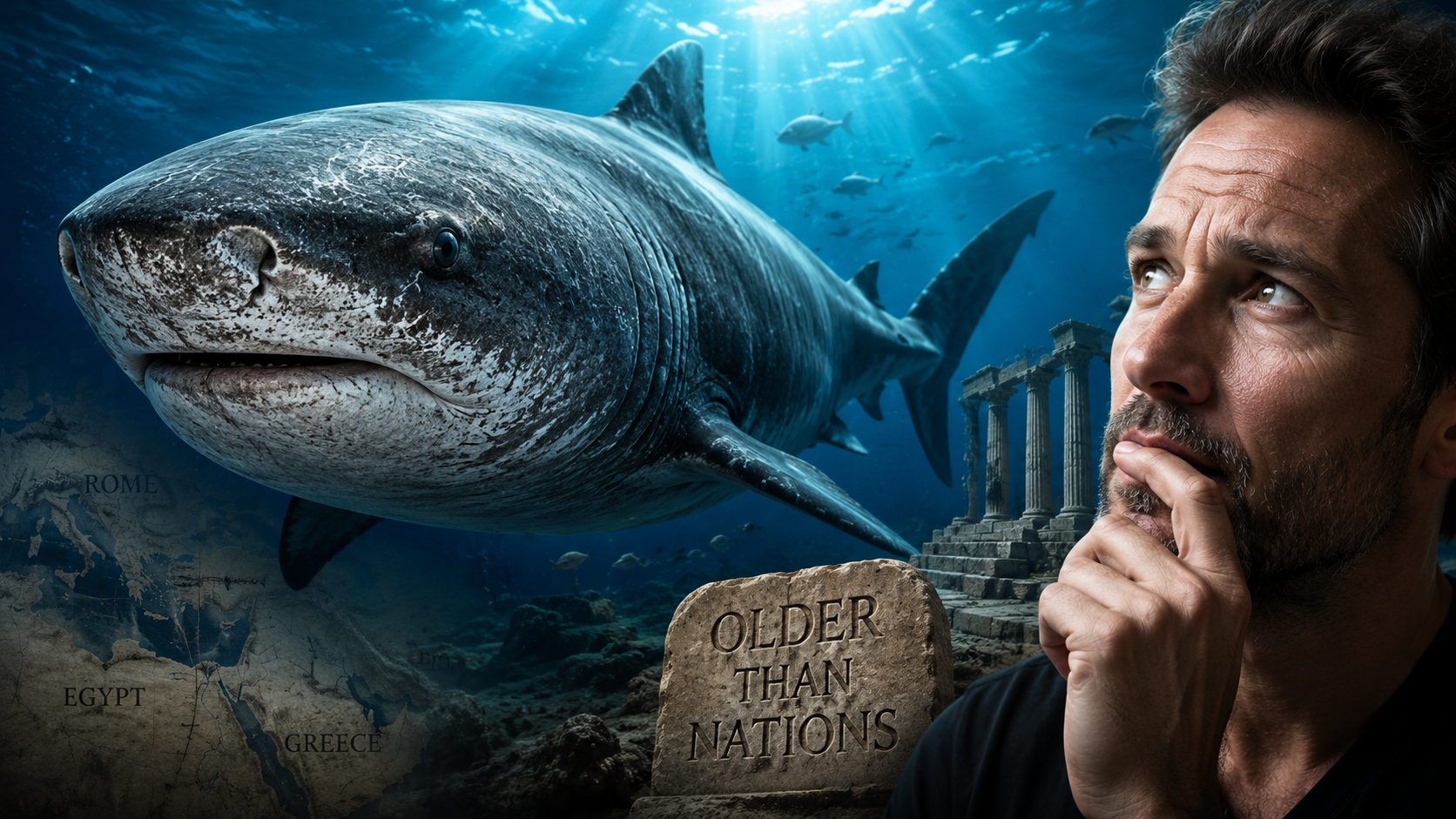
When most people think about sharks, they imagine powerful ocean predators cruising through modern seas. What many don’t realize, however, is that sharks are among the oldest surviving vertebrates on Earth. These remarkable creatures have been swimming through the world’s oceans for hundreds of millions of years—long before the rise of modern civilizations, empires, and even dinosaurs.
To put their age into perspective, sharks existed before many of the continents looked the way they do today. They survived mass extinctions, dramatic climate shifts, and countless geological transformations that wiped out entire groups of animals.
Here are 13 surprising truths about the shark lineage that predates many nations—and why these ancient survivors continue to fascinate scientists and nature enthusiasts alike.
1. Sharks Are Older Than Dinosaurs
One of the most astonishing facts about sharks is their age.
Scientists estimate that the earliest shark ancestors appeared more than 400 million years ago. By comparison, dinosaurs first emerged roughly 230 million years ago.
This means sharks were already thriving in ancient oceans for well over 150 million years before the first dinosaur walked across the Earth.
Their longevity makes them one of the oldest surviving groups of vertebrates on the planet.
2. They Existed Before Many Trees
This fact often surprises people even more than the dinosaur comparison.
The earliest shark ancestors appeared long before the widespread forests we recognize today. While primitive plant life existed, many modern tree groups had not yet evolved.
In a sense, sharks were already established ocean dwellers before Earth developed many of the landscapes that now seem timeless.
Their evolutionary timeline challenges our assumptions about the history of life.
3. They Survived Multiple Mass Extinctions
Earth has experienced several major extinction events throughout its history.
These catastrophic periods eliminated vast numbers of species and dramatically reshaped ecosystems. Yet sharks managed to survive each one, adapting to changing environmental conditions over millions of years.
Their resilience provides scientists with valuable insights into long-term survival strategies in nature.
Few animal lineages can claim such an impressive record of endurance.
4. Modern Sharks Are Not Living Fossils
People sometimes assume that today’s sharks are identical to their ancient ancestors.
In reality, shark species have evolved significantly over time. While the basic body plan has remained highly effective, countless adaptations have occurred throughout their evolutionary history.
Modern sharks are the result of hundreds of millions of years of refinement and diversification.
They are ancient in origin but thoroughly modern in their biology.
5. There Are More Than 500 Shark Species
Not all sharks resemble the large predators commonly featured in documentaries.
Scientists have identified more than 500 shark species, ranging from tiny deep-sea varieties to massive filter feeders. Some inhabit tropical reefs, while others thrive in icy waters or the deep ocean.
This incredible diversity highlights the adaptability of the shark lineage.
Different species have evolved to occupy a wide variety of ecological niches.
6. Some Sharks Glow in the Dark
Bioluminescence isn’t limited to jellyfish and deep-sea fish.
Researchers have discovered shark species capable of producing light through specialized biological processes. These glowing patterns may help with camouflage, communication, or species recognition.
The discovery demonstrates how much remains to be learned about shark biology.
Even animals that have existed for hundreds of millions of years continue to surprise scientists.
7. Their Skeletons Are Made of Cartilage
Unlike humans and most other vertebrates, sharks do not have skeletons made primarily of bone.
Instead, their skeletons consist largely of cartilage—the same flexible material found in human noses and ears. This lighter structure helps improve buoyancy and maneuverability in the water.
The design has proven remarkably successful over evolutionary time.
It is one of many adaptations that contributed to the long-term success of sharks.
8. They Have Extraordinary Sensory Abilities
Sharks possess some of the most advanced sensory systems in the animal kingdom.
Many species can detect tiny electrical signals produced by living organisms. Specialized organs known as ampullae of Lorenzini help them locate prey even when visibility is poor.
They also have highly developed senses of smell, hearing, and vibration detection.
These capabilities make sharks exceptionally effective hunters and navigators.
9. Some Species Can Live for Centuries
While many shark species have relatively typical lifespans, others can live extraordinarily long lives.
The best-known example is the Greenland Shark, which researchers believe can survive for several centuries. Some estimates suggest individuals may live more than 400 years.
If accurate, this would make them among the longest-living vertebrates ever documented.
Imagine an animal alive before the founding of many modern countries still swimming today.
10. Sharks Help Maintain Healthy Marine Ecosystems
Sharks play a critical ecological role.
As predators, they help regulate populations of other marine animals and contribute to balanced food webs. Their presence can influence the behavior and distribution of prey species, affecting entire ecosystems.
Healthy shark populations often support healthier oceans overall.
This ecological importance extends far beyond their reputation as predators.
11. Most Sharks Pose Little Threat to Humans
Popular culture has created an image of sharks as relentless dangers to people.
In reality, the vast majority of shark species are harmless to humans. Many are too small to pose any risk, while others live far from areas where people swim.
Serious shark incidents are extremely rare compared to many everyday risks.
Understanding this helps promote more balanced perspectives on shark conservation.
12. They Continue to Reveal Evolutionary Secrets
Because sharks have existed for such an immense span of time, studying them provides valuable clues about vertebrate evolution.
Researchers examine shark genetics, anatomy, immune systems, and reproductive strategies to better understand how complex organisms adapt and survive.
Their long evolutionary history makes them important subjects for scientific investigation.
Each new discovery contributes to a deeper understanding of life on Earth.
13. They Are Older Than Many Human Institutions and Nations
Perhaps the most remarkable truth is how their age compares to human history.
Many modern nations are only a few centuries old. Even some of the world’s oldest continuously existing civilizations emerged long after sharks had already been evolving in Earth’s oceans for hundreds of millions of years.
When people refer to sharks as ancient animals, they are not exaggerating.
Their lineage stretches back through periods of history almost impossible for the human mind to fully comprehend.
Why Sharks Continue to Fascinate Scientists
Sharks occupy a unique place in the natural world.
They combine extraordinary longevity, biological sophistication, ecological importance, and evolutionary success. Few groups of animals have persisted through such dramatic environmental changes while maintaining such broad diversity.
Researchers continue to study sharks to answer questions about:
- Evolution
- Longevity
- Adaptation
- Marine ecology
- Sensory biology
- Conservation
Each discovery adds another layer to our understanding of these remarkable creatures.
The Conservation Challenge
Despite surviving for hundreds of millions of years, sharks face significant modern threats.
Overfishing, habitat degradation, climate change, and accidental capture in fishing operations have placed pressure on many shark populations worldwide.
The fact that sharks survived multiple mass extinctions does not guarantee protection from human-caused challenges.
Conservation efforts are increasingly focused on preserving species that play vital roles in ocean ecosystems.
Protecting sharks ultimately helps protect marine biodiversity as a whole.
Final Thoughts
The shark lineage represents one of nature’s greatest success stories. These extraordinary animals appeared hundreds of millions of years ago, survived global catastrophes, and adapted to changing oceans long before the rise of modern civilizations.
From their ancient origins and advanced senses to their ecological importance and astonishing longevity, sharks continue to challenge assumptions about life on Earth. The 13 truths explored above reveal why these creatures remain among the most fascinating animals ever to inhabit our planet.
Long before many nations existed—and long before humans appeared at all—sharks were already mastering the oceans. Their story is not just one of survival but of remarkable evolutionary endurance, making them one of nature’s most enduring wonders.







