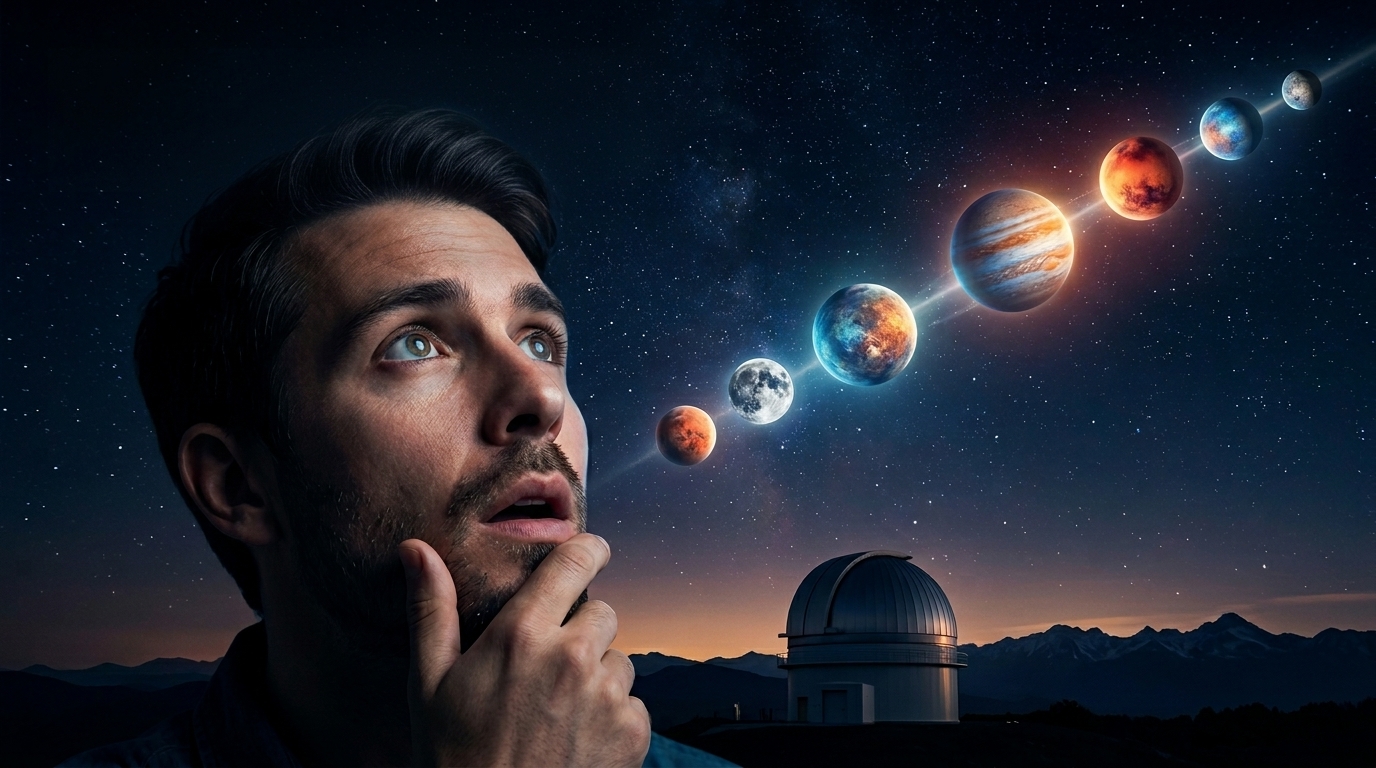
Every so often, the night sky puts on a display that feels almost carefully arranged. While celestial events happen constantly, some periods stand out because multiple astronomical phenomena overlap in a short span of time. January 2026 is shaping up to be one of those moments.
From planetary alignments to meteor activity and seasonal sky conditions, the month offers a mix of subtle and striking events that will reward anyone willing to look up. But beyond the headlines and social media buzz, there are deeper and less obvious details that make this celestial lineup especially interesting.
Understanding these hidden aspects helps reveal not just what we will see in the sky—but why it matters scientifically and visually.
Here are seven things most people don’t realize about January 2026’s celestial lineup.
1. Planetary Alignments Are More About Perspective Than Perfect Lines
One of the most talked-about features of any celestial month is planetary alignment. However, what most people picture is a perfectly straight line of planets stretching across the sky.
In reality, planetary alignments are visual effects caused by perspective from Earth. The planets are not actually lined up in space; instead, they appear along a curved path known as the ecliptic.
In January 2026, several planets will appear in the same general region of the sky, creating a striking visual grouping during pre-dawn or evening hours depending on location.
This alignment is not rare in astronomical terms, but it is visually compelling because it allows observers to see multiple planets without specialized equipment.
The key takeaway is that alignment is about geometry of sight, not physical arrangement.
2. The Winter Sky Makes Celestial Events Appear Sharper and Brighter
One often-overlooked advantage of January skywatching is atmospheric clarity.
Cold winter air tends to hold less moisture, dust, and pollution compared to warmer months. This results in sharper visibility and steadier viewing conditions for stars and planets.
As a result, celestial objects during January often appear brighter and more defined.
In 2026, this seasonal clarity will enhance visibility of planetary movement and faint background stars.
Even modest telescopes or binoculars will benefit from these improved conditions, making subtle astronomical details easier to observe.
The environment itself becomes part of the viewing experience, sharpening the contrast between Earth and space.
3. Meteor Activity Continues Quietly in the Background
While January is not known for one of the major meteor showers like the Perseids or Geminids, it still features ongoing minor meteor activity.
The Quadrantid meteor shower typically occurs in early January and is known for its sharp but short peak. However, many casual observers miss it due to its brief visibility window and weather conditions in many regions.
Beyond named showers, sporadic meteors continue to enter Earth’s atmosphere throughout the month.
These faint streaks are often overlooked, especially when attention is focused on planets or moon phases.
Yet they represent constant cosmic activity—remnants of debris interacting with Earth’s atmosphere every night.
4. Lunar Phases Play a Major Role in Visibility
The Moon is one of the most influential factors in how we experience the night sky, yet its impact is often underestimated.
During brighter lunar phases, especially near full moon, faint stars and meteor activity become harder to see. During darker phases, the sky opens up dramatically.
In January 2026, the timing of lunar phases will significantly influence which celestial events are easiest to observe.
A darker sky window can dramatically improve the visibility of meteor activity and deep-sky objects, while brighter phases may highlight lunar surface details instead.
Understanding the Moon’s cycle is essential for planning optimal skywatching sessions.
5. Planet Brightness Changes Are Subtle but Scientifically Important
Many people notice planets as steady points of light, but fewer realize that their brightness and position subtly change over time.
These changes are caused by varying distances between Earth and other planets as they orbit the Sun.
In January 2026, some planets will be approaching or receding from optimal viewing positions, which affects how bright they appear in the night sky.
For example, planets closer to opposition (when Earth is directly between the planet and the Sun) appear brighter and more prominent.
These shifts are gradual but measurable, and they provide astronomers with important data about orbital mechanics and planetary motion.
6. The Ecliptic Line Creates a Natural “Sky Highway”
One of the most important but least appreciated features of the night sky is the ecliptic.
This is the imaginary line that represents the plane of Earth’s orbit around the Sun. Most planets travel close to this same plane, which is why they appear along a shared path in the sky.
During January 2026, multiple planets will be positioned along this celestial highway, making it easier to track their movement night after night.
What makes this interesting is that the ecliptic is not just a visual guide—it reflects the fundamental structure of the solar system.
Understanding this line helps observers make sense of why planets always appear in a predictable band rather than randomly scattered across the sky.
7. Light Pollution Will Be the Biggest Factor in What You Can Actually See
Perhaps the most important yet underestimated factor affecting January’s celestial viewing is not in space—but on Earth.
Light pollution from cities, towns, and infrastructure significantly reduces the visibility of stars, planets, and meteor activity.
Even during optimal celestial conditions, heavy artificial lighting can wash out faint details and limit the number of visible objects.
In 2026, this means that where you observe from will matter as much as what you observe.
Dark-sky locations will reveal far more detail, while urban environments may only show the brightest planets and stars.
This makes planning and location selection crucial for anyone hoping to experience the full richness of the celestial lineup.
Why January 2026 Stands Out Astronomically
What makes January 2026 particularly interesting is not a single dramatic event, but the combination of multiple overlapping factors.
Planetary visibility, seasonal atmospheric clarity, lunar cycles, and ongoing meteor activity all interact to create a layered viewing experience.
Rather than a single spectacle, the month offers a series of smaller but meaningful celestial moments.
For dedicated observers, this creates opportunities for repeated skywatching sessions with different highlights each time.
How to Get the Best Viewing Experience
To fully appreciate January’s night sky, a few simple practices can make a major difference:
- Choose locations away from city lights
- Allow time for eyes to adjust to darkness
- Check lunar phase calendars before planning sessions
- Use binoculars or small telescopes for planetary detail
- Dress warmly for extended winter viewing
Even casual observers can notice significant improvements with minimal preparation.
The Bigger Picture Behind the Sky
Celestial events often remind us that the night sky is not static—it is constantly changing, even if those changes are slow from a human perspective.
January 2026 offers a clear example of this ongoing motion. Planets shift position, meteors continue to arrive, and Earth moves through its own orbit while everything else follows its path.
What we see in the sky is a snapshot of a much larger and more complex system in motion.
Final Thoughts
January 2026’s celestial lineup is not defined by a single headline event, but by the interaction of multiple subtle phenomena.
The seven key insights include:
- Planetary alignments are perspective-based
- Winter air improves visibility
- Meteor activity continues quietly
- Lunar phases shape what we can see
- Planet brightness changes over time
- The ecliptic organizes planetary movement
- Light pollution strongly affects observation
Together, these factors create a rich and layered skywatching experience.
For those willing to step outside and look up, January 2026 offers more than just a view of space—it offers a reminder of how dynamic and interconnected our universe truly is.







