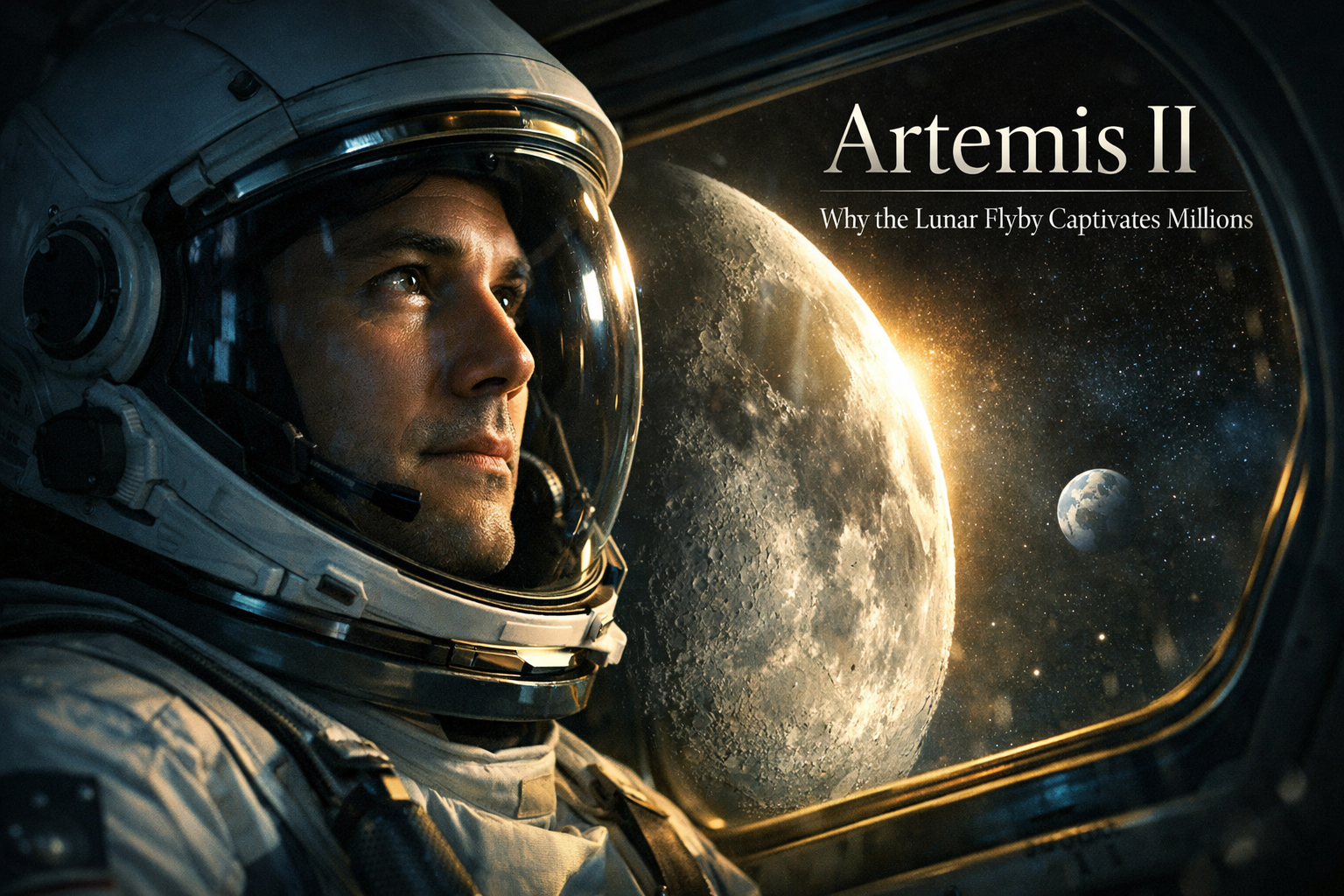
Humanity has always looked at the Moon and felt a mixture of curiosity, wonder, and possibility. It is our closest celestial neighbor, yet still distant enough to inspire imagination and ambition. With NASA’s upcoming Artemis II mission, that relationship is entering a new chapter.
Artemis II is not a landing mission. Instead, it will carry astronauts around the Moon and bring them safely back to Earth, marking the first crewed lunar flyby in more than half a century. This journey is part of a broader effort to return humans to deep space exploration and eventually establish a long-term presence on the Moon.
But beyond the technical achievements, Artemis II has struck an emotional chord with millions of people around the world. It is not just a mission—it is a symbol of renewal, curiosity, and shared human ambition.
Here are seven reasons why Artemis II’s lunar flyby resonates so deeply with global audiences.
1. It Marks the Return of Humans to Deep Space After Decades
One of the most powerful aspects of Artemis II is the simple fact that it brings humans back to lunar distance travel for the first time since the Apollo era.
The last time astronauts traveled this far from Earth was during the Apollo missions in the 1960s and 1970s. Since then, human spaceflight has been limited primarily to low Earth orbit.
Artemis II changes that by sending astronauts farther than anyone has traveled in over 50 years.
This return to deep space exploration feels like reconnecting with a forgotten part of human history.
It reminds people of what humanity once achieved—and what it is capable of achieving again.
2. The Mission Revives the Spirit of Exploration
Artemis II is not just a scientific mission—it is a continuation of humanity’s long tradition of exploration.
From ocean voyages to polar expeditions, humans have always pushed beyond known boundaries.
The lunar flyby represents a modern version of that same instinct.
It speaks to a universal desire to explore the unknown, even when it is difficult, expensive, and risky.
This emotional connection to exploration is one of the key reasons the mission resonates with so many people.
It is not just about reaching the Moon—it is about the mindset that makes such journeys possible.
3. It Connects Past Achievements With Future Goals
Artemis II exists at a unique intersection between history and the future.
It builds directly on the legacy of the Apollo missions while also laying the groundwork for future lunar bases and Mars exploration.
This connection creates a powerful narrative bridge.
Older generations remember the excitement of Apollo-era spaceflight, while younger generations are witnessing a new era unfold in real time.
The mission serves as a reminder that progress is continuous, not isolated.
It connects decades of scientific achievement into a single evolving story.
4. The Lunar Flyby Offers a Rare View of Earth From Afar
One of the most emotionally powerful aspects of lunar missions is the perspective they offer.
During the flyby, astronauts will see Earth as a small, fragile sphere floating in the vast darkness of space.
This “overview effect,” first described by astronauts during earlier missions, often leads to profound emotional responses.
People who experience it frequently report feelings of awe, unity, and a deeper appreciation for the planet.
Even though most of humanity will not physically experience this view, images and live updates from Artemis II will allow millions to share in that perspective.
This shared visual experience is one of the reasons the mission resonates so widely.
5. It Symbolizes International Collaboration and Shared Effort
Modern space exploration is no longer a single-nation effort. It is a global collaboration involving scientists, engineers, and agencies from around the world.
Artemis II reflects this cooperative spirit, with contributions from multiple international partners.
This collaborative structure reinforces the idea that space exploration is a shared human endeavor rather than a competitive one.
In a time when global cooperation is often challenged, missions like Artemis II serve as reminders of what can be achieved when nations work together.
This sense of unity adds emotional weight to the mission’s scientific goals.
6. It Inspires a New Generation of Scientists and Engineers
One of the most important impacts of Artemis II is its influence on younger generations.
Space missions have historically played a major role in inspiring interest in science, technology, engineering, and mathematics.
Seeing astronauts travel to the Moon in real time can spark curiosity and ambition in students around the world.
Many engineers and scientists working today were inspired by earlier space missions during their childhood.
Artemis II has the potential to create a similar ripple effect for a new generation.
This long-term educational impact is one of the mission’s most valuable outcomes.
7. It Represents a Step Toward a Permanent Lunar Presence
Perhaps the most forward-looking aspect of Artemis II is its role in preparing for future missions.
The goal of the broader Artemis program is not just to visit the Moon, but to establish a sustainable human presence there.
This includes building infrastructure, conducting scientific research, and developing technologies that will support future deep space exploration.
Artemis II is a critical step in that process.
By testing spacecraft systems and human performance in deep space conditions, it helps lay the foundation for future missions that will stay longer and go farther.
This long-term vision is what makes the mission feel significant beyond its immediate timeline.
The Emotional Power Behind Space Exploration
Beyond technical achievements, space missions resonate because they tap into something deeply human.
They represent curiosity, ambition, and the desire to understand our place in the universe.
Artemis II is especially powerful because it combines nostalgia for past achievements with excitement for future possibilities.
It reminds people that exploration is not a finished chapter—it is an ongoing journey.
Why Artemis II Feels Different From Other Space Missions
Unlike many robotic missions or Earth-orbit operations, Artemis II involves human presence in deep space.
This human element adds emotional depth that cannot be replicated by instruments alone.
Seeing astronauts travel beyond Earth orbit brings a sense of immediacy and connection that resonates strongly with global audiences.
It transforms space exploration from abstract science into a shared human story.
The Role of Media in Amplifying Public Connection
Modern communication tools also play a major role in why Artemis II resonates so widely.
Unlike earlier space missions, today’s audiences can follow updates in real time through digital platforms, live broadcasts, and interactive media.
This constant access helps people feel more connected to the mission.
It turns space exploration into a collective experience rather than a distant event.
This accessibility strengthens emotional engagement and global interest.
Final Thoughts
Artemis II represents far more than a lunar flyby. It is a symbol of renewal, exploration, and shared human ambition.
The seven key reasons it resonates so strongly include:
- Return to deep space after decades
- Revival of exploration spirit
- Connection between past and future missions
- Earth perspective from lunar distance
- International collaboration
- Inspiration for future generations
- Foundation for a permanent lunar presence
Together, these elements transform Artemis II from a technical mission into a cultural milestone.
It is a reminder that humanity’s desire to explore has never faded—it has simply been waiting for the next chapter to begin.
As the spacecraft prepares to journey around the Moon, millions around the world will be watching not just a mission, but a moment in history where humanity once again reaches beyond its home.







