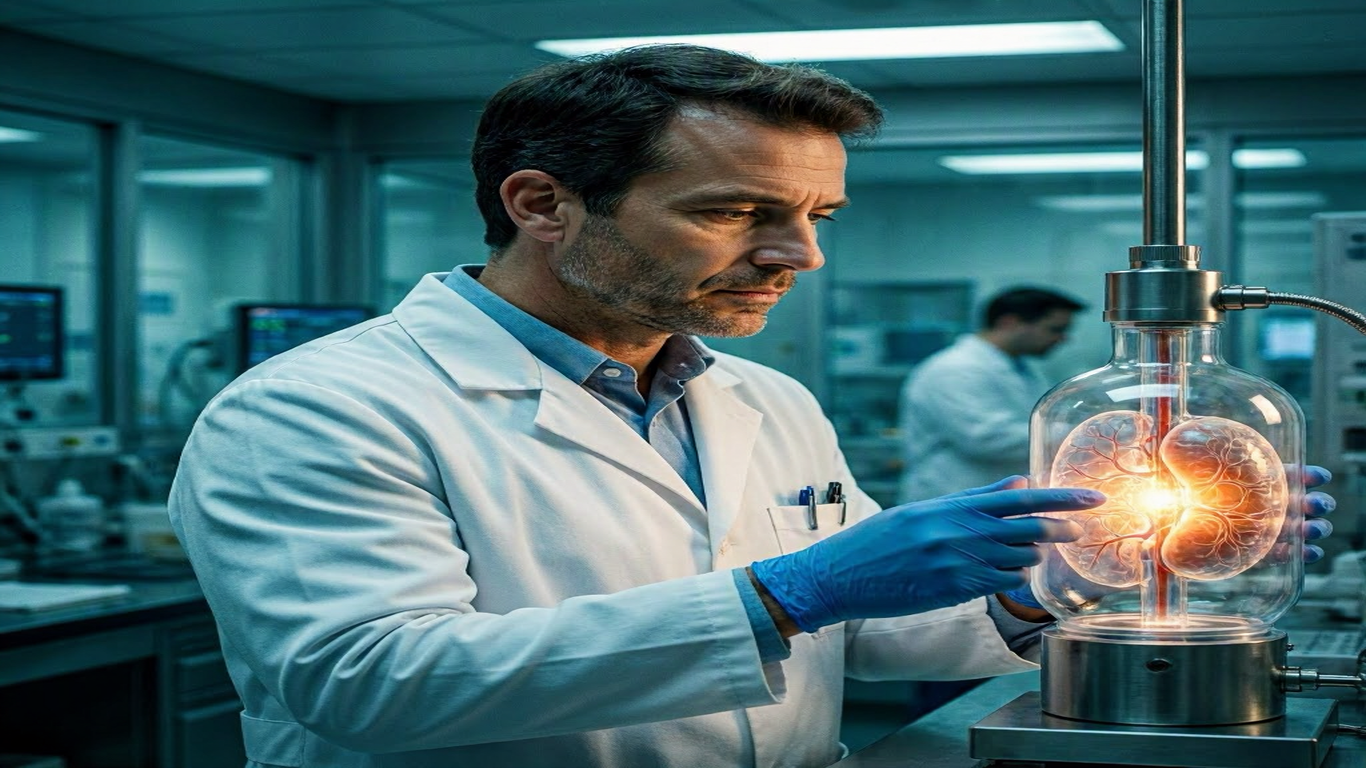
Modern medicine has made remarkable progress in treating disease, extending life expectancy, and improving quality of life. Yet despite these advances, damage to vital organs remains one of the greatest challenges in healthcare. Conditions affecting the kidneys, heart, liver, lungs, and other essential organs continue to impact millions of people worldwide every year.
Traditionally, treatment options for severe organ damage have often focused on managing symptoms, slowing disease progression, or replacing the organ through transplantation. While these approaches have saved countless lives, researchers are increasingly exploring another possibility: repairing damaged organs rather than replacing them.
This growing field, often referred to as regenerative medicine or organ repair research, has become one of the most exciting areas in modern science. Scientists around the world are investigating ways to help the body restore, regenerate, or rebuild damaged tissues using innovative technologies and biological processes.
So why is organ repair attracting so much attention? Here are 14 important reasons researchers continue to invest time, resources, and effort into this rapidly evolving field.
1. Organ Disease Affects Millions of People Worldwide
One of the primary reasons scientists are pursuing organ repair techniques is the enormous global burden of chronic disease.
Heart disease, kidney disease, liver disorders, and respiratory illnesses affect millions of individuals across every age group. In many cases, damage accumulates gradually over years before symptoms become severe.
Because these conditions are so widespread, even modest improvements in treatment could benefit a significant number of patients.
Researchers see organ repair as a potential pathway toward addressing one of healthcare’s most pressing challenges.
2. Organ Transplants Have Significant Limitations
Organ transplantation remains one of medicine’s greatest achievements, but it also faces major obstacles.
There are often far more patients in need of transplants than there are available donor organs. Many individuals spend months or even years on waiting lists.
Even when a transplant is successful, recipients frequently require lifelong medical monitoring and medications to reduce the risk of rejection.
Scientists hope that effective organ repair techniques could eventually reduce dependence on donor organs and provide additional treatment options for patients.
3. The Body Already Has Natural Healing Mechanisms
One reason researchers are optimistic is that the human body already possesses impressive repair capabilities.
Skin heals after cuts. Bones mend after fractures. Certain tissues can regenerate to varying degrees following injury.
Scientists are studying these natural healing processes to understand how they work and whether similar mechanisms can be encouraged in organs that typically have limited regenerative capacity.
By learning from the body’s own biology, researchers hope to unlock new approaches to tissue repair.
4. Advances in Stem Cell Research Are Creating New Possibilities
Stem cells have become a major focus in regenerative medicine because of their unique ability to develop into different types of specialized cells.
Researchers are investigating how stem cells might help repair damaged tissues, replace injured cells, or support healing within organs.
While many applications remain under study, advances in stem cell science continue expanding the possibilities for future treatments.
The field remains one of the most promising areas of medical research today.
5. Scientists Want to Improve Quality of Life
Many chronic organ conditions affect more than physical health.
Patients often experience fatigue, discomfort, mobility limitations, emotional stress, and disruptions to daily life.
Researchers recognize that successful organ repair could potentially improve independence, energy levels, and overall well-being.
The goal is not only to extend lifespan but also to enhance healthspan—the years people spend living actively and comfortably.
Improving quality of life remains a major motivation behind ongoing research efforts.
6. Healthcare Costs Continue to Rise
Chronic disease management can be expensive for both individuals and healthcare systems.
Long-term treatments, hospitalizations, medications, dialysis, rehabilitation, and ongoing monitoring often require substantial resources.
Scientists are interested in whether regenerative therapies might eventually reduce some of these long-term healthcare burdens.
Although developing advanced treatments can be costly initially, successful repair strategies could potentially lower future healthcare expenses by reducing complications and improving outcomes.
This economic factor is one reason governments, institutions, and private organizations continue funding research in this area.
7. Technology Is Accelerating Medical Innovation
The pace of scientific advancement has increased dramatically in recent decades.
Researchers now have access to sophisticated imaging tools, genetic analysis technologies, artificial intelligence systems, and advanced laboratory techniques that were unimaginable a generation ago.
These technologies allow scientists to study tissues and cellular processes in extraordinary detail.
As a result, researchers can investigate organ repair strategies more effectively than ever before.
Many experts believe technological progress will continue driving major breakthroughs in regenerative medicine.
8. Personalized Medicine Is Changing Healthcare
Healthcare is increasingly moving toward individualized treatment approaches.
Rather than applying identical therapies to everyone, researchers are exploring ways to tailor treatments based on genetics, medical history, lifestyle factors, and biological characteristics.
Organ repair research fits naturally into this trend.
Future therapies may be designed to work with a patient’s unique biology, potentially improving effectiveness while minimizing unwanted side effects.
Personalization is becoming a central theme in many areas of modern medicine.
9. Researchers Are Learning More About Cellular Communication
The body functions through complex communication networks between cells.
Scientists have discovered that cells constantly exchange signals that influence growth, repair, inflammation, and healing.
Understanding these communication systems may help researchers develop new ways to encourage tissue regeneration.
Instead of simply replacing damaged cells, future treatments may focus on activating existing biological pathways that support repair.
This deeper understanding of cellular behavior is opening new avenues for investigation.
10. Organ Repair Could Reduce Long-Term Complications
Many chronic diseases gradually damage organs over time.
As this damage progresses, patients may experience complications affecting multiple body systems.
Researchers hope that repairing tissues earlier in the disease process could help prevent or reduce these complications.
Protecting organ function may have benefits that extend far beyond the affected organ itself.
This preventive potential is one reason organ repair remains such an attractive research goal.
11. Scientific Discoveries Often Lead to Unexpected Benefits
One fascinating aspect of medical research is that discoveries frequently produce benefits beyond their original purpose.
Techniques developed for organ repair may eventually contribute to advancements in wound healing, tissue engineering, aging research, or other medical fields.
Historically, many breakthroughs have generated applications that researchers did not initially anticipate.
Scientists understand that investing in regenerative medicine may create opportunities across multiple areas of healthcare.
Innovation often produces ripple effects that extend far beyond a single specialty.
12. Patients Are Seeking Better Treatment Options
People living with chronic illnesses often hope for treatments that go beyond symptom management.
While existing therapies can be highly effective, many patients remain interested in approaches that address underlying tissue damage.
Researchers listen carefully to patient experiences when identifying priorities for future investigations.
The desire for more effective, long-lasting solutions continues motivating scientific exploration.
Patient needs and expectations play an important role in shaping research goals.
13. Collaboration Is Driving Faster Progress
Today’s medical research rarely happens in isolation.
Scientists, physicians, engineers, data analysts, biologists, and technology specialists frequently work together on complex challenges.
This collaborative environment allows experts from different fields to share ideas and combine knowledge.
Many advances in organ repair research result from multidisciplinary teamwork rather than individual efforts.
Collaboration accelerates innovation and helps researchers tackle problems from multiple perspectives.
14. The Future of Medicine May Focus More on Regeneration
Perhaps the biggest reason scientists are investigating organ repair techniques is the broader vision they represent.
For much of medical history, treatment has focused on managing disease after damage occurs.
Regenerative medicine offers a different possibility—helping the body restore function, rebuild tissues, and recover from injury more effectively.
While many challenges remain and significant research is still needed, the concept of regeneration represents an exciting shift in how healthcare may evolve.
Researchers believe future medicine could become increasingly focused on restoration rather than replacement.
Challenges Researchers Still Face
Despite the excitement surrounding organ repair research, scientists acknowledge that substantial obstacles remain.
Human biology is extraordinarily complex. Different organs heal in different ways, and what works in laboratory settings may not always succeed in real-world clinical applications.
Researchers must carefully evaluate safety, effectiveness, long-term outcomes, and ethical considerations before new treatments become widely available.
Scientific progress often occurs gradually rather than through sudden breakthroughs.
Understanding these challenges helps maintain realistic expectations while appreciating the importance of ongoing research.
Why This Research Matters
The significance of organ repair research extends beyond individual diseases.
At its core, this work reflects humanity’s broader effort to understand how the body functions and how health can be preserved throughout life.
Every discovery contributes to a growing body of knowledge that may help future generations live healthier, longer lives.
Even when specific therapies remain years away, the research itself often advances scientific understanding in meaningful ways.
Final Thoughts
Scientists are investigating organ repair techniques because they see tremendous potential to improve healthcare, reduce suffering, and expand treatment possibilities for millions of people worldwide.
From stem cell research and personalized medicine to advances in technology and cellular biology, multiple factors are driving progress in this exciting field. While many questions remain unanswered, the growing interest in regenerative medicine reflects a powerful vision for the future—one where damaged tissues may be repaired, organ function preserved, and chronic disease managed more effectively than ever before.
Although the journey is far from complete, each new discovery brings researchers one step closer to understanding how the body heals and how that healing process might be enhanced. For patients, healthcare providers, and scientists alike, that possibility continues to inspire hope and innovation.







