Grief is one of the most deeply personal human experiences. While loss is universal, the way people cope with it varies widely. Some find comfort in memories, others in rituals, and many in objects that carry emotional meaning long after a loved one has passed away.
Among the most powerful coping tools are symbolic gifts—items that are kept, shared, or created to preserve a sense of emotional connection with someone who is no longer physically present.
These objects are not simply possessions. They represent memories, relationships, and emotional bonds that continue beyond death. In many cases, they help people process grief, maintain a sense of closeness, and navigate life after loss.
Psychologists often note that humans have a natural tendency to seek continuing bonds with those they have lost. Symbolic gifts play an important role in that process by turning memory into something tangible.
Here are six meaningful ways people use symbolic gifts to maintain emotional presence after death.
1. They Preserve Personal Belongings as Emotional Anchors
One of the most common ways people maintain a connection with a loved one is by keeping personal items that belonged to them.
These may include clothing, jewelry, books, handwritten notes, or everyday objects that once held significance in their daily life.
While these items may seem ordinary to others, they often carry deep emotional meaning for those left behind.
A shirt can represent comfort and familiarity.
A watch may symbolize time shared together.
A handwritten letter may preserve a voice and personality.
These objects serve as emotional anchors, helping individuals feel a continued connection to the deceased.
For many people, simply seeing or holding these items provides a sense of closeness that words alone cannot offer.
2. They Turn Objects Into Memorial Displays
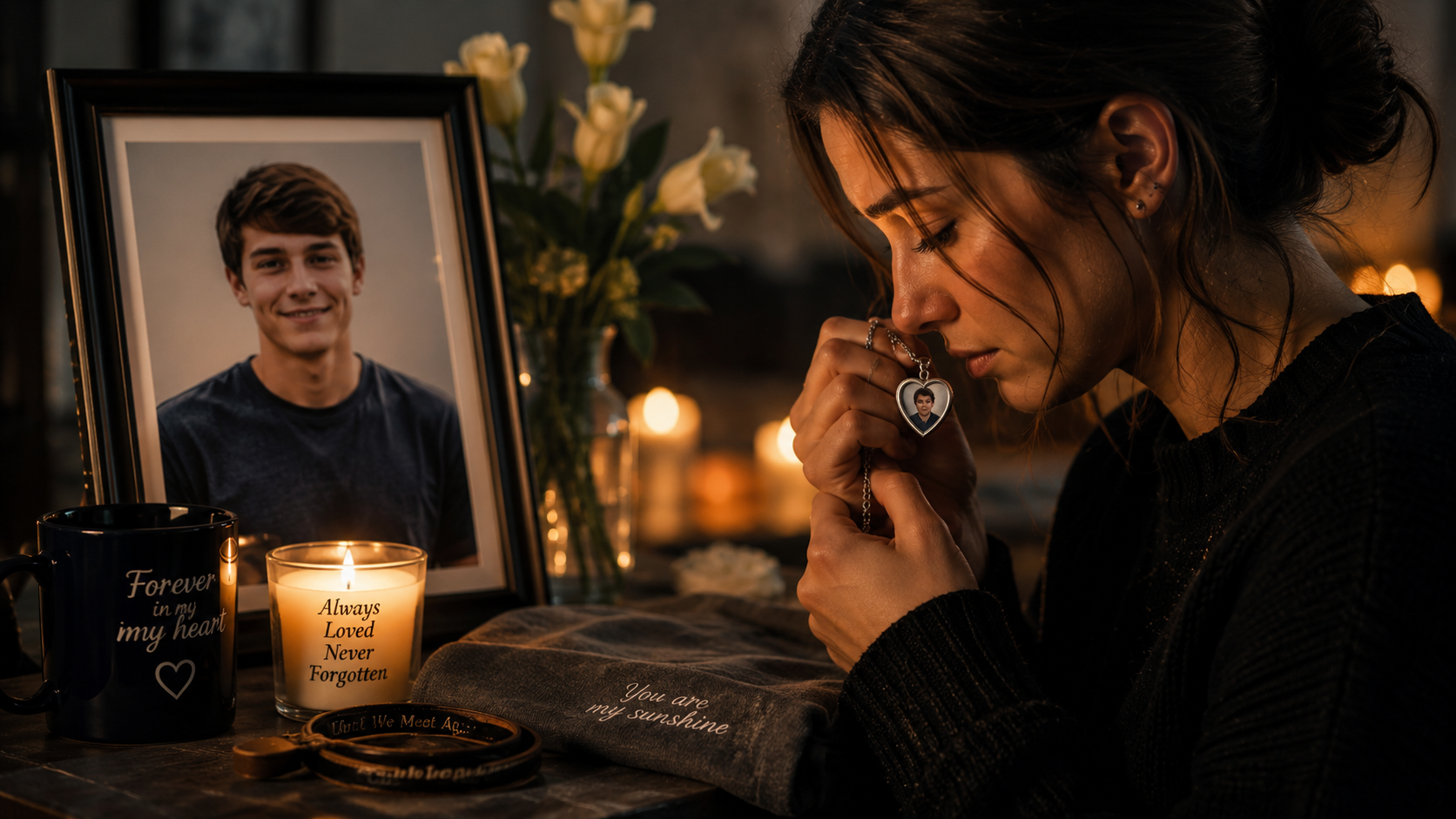
Another common practice is creating dedicated spaces in the home that function as informal memorials.
These spaces often include photographs, candles, favorite items, or meaningful gifts received during the person’s lifetime.
Rather than storing memories away, people choose to display them in visible, intentional ways.
These memorial corners or shelves become places of reflection.
Some individuals visit them daily, while others turn to them during anniversaries, birthdays, or emotionally significant moments.
The presence of these symbolic arrangements helps maintain a sense of ongoing relationship rather than final separation.
They transform physical space into emotional space.
3. They Create Custom Keepsakes From Personal Items
In recent years, personalized memorial keepsakes have become increasingly popular.
People now transform a loved one’s belongings into new forms that can be carried or displayed in different ways.
This may include:
- Jewelry made from ashes
- Framed handwriting artwork
- Clothing repurposed into quilts
- Lockets containing photographs or small mementos
These creations allow grief to take a tangible form.
Rather than storing memories in one place, individuals can carry symbolic reminders with them throughout daily life.
This portability can be especially comforting, as it allows emotional presence to continue beyond the home.
Keepsakes often serve as quiet reminders that love does not end with physical absence.
4. They Use Symbolic Gifts During Important Life Events
Major life milestones often intensify feelings of loss.
Weddings, graduations, birthdays, and anniversaries can all bring a sense of absence when a loved one is no longer present to share the moment.
To bridge this emotional gap, many people incorporate symbolic gifts into these occasions.
This may include:
- Wearing a piece of jewelry that belonged to the deceased
- Displaying a photograph during ceremonies
- Setting an empty chair in their honor
- Carrying a symbolic item during the event
These gestures allow individuals to feel that their loved one is still part of important life experiences.
Rather than focusing solely on absence, symbolic gifts help integrate memory into celebration.
They create emotional continuity between past and present.
5. They Pass Down Objects as Family Legacy Symbols
Symbolic gifts often extend beyond individual grief and become part of family tradition.
Items once belonging to a loved one may be passed down to children or grandchildren as meaningful heirlooms.
These objects may include watches, rings, books, or personal artifacts that carry emotional and historical significance.
When passed down, they serve two purposes.
First, they preserve memory.
Second, they connect generations through shared history.
Family members who never met the original owner can still feel a sense of connection through the story attached to the object.
This process transforms grief into legacy.
Instead of fading over time, emotional presence is carried forward through generations.
6. They Incorporate Symbolic Gifts Into Daily Rituals
For many people, maintaining emotional presence is not limited to special occasions.
It becomes part of everyday life.
Symbolic gifts are often integrated into daily routines in subtle but meaningful ways.
This may include:
- Lighting a candle in the morning or evening
- Wearing a piece of jewelry every day
- Keeping a photograph on a desk or bedside table
- Speaking to a symbolic object during quiet moments
These small rituals help individuals maintain a sense of ongoing connection.
Rather than viewing grief as something that must be “resolved,” these practices acknowledge it as something that evolves over time.
Daily rituals provide structure and emotional stability.
They allow people to continue relationships in a new form—one based on memory and meaning rather than physical presence.
Why Symbolic Gifts Matter in the Grieving Process
Grief is not a linear process. It does not follow a fixed timeline or predictable stages.
Instead, it changes shape over time.
Psychologists often describe modern grief as involving “continuing bonds,” meaning that relationships with the deceased do not end but rather transform.
Symbolic gifts play a key role in this transformation.
They help people:
- Maintain emotional connection
- Express ongoing love
- Process complex emotions
- Create stability during change
- Preserve identity and memory
These objects and rituals allow grief to become integrated into life rather than separated from it.
The Psychology Behind Emotional Attachment to Objects
Human beings naturally form emotional attachments to objects, especially when those objects are associated with meaningful relationships.
This is partly because memory is deeply sensory and associative.
A familiar object can trigger memories, emotions, and experiences connected to a person.
Psychologists suggest that symbolic objects serve as “memory triggers” that help the brain maintain emotional continuity.
This is why even small items can carry significant emotional weight.
A simple object becomes a bridge between past and present.
Cultural Differences in Symbolic Remembrance
Different cultures around the world use symbolic gifts in unique ways to honor the deceased.
Some traditions emphasize clothing or photographs.
Others use religious artifacts, food offerings, or commemorative spaces.
While practices vary, the underlying purpose remains similar: maintaining connection and honoring memory.
This universality suggests that symbolic remembrance is a deeply human behavior rather than a cultural exception.
People everywhere seek ways to preserve emotional bonds after loss.
When Symbolic Gifts Become Healing Tools
While grief can be painful, symbolic gifts often serve as part of the healing process.
They do not erase loss, but they help individuals live with it in a meaningful way.
For many, these objects provide comfort during difficult moments.
They offer reassurance that love and memory continue even after death.
Over time, what begins as a source of intense emotion may evolve into a source of peace.
Healing does not always mean letting go.
Sometimes it means learning how to carry memory forward in a healthy way.
The Fine Balance Between Memory and Moving Forward
One of the challenges in grief is balancing remembrance with continued life growth.
Symbolic gifts can help maintain this balance.
They allow individuals to honor the past without becoming emotionally stuck in it.
Healthy use of symbolic remembrance involves:
- Acknowledging emotions
- Integrating memory into daily life
- Allowing space for both sadness and joy
- Continuing personal growth while preserving connection
When used thoughtfully, symbolic objects support emotional resilience rather than hinder it.
Final Thoughts: Love That Continues Beyond Loss
Symbolic gifts are more than objects. They are emotional expressions of love, memory, and connection.
The six key ways people use them include:
- Preserving personal belongings
- Creating memorial displays
- Designing custom keepsakes
- Honoring loved ones during life events
- Passing objects through generations
- Incorporating rituals into daily life
Together, these practices show that emotional presence does not end with physical absence.
Instead, it continues in memory, in meaning, and in the objects that carry both.
Grief may change relationships, but it does not erase them.
And through symbolic gifts, many people find a way to keep love quietly present in everyday life—long after goodbye.







