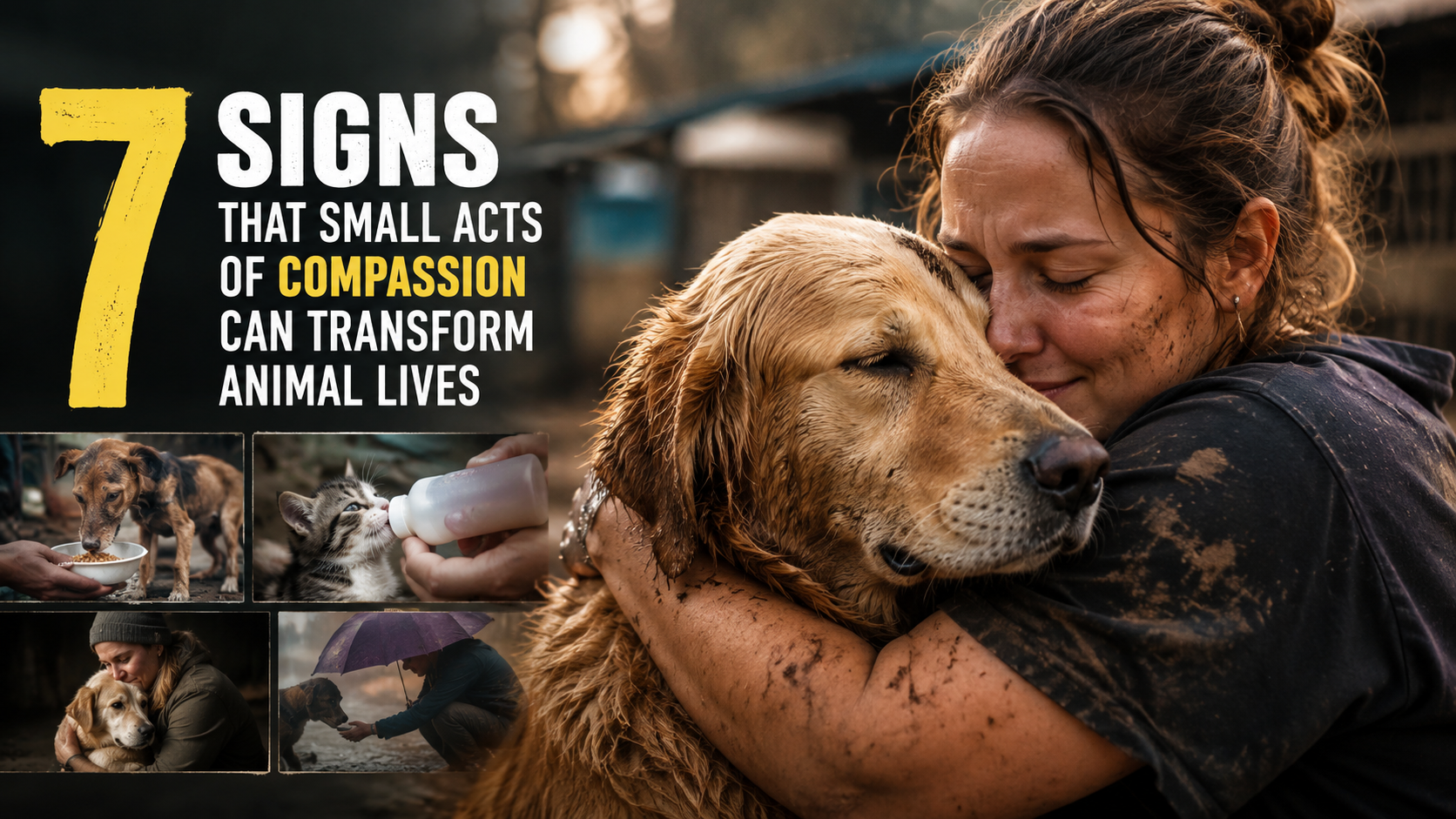
Every day, countless animals depend on the kindness of humans. While major rescue operations and large charitable donations often receive the spotlight, some of the most meaningful changes in an animal’s life begin with surprisingly small gestures. A bowl of clean water left outside on a hot day, a few minutes spent helping a lost pet, or a decision to adopt instead of shop can create ripple effects that extend far beyond what we might imagine.
Compassion toward animals is not always about making dramatic sacrifices. More often, it is about recognizing opportunities to help and taking simple actions when they arise. These small moments of care can improve an animal’s health, increase its chances of survival, and even restore trust after experiences of neglect or abandonment.
The following seven signs reveal how seemingly minor acts of kindness can make an extraordinary difference in the lives of animals.
1. Animals Begin to Trust Humans Again
One of the most powerful effects of compassion is the restoration of trust.
Many animals, especially strays, rescue animals, or those that have experienced abuse, develop fear and anxiety around people. They may avoid human contact, hide when approached, or react defensively because they associate people with danger.
A simple act such as offering food consistently, speaking gently, or allowing an animal space to feel safe can gradually change this perception. Over time, animals often learn that not all humans are a threat. What starts as cautious observation can evolve into confidence and comfort.
Animal shelters frequently report remarkable transformations in frightened animals that receive patient care. Dogs that once trembled in corners begin wagging their tails. Cats that refused interaction start seeking affection. These changes demonstrate how compassion can help heal emotional wounds that are invisible to the eye.
Trust is not built overnight, but even the smallest gesture can become the first step in rebuilding it.
2. Their Physical Health Improves Dramatically
Small acts of kindness often have immediate effects on an animal’s well-being.
Providing food, fresh water, shelter, or basic medical attention can significantly improve an animal’s physical condition. For stray animals, something as simple as access to clean drinking water during extreme weather can prevent dehydration and serious health complications.
Likewise, noticing an injured animal and contacting a rescue organization may save its life. Many animals suffer silently because they lack access to care. When someone takes the time to intervene, recovery becomes possible.
Regular acts of compassion can also prevent future health issues. Vaccinations, proper nutrition, and routine veterinary care all contribute to longer, healthier lives. Even small contributions—such as donating supplies to a shelter or supporting local rescue groups—can help provide essential resources for animals in need.
The difference between suffering and recovery often begins with a single caring decision.
3. Animals Become More Social and Confident
Compassion does more than address physical needs; it also supports emotional development.
Animals thrive when they feel secure and valued. Positive interactions encourage them to explore their environment, engage with others, and express natural behaviors. A neglected animal may initially appear withdrawn, but with consistent kindness, its personality often begins to emerge.
This is especially noticeable in rescued pets. Once they realize they are safe, many become playful, curious, and affectionate. Their confidence grows because they no longer need to focus all their energy on survival.
Socialization plays an important role as well. Gentle handling, positive reinforcement, and patient training help animals develop healthier relationships with both humans and other animals. As confidence increases, so does their ability to adapt to new environments and experiences.
These transformations remind us that emotional well-being is just as important as physical health.
4. Their Chances of Finding a Permanent Home Increase
Many animals in shelters spend weeks, months, or even years waiting for adoption. Small acts of compassion can dramatically improve their chances of finding a loving home.
Volunteers often make a tremendous difference by walking dogs, socializing cats, taking photographs, or sharing adoption profiles online. These seemingly simple efforts help animals become more visible to potential adopters.
Even spending a short amount of time with a shelter animal can improve its behavior and confidence, making it more appealing to prospective families. A dog that has learned basic commands or a cat that has become comfortable around people often stands out during adoption visits.
Additionally, fostering provides temporary care that helps animals adjust to home environments while reducing stress associated with shelter life. Many foster families report that animals flourish once they receive individual attention and stability.
What may feel like a small contribution can ultimately help an animal find a forever home.
5. Communities Become More Animal-Friendly
Compassion toward animals often creates positive change beyond individual cases.
When people witness acts of kindness, they are more likely to adopt similar behaviors. A neighborhood where residents leave water stations for wildlife, support local shelters, and report injured animals often develops a stronger culture of care.
These community-wide efforts can lead to significant improvements in animal welfare. Stray populations may receive better support, lost pets are more likely to be reunited with their owners, and awareness about responsible pet ownership tends to increase.
Schools, community groups, and local organizations can also play a role by educating people about humane treatment and encouraging volunteer work. As compassion spreads, more animals benefit from safer and healthier environments.
In this way, one person’s small act of kindness can inspire many others to take action.
6. Wildlife Receives Critical Support During Difficult Times
Compassion is not limited to pets and domesticated animals. Wildlife also benefits from thoughtful human actions.
Natural disasters, habitat loss, extreme temperatures, and environmental changes can place tremendous pressure on wild animal populations. Small efforts such as planting native flowers, maintaining bird feeders responsibly, creating pollinator-friendly gardens, or providing water sources during droughts can make a meaningful difference.
These actions help support biodiversity and provide resources that many species rely on for survival. Birds, insects, small mammals, and other wildlife often benefit from habitats created by people who care about conservation.
Moreover, reporting injured wildlife to licensed rehabilitation centers ensures that animals receive proper treatment rather than being left to suffer.
Although these actions may seem minor, they contribute to healthier ecosystems and improved survival rates for countless species.
7. Compassion Creates a Lasting Ripple Effect
Perhaps the most remarkable sign of all is the ripple effect that compassion creates.
When someone helps an animal, the impact often extends far beyond that single moment. A rescued dog may become a beloved family companion. A rehabilitated wildlife animal may return to its habitat and continue contributing to its ecosystem. A child who witnesses kindness toward animals may grow up with a lifelong commitment to animal welfare.
Acts of compassion also inspire others to become involved. Social media posts about successful rescues encourage awareness and action. Volunteer experiences motivate people to support shelters and advocacy groups. Stories of recovery remind communities that positive change is possible.
The influence of kindness multiplies as it spreads from person to person. What begins as one small gesture can eventually improve the lives of many animals and inspire broader efforts to protect them.
Why Small Actions Matter More Than We Think
Many people underestimate the value of individual actions because they focus on large-scale problems. It is easy to assume that one person cannot make a significant difference in the face of widespread animal suffering.
However, every large movement begins with individual choices. Shelters rely on volunteers. Rescue organizations depend on supporters. Animals survive because someone noticed them, cared enough to stop, and chose to help.
The reality is that compassion does not require extraordinary resources. It requires awareness, empathy, and a willingness to act. Whether it involves adopting a pet, helping an injured bird, supporting a rescue organization, or simply treating animals with respect, each action contributes to a better world.
Final Thoughts
The transformation of an animal’s life often starts with a simple act of kindness. A moment of patience, a small donation, a bowl of water, or a helping hand may seem insignificant at first, but these gestures can create lasting changes that extend far beyond what we can see.
The seven signs outlined above demonstrate how compassion improves trust, health, confidence, adoption opportunities, community awareness, wildlife support, and long-term positive impact. Together, they highlight an important truth: small actions matter.
Every animal deserves care, safety, and respect. By choosing compassion in everyday situations, we have the power to make a meaningful difference—one small act at a time.







