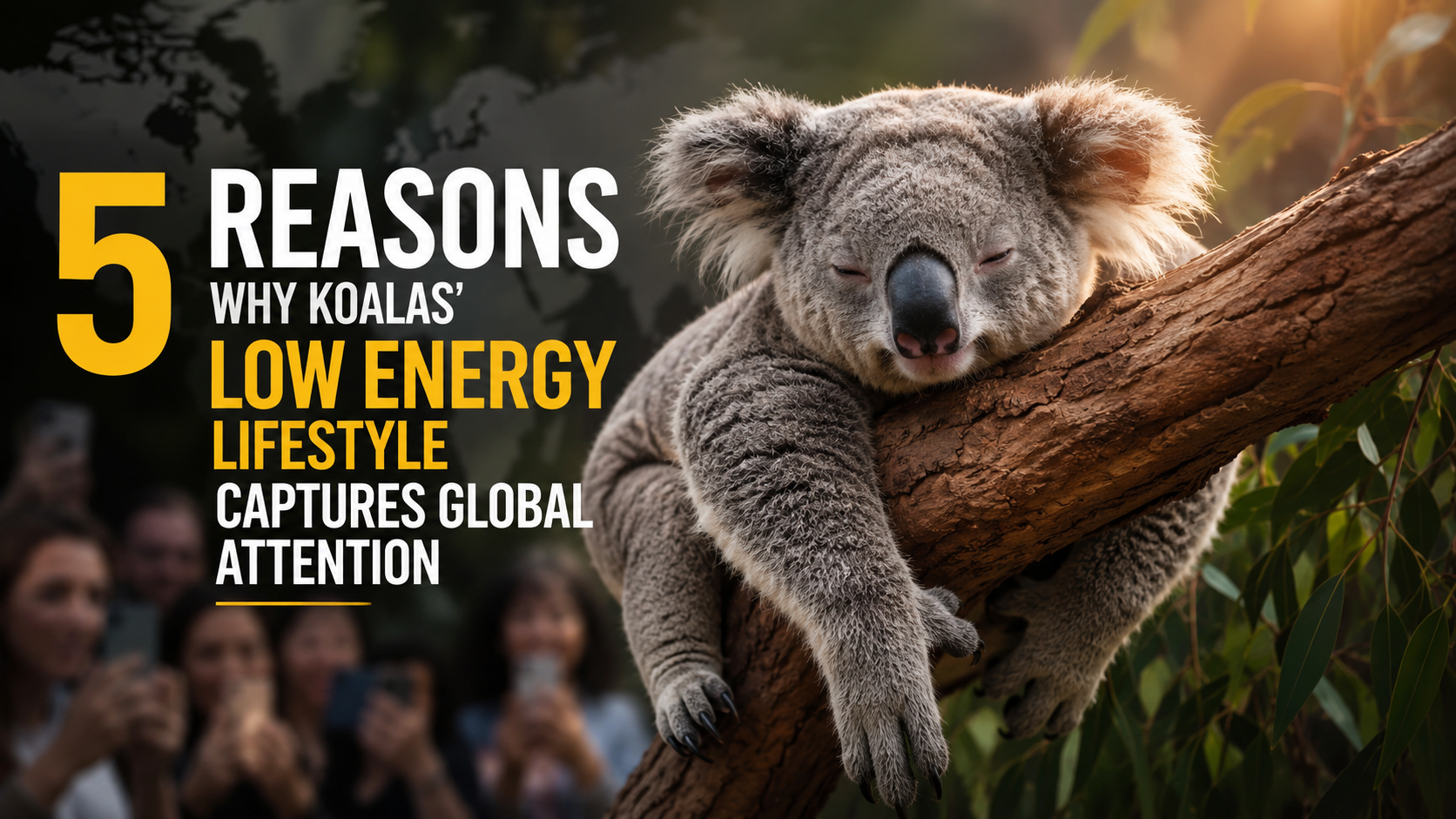
Few animals are as instantly recognizable as the koala. With their fluffy ears, round noses, and seemingly permanent sleepy expressions, these iconic marsupials have become symbols of relaxation and tranquility. Native to Australia, koalas are admired around the world not only for their appearance but also for their remarkably laid-back way of life.
Unlike many animals that spend their days hunting, foraging over long distances, or constantly avoiding predators, koalas are famous for doing very little. In fact, they can sleep or rest for up to 20 hours a day. To some people, this lifestyle appears enviable; to others, it is fascinating from a biological perspective.
But why does the koala’s low-energy routine attract so much global interest? The answer lies in a combination of science, psychology, and cultural appeal. Here are five key reasons why the koala’s relaxed lifestyle continues to captivate people worldwide.
1. Their Extreme Sleeping Habits Seem Almost Unbelievable
One of the first facts people learn about koalas is how much they sleep.
While humans generally require seven to nine hours of sleep each night, koalas can spend the majority of their day resting. Depending on environmental conditions and individual needs, they may sleep or remain inactive for 18 to 20 hours daily.
This extraordinary behavior immediately captures attention because it differs so dramatically from human routines. In a world where productivity, busy schedules, and constant activity are often celebrated, the koala appears to exist by an entirely different set of rules.
For many people, the idea of spending most of the day napping seems both amusing and strangely appealing. As a result, koalas frequently become the subject of social media posts, documentaries, and wildlife articles highlighting their famously sleepy nature.
What appears to be laziness, however, is actually a carefully evolved survival strategy.
2. Their Diet Explains Their Unique Lifestyle
The secret behind the koala’s low-energy lifestyle lies largely in its diet.
Koalas feed primarily on eucalyptus leaves, a food source that presents several challenges. While eucalyptus trees are abundant in parts of Australia, their leaves contain relatively little nutritional value. They are also difficult to digest and contain natural compounds that can be toxic to many other animals.
To survive on such a specialized diet, koalas have evolved highly efficient digestive systems capable of breaking down these leaves. However, digesting eucalyptus requires significant time and energy.
As a result, koalas conserve energy whenever possible. Instead of wasting calories on unnecessary movement, they spend much of their day resting and sleeping. This energy-saving strategy allows them to survive on a food source that would be inadequate for many other mammals.
The connection between diet and behavior fascinates scientists and animal lovers alike because it demonstrates how species adapt to challenging environments over time.
3. They Represent a Lifestyle Many People Secretly Admire
Part of the koala’s popularity stems from the way humans interpret its behavior.
Modern life often feels fast-paced and demanding. Many people juggle work responsibilities, family commitments, social obligations, and digital distractions. Against this backdrop, the image of a koala peacefully resting in a tree can seem incredibly attractive.
Although people understand that koalas are simply following biological instincts, they often project human emotions and values onto the animal. The koala becomes a symbol of slowing down, reducing stress, and enjoying life’s quieter moments.
This symbolic appeal helps explain why koalas are frequently featured in relaxation-themed content, wellness campaigns, and travel marketing materials. Their calm demeanor serves as a visual reminder that rest is an important part of well-being.
In a culture that often celebrates constant activity, the koala offers a refreshing alternative perspective.
4. Their Behavior Highlights the Wonders of Evolution
Beyond their charm, koalas attract attention because they provide an excellent example of evolutionary adaptation.
Every aspect of their low-energy lifestyle reflects millions of years of natural selection. Their specialized diet, digestive system, sleeping patterns, and tree-dwelling habits work together as part of a highly efficient survival strategy.
From a scientific standpoint, koalas demonstrate how species can evolve to thrive within very specific ecological niches. Rather than competing directly with other animals for a wide variety of food sources, they have adapted to exploit a resource that relatively few species can utilize effectively.
This specialization makes them particularly interesting to researchers studying ecology, animal behavior, and evolutionary biology.
For the public, the koala serves as a reminder that nature often produces solutions that may seem unusual at first glance but make perfect sense within a particular environment.
5. Their Vulnerability Inspires Global Concern and Protection Efforts
Another reason people pay close attention to koalas is that their future faces significant challenges.
Despite their widespread popularity, koala populations have been affected by habitat loss, climate change, disease, drought, and increasingly severe wildfires. Images of koalas rescued during bushfires have generated international sympathy and support for conservation efforts.
Their gentle appearance and seemingly peaceful lifestyle make them particularly effective ambassadors for wildlife protection. When people learn about the threats facing koalas, they often become more interested in broader environmental issues affecting ecosystems and biodiversity.
Conservation organizations frequently use koalas to raise awareness about habitat preservation and sustainable land management. Because the animal already enjoys strong public affection, it can help draw attention to important ecological challenges.
In this way, the koala’s low-energy lifestyle does more than entertain—it helps inspire conversations about protecting wildlife and natural habitats for future generations.
The Science Behind Their Daily Routine
To better understand why koalas behave the way they do, it helps to look at how they spend a typical day.
Most of their time is devoted to:
- Sleeping
- Resting in tree branches
- Feeding on eucalyptus leaves
- Grooming
- Moving between nearby trees
Unlike highly active predators or migratory animals, koalas rarely need to travel long distances. Their energy conservation strategy allows them to maximize the nutritional value they obtain from their specialized diet.
This routine may appear uneventful from a human perspective, but it represents a highly successful adaptation that has enabled koalas to survive in Australia for millions of years.
Why Koalas Continue to Dominate Popular Culture
The global fascination with koalas extends far beyond wildlife enthusiasts.
They regularly appear in:
- Children’s books
- Nature documentaries
- Tourism campaigns
- Educational materials
- Conservation initiatives
- Social media content
Their popularity stems from a rare combination of traits: they are visually appealing, behaviorally unique, and scientifically interesting. Few animals can simultaneously inspire affection, curiosity, and concern in the same way.
Additionally, their sleepy lifestyle creates a natural contrast with the increasingly hectic pace of modern society. This contrast helps keep koalas relevant in popular culture year after year.
Lessons Humans Can Take From Koalas
While people should not literally imitate a koala’s daily schedule, there are a few symbolic lessons that resonate with audiences worldwide.
Koalas remind us of the importance of:
- Rest and recovery
- Energy conservation
- Adapting to our environment
- Appreciating simple routines
- Maintaining balance between activity and relaxation
Their behavior highlights a truth often overlooked in modern life: constant movement is not always necessary for success or survival.
Sometimes efficiency, patience, and strategic energy use are just as valuable.
Final Thoughts
The global fascination with koalas goes far beyond their adorable appearance. Their low-energy lifestyle offers a unique window into the relationship between biology, evolution, and behavior. What may initially seem like laziness is actually a sophisticated adaptation that allows these animals to thrive on a challenging diet and within a specialized ecological niche.
From their extraordinary sleeping habits and evolutionary success to their role in conservation awareness, koalas continue to capture the imagination of people around the world. They symbolize calmness in a fast-moving world and serve as a reminder that nature often operates according to its own remarkable logic.
The five reasons explored above help explain why these sleepy Australian marsupials remain among the most beloved and fascinating animals on the planet.







