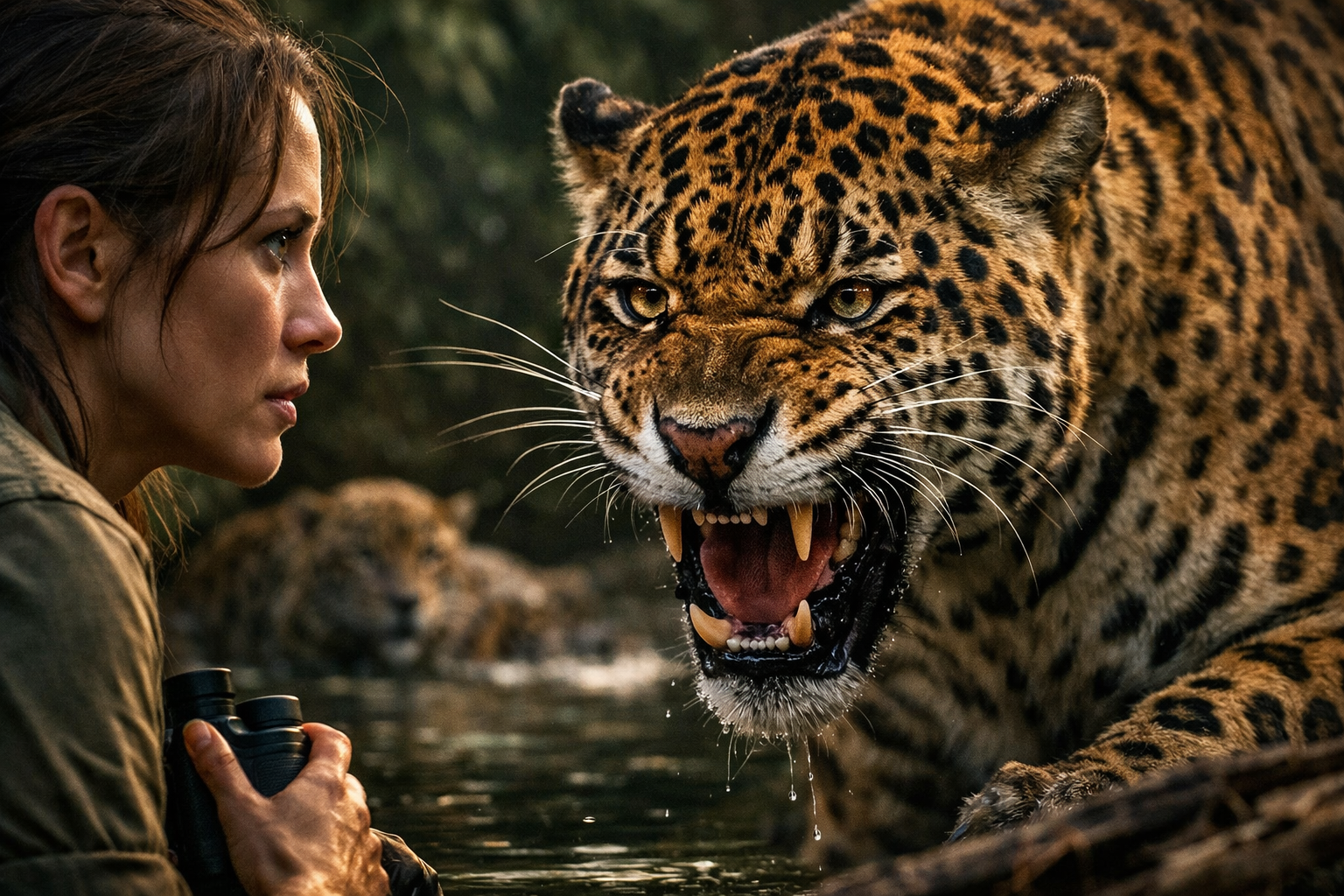
When people think of jaguars, they often picture a powerful spotted cat silently moving through dense rainforest. Known for their strength, beauty, and stealth, jaguars are among the most iconic predators in the Americas. Yet despite their fame, much of their behavior remains misunderstood.
Popular media often portrays big cats as fierce hunters whose lives revolve solely around stalking prey. In reality, jaguars are far more complex. Their daily routines, social interactions, hunting strategies, and adaptations reveal an intelligent and highly specialized animal that plays a critical role in maintaining healthy ecosystems.
The more scientists study jaguars in the wild, the more fascinating discoveries emerge. Here are 12 things most people don’t realize about jaguar behavior—and why these remarkable cats continue to intrigue researchers around the world.
1. Jaguars Are Excellent Swimmers
Unlike many domestic cats that avoid water whenever possible, jaguars are surprisingly comfortable in aquatic environments.
They frequently swim across rivers, explore wetlands, and even hunt in water. In regions such as the Pantanal wetlands of South America, jaguars spend a significant amount of time near rivers and flooded areas.
Their confidence in the water gives them access to food sources that many other predators cannot easily exploit, making them one of the most versatile hunters in the animal kingdom.
2. Their Hunting Technique Is Unusually Powerful
Most big cats kill prey by targeting the throat or suffocating their victims. Jaguars often use a different approach.
Thanks to their exceptionally strong jaws, they are capable of delivering a bite powerful enough to penetrate skulls and thick shells. This unique hunting method allows them to tackle prey that would be difficult for many predators to handle.
Their bite force is considered one of the strongest relative to body size among all wild cats, making them highly effective hunters.
3. They Hunt More Than Just Mammals
Many people assume jaguars primarily hunt deer and other mammals. While those animals are certainly part of their diet, jaguars are remarkably opportunistic.
They may consume fish, turtles, caimans, birds, reptiles, and various other species depending on what is available in their habitat.
This dietary flexibility helps them survive in a wide range of ecosystems and contributes to their success as apex predators.
4. Jaguars Are Masters of Patience
Success in the wild often depends on timing, and jaguars excel at waiting for the right moment.
Rather than relying solely on speed, they frequently use stealth and patience. A jaguar may spend considerable time observing potential prey before launching a carefully calculated attack.
This behavior conserves energy and increases hunting success, demonstrating that patience can be one of nature’s most effective survival tools.
5. They Communicate Without Constant Vocalization
Although jaguars are capable of producing impressive vocal sounds, they do not rely on roaring alone to communicate.
Scent markings, scratch marks on trees, body posture, and territory signals all play important roles in conveying information. These subtle forms of communication help jaguars avoid unnecessary conflicts and establish boundaries.
Much of their social interaction occurs through signs that are invisible to casual observers.
6. Solitary Doesn’t Mean Unsocial
Jaguars are generally solitary animals, but that does not mean they never interact with one another.
Researchers have documented peaceful encounters between individuals, especially around abundant food sources. Mothers maintain strong bonds with cubs for extended periods, and neighboring jaguars may show greater tolerance than previously believed.
These observations suggest that jaguar social behavior is more nuanced than the simple label of “solitary” implies.
7. They Adapt to Different Environments Remarkably Well
One of the most impressive aspects of jaguar behavior is adaptability.
Jaguars inhabit tropical rainforests, wetlands, dry forests, grasslands, and other environments across Central and South America. Their behavior often changes depending on local conditions, prey availability, and habitat characteristics.
This flexibility allows them to survive in diverse ecosystems and respond to environmental changes more effectively than many specialized predators.
8. Cubs Spend Years Learning Survival Skills
Young jaguars do not become skilled hunters overnight.
Mothers invest significant time teaching cubs how to stalk prey, navigate their environment, identify threats, and develop independence. This learning period can last nearly two years before young jaguars establish territories of their own.
These lessons are critical because successful hunting requires experience, patience, and practice—not just instinct.
9. Jaguars Help Maintain Ecosystem Balance
Their behavior influences far more than their own survival.
As apex predators, jaguars help regulate prey populations and maintain ecological balance. By controlling numbers of herbivores and other animals, they indirectly influence vegetation growth, species diversity, and habitat health.
This makes jaguars a keystone species whose presence benefits entire ecosystems.
10. They Are More Active at Different Times Than Many People Think
Many people assume jaguars are strictly nocturnal, but their activity patterns are more flexible.
Depending on habitat conditions, prey behavior, and human activity, jaguars may hunt during the day, at dusk, at dawn, or throughout the night.
Their schedules often shift to maximize hunting opportunities and minimize risk, highlighting their ability to adapt behavior to changing circumstances.
11. Individual Jaguars Have Distinct Personalities
Like many intelligent animals, jaguars display individual differences in behavior.
Some appear more cautious, while others are bolder and more exploratory. These personality traits can influence territory use, hunting strategies, and responses to environmental challenges.
Recognizing these differences helps scientists better understand how individual animals contribute to broader population dynamics.
12. They Avoid Humans More Than Most People Realize
Despite their reputation as formidable predators, jaguars generally prefer avoiding human contact.
In most cases, they quietly retreat when people are nearby. Their elusive nature is one reason why sightings remain relatively rare even in areas where jaguars are known to exist.
This cautious behavior helps reduce conflict and demonstrates that these animals are often far less aggressive than public perception suggests.
Why Jaguars Continue to Fascinate Researchers
Jaguars occupy a unique place among the world’s big cats. Their combination of strength, adaptability, intelligence, and mystery makes them particularly compelling subjects for scientific study.
Advances in tracking technology and wildlife monitoring have allowed researchers to uncover behaviors that were once difficult to observe. Each new discovery adds depth to our understanding of how these remarkable predators survive and thrive in challenging environments.
The more scientists learn, the clearer it becomes that jaguars are far more complex than traditional stereotypes suggest.
What Jaguar Behavior Teaches Us About Wildlife
Studying jaguars offers broader lessons about animal behavior as a whole.
Their adaptability demonstrates the importance of flexibility in changing ecosystems. Their communication methods reveal that animals often exchange information in subtle ways. Their patience and intelligence challenge simplistic views of predator behavior.
Perhaps most importantly, jaguars remind us that every species possesses unique strategies shaped by millions of years of evolution.
By understanding these behaviors, we gain a deeper appreciation for the intricate relationships that sustain life in the natural world.
The Importance of Protecting Jaguar Habitats
Because jaguars require large territories and healthy ecosystems, protecting their habitats benefits countless other species as well.
Conservation efforts aimed at preserving forests, wetlands, and wildlife corridors help maintain biodiversity while supporting the ecological roles jaguars perform. Their survival is closely tied to the health of the environments they inhabit.
In many ways, protecting jaguars means protecting entire ecosystems.
Final Thoughts
Jaguars are much more than powerful predators with beautiful spotted coats. They are intelligent, adaptable, and highly specialized animals whose behavior continues to surprise researchers and wildlife enthusiasts alike.
From their swimming abilities and unusual hunting techniques to their subtle communication methods and ecological importance, these big cats reveal a level of complexity that many people never see. Each new discovery highlights how much there is still to learn about the natural world.
The next time you think of a jaguar, remember that beneath its fierce reputation lies one of nature’s most fascinating and misunderstood animals—an extraordinary predator whose behavior offers valuable insights into survival, adaptation, and the delicate balance of life in the wild.







