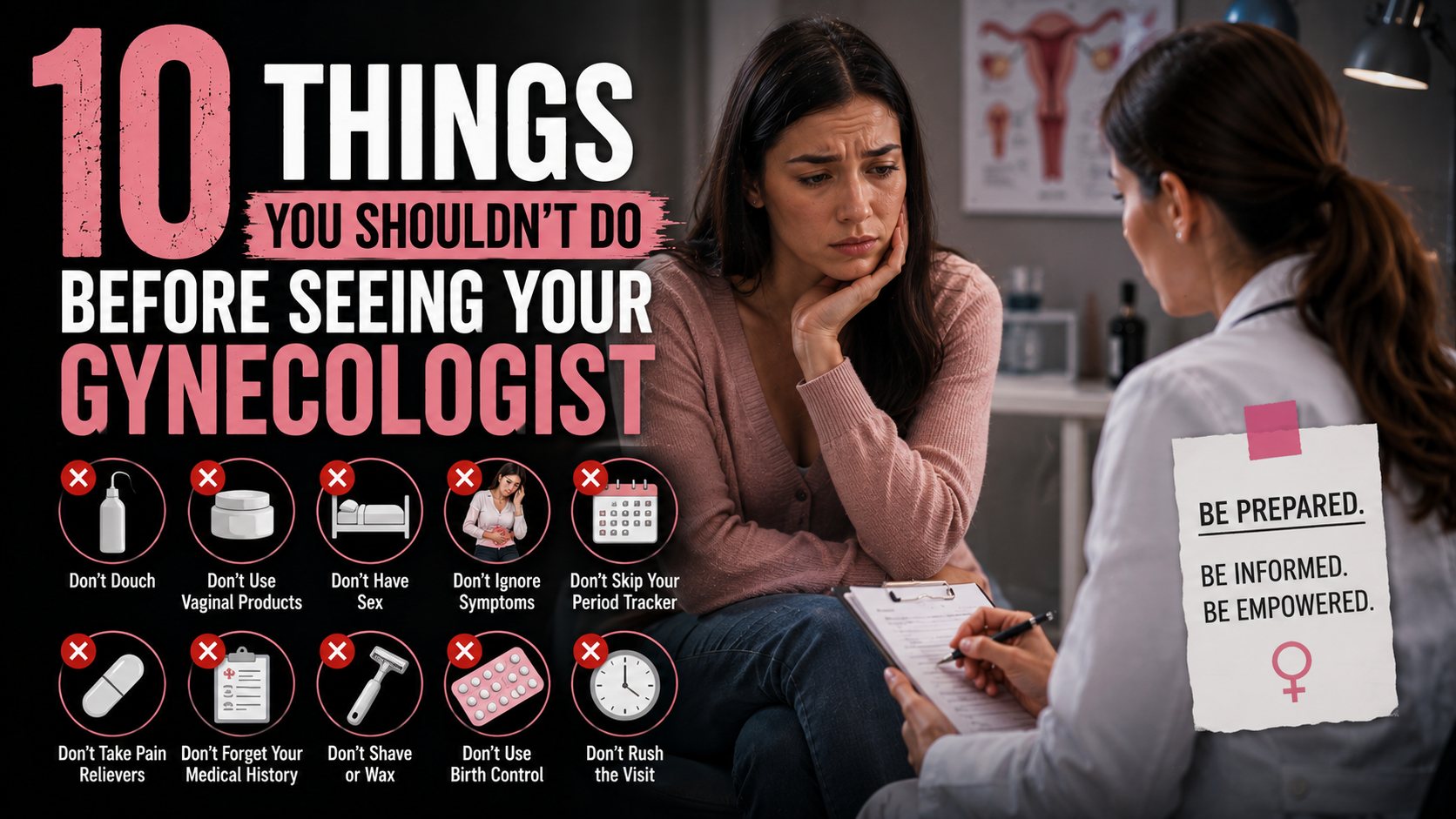
For many women, visiting the gynecologist isn’t exactly something to look forward to. Whether it’s your first appointment or you’ve been going for years, it’s completely normal to feel nervous, uncomfortable, or even anxious beforehand.
The good news is that a little preparation can make the experience much smoother. Knowing what to do—and what to avoid—before your visit can help reduce stress, improve communication with your doctor, and ensure you get the most accurate care possible.
Here are 10 important do’s and don’ts to keep in mind before your next gynecological appointment.
1. Don’t Empty Your Bladder Right Before the Visit

Many people instinctively head to the bathroom before any medical appointment, especially when they’re feeling nervous.
However, if your gynecologist needs a urine sample, arriving with a completely empty bladder can be inconvenient.
Urine samples may be used to:
- Test for urinary tract infections (UTIs)
- Screen for sexually transmitted infections (STIs)
- Confirm pregnancy
- Investigate certain symptoms
You don’t need to arrive uncomfortably full, but try not to use the restroom immediately before your appointment. Drinking some water beforehand can help ensure you’re able to provide a sample if needed.
2. Avoid Sexual Activity for 24 Hours Before Your Exam

Sex can temporarily alter the vaginal environment and may affect the accuracy of certain tests, including Pap smears and vaginal swabs.
Even protected sex can introduce substances such as lubricants or spermicide that may interfere with results.
Giving your body a short break before the exam helps your healthcare provider get the clearest picture of your reproductive health.
3. Don’t Stress About Grooming

Many women worry about whether they should shave, wax, trim, or otherwise groom before seeing a gynecologist.
Here’s the reality: your gynecologist truly doesn’t care.
Medical professionals are focused on your health, not your grooming habits.
In fact, aggressive hair removal immediately before an appointment can sometimes cause irritation, razor burn, small cuts, or inflammation that may make the exam less comfortable.
Whether you choose to groom or not is entirely personal. There’s no medical requirement to do so before an appointment.
4. Try Not to Schedule During Your Period

Unless you’re specifically seeking help for menstrual concerns, it may be helpful to schedule your appointment outside of your menstrual cycle.
Heavy bleeding can sometimes make certain exams and screening tests more difficult to perform or interpret accurately.
Additionally, many women feel more sensitive, bloated, or uncomfortable during their periods, which can add to appointment anxiety.
If your period unexpectedly arrives before your visit, call your provider’s office and ask whether you should still come in or reschedule.
5. Bring Your Medical History

Having important health information readily available can save time and help your doctor better understand your needs.
Consider making notes about:
- Previous surgeries
- Current medications
- Allergies
- Family medical history
- Past pregnancies
- Menstrual history
- Previous diagnoses
It’s easy to forget important details when you’re sitting in an exam room, so writing things down beforehand can be extremely helpful.
6. Make a List of Questions

A gynecology appointment is an opportunity to discuss concerns that may not come up in everyday conversation.
Before your visit, write down any questions you have regarding:
- Birth control options
- Menstrual changes
- Sexual health
- Fertility concerns
- Hormonal symptoms
- Pelvic pain
- Vaginal health
No topic is too embarrassing or too small to discuss. Gynecologists address these concerns every day and are there to help, not judge.
7. Avoid Excessive Online Research

Looking up symptoms online can be tempting, especially if you’re worried about something.
While basic research can help you better understand your concerns, spending hours searching the internet often creates unnecessary anxiety.
Online information can be:
- Inaccurate
- Outdated
- Misleading
- Taken out of context
Trust your healthcare provider to evaluate your specific situation rather than assuming the worst based on internet searches.
8. Try to Relax Before the Appointment

Feeling nervous is completely normal.
However, tension and anxiety can sometimes make exams more uncomfortable than they need to be.
Simple relaxation techniques may help, including:
- Deep breathing exercises
- Meditation
- Gentle stretching
- Listening to calming music
- Arriving early to avoid feeling rushed
The more relaxed your muscles are, the more comfortable the examination process is likely to be.
9. Bring Support If You Need It

You don’t have to handle medical appointments alone.
If you’re feeling particularly anxious, consider bringing someone you trust.
This could be:
- A partner
- A close friend
- A sibling
- A parent
- Another supportive family member
Even if they remain in the waiting room, having someone there can provide reassurance before and after the appointment.
Many women find it comforting to have a trusted person available to discuss concerns or simply offer emotional support.
10. Be Honest About Your Symptoms
This may be the most important tip of all.
No matter how minor, embarrassing, or unrelated a symptom may seem, tell your gynecologist about it.
Symptoms such as:
- Unusual discharge
- Pelvic pain
- Irregular bleeding
- Itching
- Fatigue
- Nausea
- Changes in libido
- Pain during intercourse
can provide valuable clues about your overall health.
Your doctor can only work with the information you provide. Being open and honest helps ensure accurate diagnosis and appropriate treatment.
Why Regular Gynecological Care Matters
Routine gynecological visits play an essential role in preventive healthcare.
These appointments can help:
- Detect potential health issues early
- Screen for cervical cancer
- Monitor reproductive health
- Address hormonal concerns
- Discuss contraception and fertility
- Identify infections or other conditions before they become serious
Regular checkups are one of the most effective ways to stay proactive about your health.
Final Thoughts

A gynecologist appointment may never become anyone’s favorite activity, but it doesn’t have to be an overwhelming experience.
Preparing in advance, asking questions, staying honest about symptoms, and understanding what to expect can make the visit far less stressful and far more productive.
Remember that your gynecologist’s primary goal is to help you maintain your health and well-being. They’re there to provide answers, support, and medical expertise—not judgment.
The next time you have an appointment scheduled, take a deep breath, come prepared, and give yourself credit for taking an important step toward protecting your long-term health.







