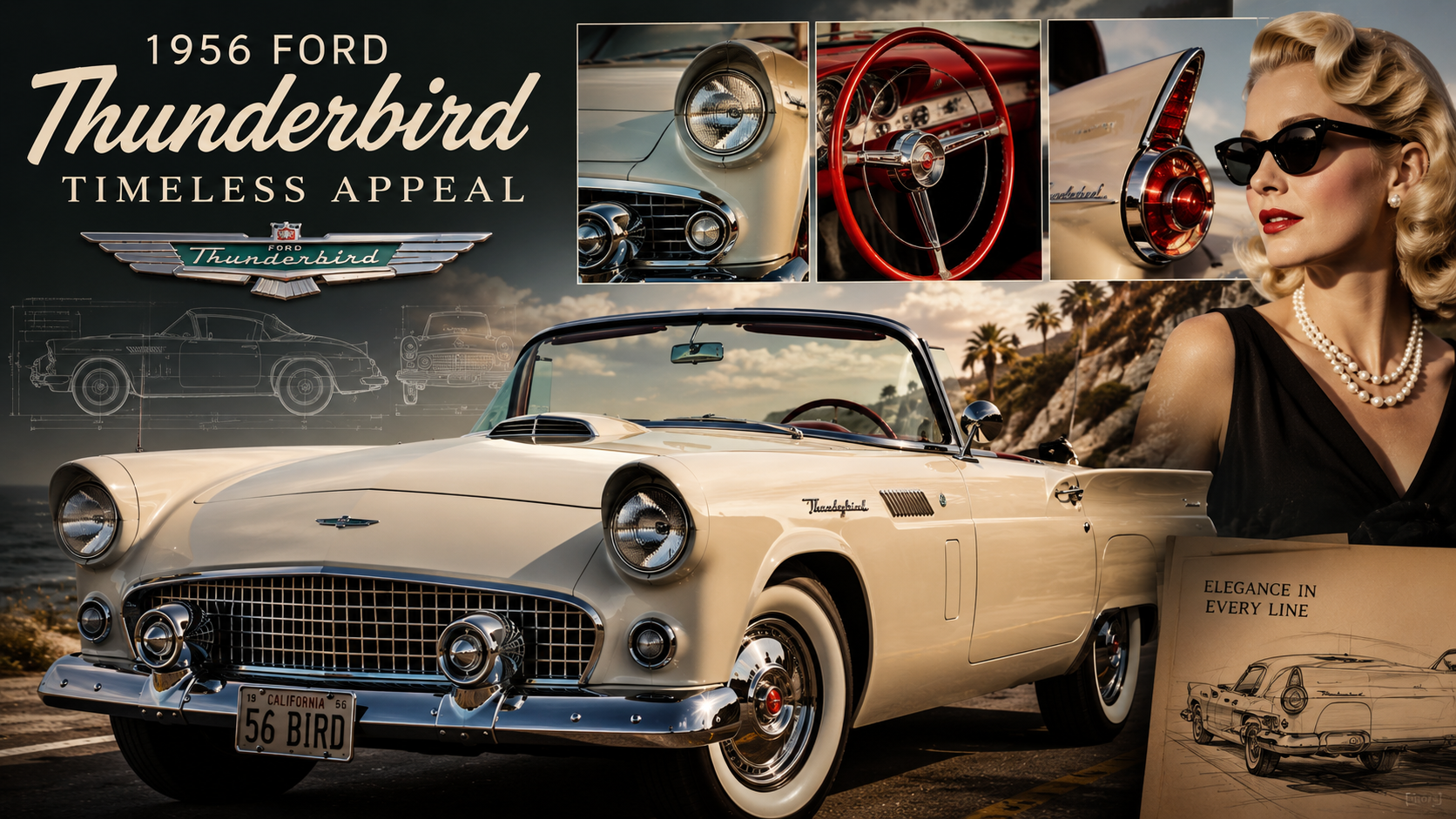
Few classic cars manage to maintain their charm across generations quite like the Ford Thunderbird. Introduced during a transformative era in American automotive design, the Thunderbird quickly established itself as more than just a vehicle—it became a symbol of style, sophistication, and postwar optimism.
By 1956, the Thunderbird had already begun evolving into an icon. While its debut in 1955 introduced the concept of a personal luxury car, the 1956 model refined that vision and added practical improvements that enhanced both its beauty and usability.
What makes the 1956 Thunderbird especially fascinating is how its design choices continue to influence automotive aesthetics today. Its proportions, detailing, and engineering decisions all contribute to a timeless appeal that still captivates collectors and enthusiasts.
Here are ten key design facts that explain why the 1956 Ford Thunderbird remains one of the most admired classic cars in automotive history.
1. It Introduced a Subtle Rear Spare Tire Design
One of the most recognizable design elements of the 1956 Thunderbird is its externally mounted spare tire.
Unlike traditional trunk-mounted spares, this design placed the spare in a rear “continental-style” enclosure. This not only freed up trunk space but also created a distinctive silhouette.
The result was a more elegant rear profile that helped differentiate the Thunderbird from other convertibles of its era.
This feature became a defining visual cue and contributed significantly to its luxury appeal.
2. The Addition of Porthole Windows Improved Visibility and Style
A major design innovation for the 1956 model was the introduction of optional porthole windows in the removable hardtop.
These small circular windows were not just decorative—they improved rear visibility for drivers.
However, they also added a futuristic and aviation-inspired aesthetic that aligned with 1950s design trends.
The portholes quickly became one of the most iconic styling elements associated with the Thunderbird.
They gave the car a unique personality that set it apart from competitors.
3. Refined Body Proportions Created a More Balanced Look
Compared to the 1955 model, the 1956 Thunderbird featured subtle but important adjustments to its body proportions.
The front end was slightly lengthened, and the overall stance was refined to appear more balanced and elegant.
These changes improved visual harmony, making the car appear more grounded and refined.
In automotive design, small proportional changes can dramatically alter perception.
The 1956 Thunderbird achieved a more mature and sophisticated appearance without losing its sporty identity.
4. The Front Bumper Design Added a Sense of Strength
The redesigned front bumper gave the 1956 Thunderbird a stronger visual presence.
With its chrome detailing and integrated styling, the bumper created a sense of width and stability.
It also blended more seamlessly into the overall design, rather than appearing as a separate component.
This integration reflected a broader mid-1950s trend toward cohesive automotive styling.
The result was a car that looked both powerful and refined.
5. The Hood Scoop Became a Signature Performance Detail
Another distinctive feature of the 1956 Thunderbird was the introduction of a hood scoop.
While relatively subtle, this design element suggested performance capability and mechanical sophistication.
Even though the Thunderbird was not a high-performance sports car in the traditional sense, the hood scoop helped reinforce its sporty image.
It added visual excitement without overwhelming the clean lines of the car.
This balance between elegance and performance was central to the Thunderbird’s identity.
6. Improved Interior Space Enhanced Practical Luxury
One of the most important changes in the 1956 model was the improvement in interior usability.
Ford made modifications to increase cabin space, making the car more comfortable for everyday driving.
This was a key part of the Thunderbird’s “personal luxury car” philosophy.
Unlike pure sports cars, the Thunderbird was designed to be driven regularly, not just admired.
The improved interior helped position it as a vehicle that combined style with livability.
This dual-purpose design became a hallmark of the model’s long-term appeal.
7. The Dashboard Design Reflected Jet-Age Inspiration
The interior of the 1956 Thunderbird featured a dashboard that embraced the jet-age aesthetic popular in the 1950s.
Instrumentation was clean, symmetrical, and slightly futuristic in appearance.
This design language reflected America’s fascination with aviation and space-age innovation during the postwar era.
The dashboard was not just functional—it was expressive.
It reinforced the idea that driving the Thunderbird was a modern, forward-looking experience.
8. Chrome Accents Were Used Strategically, Not Excessively
Chrome was a dominant design feature in 1950s automobiles, but the 1956 Thunderbird used it with more restraint and purpose.
Instead of overwhelming the car with decorative chrome, designers placed accents strategically along trim lines, bumpers, and detailing.
This controlled use of chrome helped highlight the car’s shape rather than distract from it.
The result was a more sophisticated visual identity.
This balance is one reason the design has aged so well compared to more heavily ornamented vehicles of the same era.
9. The Convertible Roof Design Balanced Form and Function
The 1956 Thunderbird offered both a convertible soft top and a removable hardtop.
This dual-roof system provided flexibility for drivers while maintaining the car’s sleek design profile.
When the hardtop was installed, the car took on a coupe-like appearance that felt solid and refined.
When removed, it transformed into a stylish open-top cruiser.
This adaptability contributed to the Thunderbird’s broad appeal among different types of buyers.
It was both a luxury car and a weekend leisure vehicle.
10. Color Options Played a Key Role in Its Visual Identity
Color selection was an important part of the Thunderbird’s design strategy.
Ford offered a range of vibrant and elegant color combinations that helped personalize each vehicle.
These colors were not just cosmetic—they were part of the car’s identity.
Two-tone combinations were particularly popular, emphasizing the car’s curves and design lines.
This attention to color helped the Thunderbird stand out in a crowded automotive market and reinforced its image as a stylish lifestyle product.
Why the 1956 Thunderbird Still Feels Modern Today
One of the most remarkable aspects of the 1956 Thunderbird is how contemporary it still appears.
Even decades later, its proportions and design language feel relevant.
This longevity is not accidental. It is the result of thoughtful design principles that emphasized balance, restraint, and emotional appeal.
Rather than relying on exaggerated styling trends, the Thunderbird focused on harmony and proportion.
These are qualities that rarely go out of style.
The Birth of the Personal Luxury Car Concept
Before the Thunderbird, most American cars were categorized either as practical family vehicles or performance-oriented sports cars.
The Thunderbird introduced a new category: the personal luxury car.
It was designed for individual expression rather than pure utility or racing performance.
This concept reshaped automotive marketing and influenced future models across multiple brands.
The 1956 redesign strengthened this identity by making the car more comfortable, more stylish, and more versatile.
Cultural Impact and Legacy
Beyond its design, the Thunderbird became a cultural symbol of 1950s optimism and innovation.
It appeared in films, advertisements, and popular culture as a representation of success and modern living.
Its design language influenced future generations of vehicles, particularly in the luxury and convertible segments.
Collectors today continue to value the 1956 model for its balance of beauty, innovation, and historical significance.
Final Thoughts
The 1956 Ford Thunderbird remains one of the most important design achievements in automotive history.
Its enduring appeal comes from a combination of thoughtful design decisions, including:
- Innovative rear spare tire styling
- Porthole window aesthetics
- Refined proportions
- Strong yet elegant front design
- Subtle performance cues
- Improved interior comfort
- Jet-age inspired dashboard
- Balanced chrome detailing
- Convertible versatility
- Carefully curated color options
Together, these elements created a car that transcended its era.
More than just a vehicle, the Thunderbird became a design statement—one that continues to influence automotive style and captivate enthusiasts around the world.
Even today, it stands as a reminder that great design is not about excess, but about balance, purpose, and emotional connection.