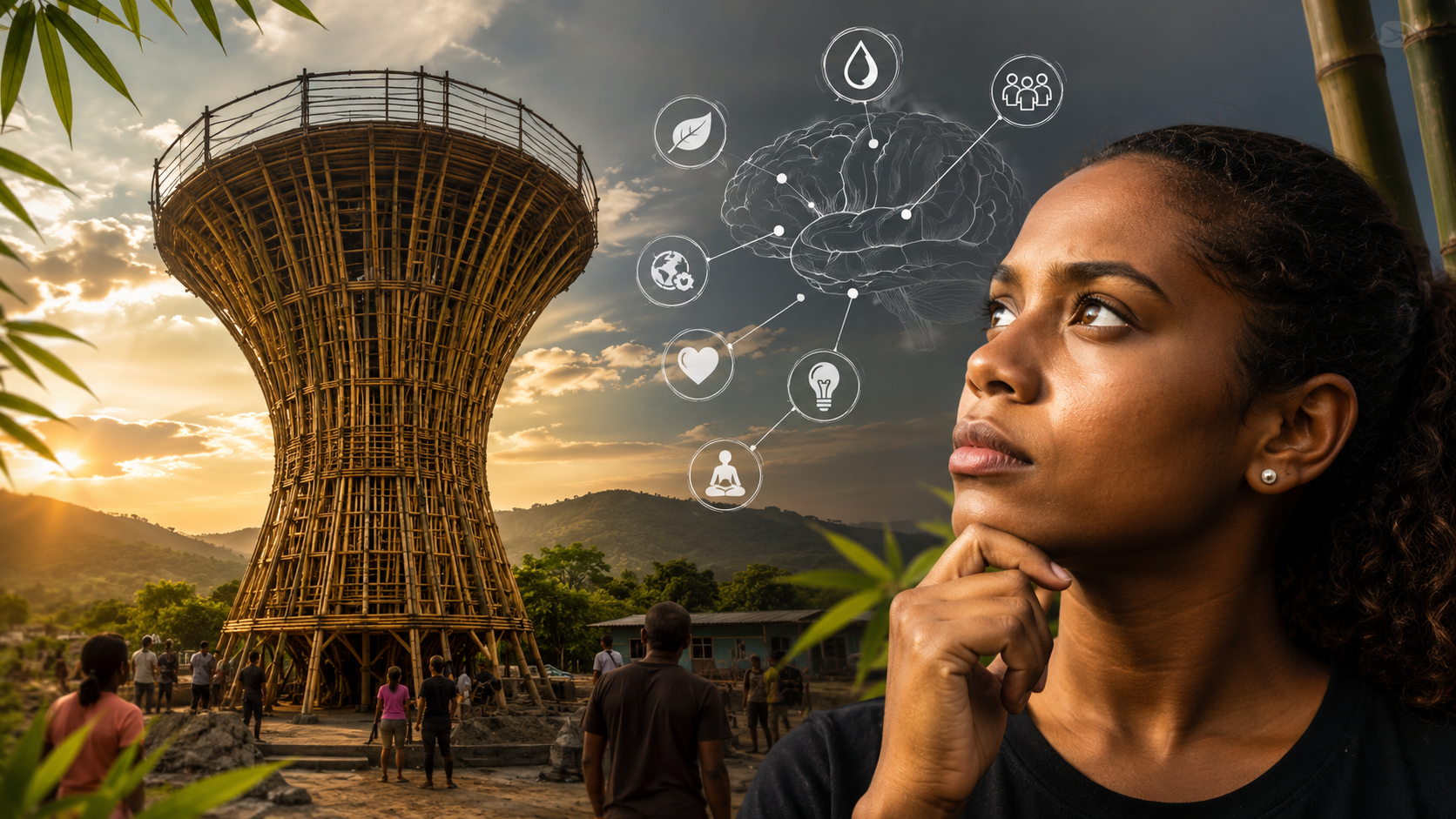
There’s something quietly magical about a tall, slender tower made of bamboo that pulls clean drinking water straight from the air. These structures, like the celebrated Warka Water Towers, rise from dry earth in places where water has always been a daily struggle. They don’t roar with machinery or require electricity. They simply stand there, elegant and patient, turning invisible humidity, fog, and dew into life-giving liquid.
It’s no wonder they capture our imagination. In a world drowning in complex problems and high-tech fixes, these low-tech wonders feel like a breath of fresh air—literally. But the fascination goes deeper than engineering. It taps into fundamental parts of human psychology. Here are eight powerful psychological reasons why bamboo atmospheric water towers continue to intrigue, inspire, and even move people around the globe.
1. The Allure of Simplicity in a Complicated World
Modern life bombards us with complexity. Apps, algorithms, and endless notifications leave many of us craving straightforward solutions. Bamboo water towers deliver exactly that. Built with local materials, basic craftsmanship, and natural processes like condensation, they prove that effective answers don’t always need billions in funding or cutting-edge labs.
Psychologically, this satisfies our deep-seated need for cognitive ease. When something works elegantly without unnecessary complications, it reduces mental load and sparks joy. We see the tower and think, “Of course—that makes perfect sense.” In an era of climate anxiety and technological overload, this return to simplicity feels profoundly reassuring. It reminds us that human ingenuity can still align beautifully with nature rather than fighting against it.
2. Connection to Nature and Biophilia
Humans have an innate love for the natural world—known as biophilia. Bamboo itself is a wonder: fast-growing, strong yet flexible, and deeply sustainable. Watching a structure made from this living material harvest water from the atmosphere feels like witnessing nature collaborating with itself.
The towers mimic natural systems, such as how certain beetles or trees collect moisture. This resonance triggers awe and a sense of belonging. People feel drawn to designs that don’t dominate the environment but harmonize with it. In a time when many feel disconnected from the land, these towers offer a tangible bridge back to our roots, evoking calm and wonder simultaneously.
3. Hope Amid Scarcity and the Hero’s Journey
Water scarcity affects millions, particularly in rural communities across Africa, India, and beyond. The sight of a single tower producing up to 100 liters of clean water daily represents tangible hope. Psychologically, this activates our optimism bias and narrative-loving brains.
We love underdog stories and clever solutions that overcome impossible odds. The Warka Tower, conceived by architect Arturo Vittori after visiting water-stressed villages in Ethiopia, embodies the hero’s journey: a simple idea traveling from concept to life-changing reality for entire communities. Watching it succeed triggers empathy, inspiration, and a renewed belief that individual creativity can solve massive global challenges.
4. The Satisfaction of Clever, Low-Tech Innovation
There’s a special delight in “appropriate technology”—solutions perfectly matched to their context. These bamboo towers don’t rely on imported parts or specialist knowledge. Locals can build and maintain them, which empowers communities and sparks admiration worldwide.
This taps into our appreciation for resourcefulness and human cleverness. It’s the same psychology behind viral videos of backyard inventions or MacGyver-style fixes. People share images of these towers because they represent intelligence without arrogance—smart design that respects limitations while transcending them.
5. Aesthetic Appeal and Symbolic Power
Visually, the towers are striking: tall, lattice-like structures that look almost sculptural against the horizon. Their organic form, often compared to the indigenous Warka tree in Ethiopia, blends art and function seamlessly.
Psychologically, beautiful objects capture attention and evoke positive emotions. The towers symbolize resilience, growth, and renewal—bamboo bending but not breaking, water appearing as if by gentle magic. They become modern totems of sustainability, carrying emotional and cultural weight far beyond their practical use.
6. Empowerment and Community Pride
One of the most compelling aspects is how these towers shift power dynamics. Instead of depending on distant governments or expensive infrastructure, communities gain direct control over a vital resource. Women and children, who often bear the burden of water collection, reclaim hours of their lives.
This resonates deeply with our psychological need for autonomy and agency. Seeing people stand taller—literally and figuratively—around their village’s water tower stirs feelings of solidarity and shared human dignity. It’s not just about hydration; it’s about restoring pride and possibility.
7. Curiosity and the Magic of Invisible Processes
How does something made of sticks and mesh pull water from seemingly dry air? That mystery fascinates us. Humans are wired for curiosity; we love understanding hidden mechanisms.
The science behind condensation and dew points feels almost alchemical. At night, the mesh cools, moisture condenses, and droplets trickle down—pure, clean, and free. This blend of wonder and accessible science makes the towers endlessly shareable and discussable. They turn abstract environmental concepts into something concrete and observable.
8. Alignment with Values and Moral Satisfaction
In an age of eco-anxiety, these towers offer moral uplift. Supporting or simply learning about them allows people to feel they’re on the “right side” of progress—sustainable, equitable, and forward-thinking without being preachy.
This satisfies our need for consistency between values and actions (cognitive dissonance reduction). Even passive fascination provides a psychological boost: “The world has problems, but here’s proof we’re inventing better ways.” It fuels a quiet optimism that spreads through conversations, social media, and personal inspiration.
Why This Fascination Matters
The psychological pull of bamboo atmospheric water towers reveals something important about who we are. We crave solutions that are not only effective but meaningful—rooted in nature, accessible to all, and capable of restoring balance. These structures succeed because they speak to multiple layers of human experience at once: our intellect, emotions, ethics, and sense of wonder.
As climate challenges intensify and water stress grows, innovations like the Warka Tower offer more than practical relief. They provide psychological nourishment too—proof that creativity, humility, and respect for nature can coexist. They remind us that sometimes the most powerful technologies are the ones that feel timeless.
Communities that install these towers often report not just better health from clean water, but stronger social bonds and renewed hope. Children grow up seeing technology as something harmonious rather than extractive. Globally, the images and stories circulate because they touch a universal chord: we all want a future where ingenuity serves life.
Whether you’re an engineer, environmentalist, parent, or simply someone scrolling through your feed, these bamboo sentinels stop you in your tracks. They stand as quiet testaments to what’s possible when we listen to both the planet and our better instincts.
In the end, our fascination isn’t really about the towers themselves. It’s about what they represent: resilience, creativity, connection, and the enduring human capacity to turn scarcity into abundance—one drop of condensed air at a time.







