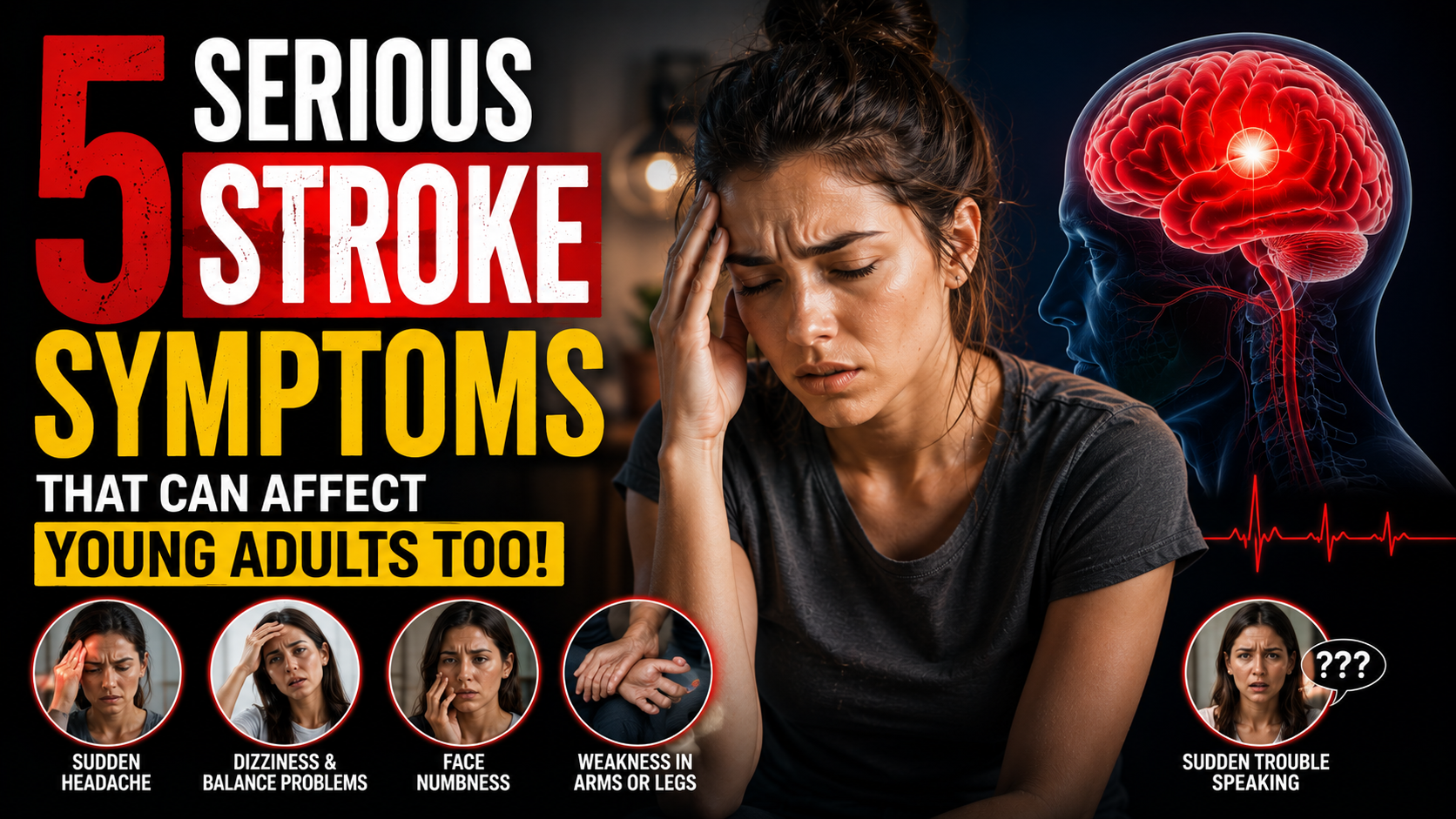
5 Serious Stroke Symptoms That Can Affect Young Adults Too
For many people, stroke is considered a health problem that mainly affects older adults. However, medical experts are seeing an increasing number of strokes among younger individuals, including people in their 20s, 30s, and 40s. While age remains a major risk factor, lifestyle habits, underlying health conditions, stress, obesity, smoking, and even certain genetic factors can raise the risk of stroke much earlier in life.
One of the biggest dangers of stroke is that many young adults fail to recognize the warning signs. Because they assume they are too young to experience a stroke, they may ignore symptoms or mistake them for less serious conditions such as fatigue, migraines, anxiety, or dehydration. Unfortunately, every minute matters when a stroke occurs. Delayed treatment can lead to permanent brain damage, disability, or even death.
Understanding the symptoms and seeking immediate medical attention can make a life-changing difference. Here are five serious stroke symptoms that young adults should never ignore.
1. Sudden Weakness or Numbness on One Side of the Body
One of the most common and recognizable signs of a stroke is sudden weakness, numbness, or paralysis affecting one side of the body. This may occur in the face, arm, leg, or a combination of these areas.
For example, you may notice that one side of your face appears to droop when you smile. You might struggle to lift one arm, or your leg may suddenly feel heavy and difficult to move. These symptoms often appear without warning and can develop within seconds or minutes.
The reason this happens is that a stroke interrupts blood flow to specific areas of the brain that control movement and muscle function. When brain cells are deprived of oxygen, they begin to die rapidly, causing the body to lose normal control over certain muscles.
Many young adults dismiss temporary numbness as a result of poor posture, sleeping in an awkward position, or sitting too long. However, if weakness or numbness appears suddenly and affects only one side of the body, it should be treated as a medical emergency.
A simple way to check is to raise both arms. If one arm drifts downward or cannot be lifted properly, seek emergency medical help immediately.
2. Difficulty Speaking or Understanding Speech
Another major warning sign of stroke is a sudden change in communication abilities. Some people may find themselves unable to speak clearly, while others struggle to understand what people around them are saying.
Speech may become slurred, slow, or confusing. A person may know what they want to say but be unable to find the right words. In some cases, they may produce nonsensical sentences without realizing it.
This symptom occurs when a stroke affects the areas of the brain responsible for language processing and communication. Even highly educated and articulate individuals can suddenly experience severe speech difficulties during a stroke.
Friends, family members, or coworkers often notice this symptom before the affected person does. If someone suddenly begins speaking strangely, using incorrect words, or appears confused during a conversation, it should never be ignored.
A quick test is to ask the person to repeat a simple sentence. If they cannot repeat it accurately or have difficulty understanding the request, emergency medical attention is necessary.
3. Sudden Vision Problems
Many people do not realize that a stroke can affect eyesight. Vision-related symptoms are often overlooked because they may be mistaken for eye strain, migraines, or fatigue.
A stroke can cause sudden blurred vision, double vision, or partial vision loss in one or both eyes. Some individuals describe the sensation as a dark curtain covering part of their field of vision. Others may experience difficulty focusing or notice that objects appear distorted.
These changes occur when blood flow to the parts of the brain responsible for visual processing becomes disrupted. In some cases, the eye itself may be healthy, but the brain is unable to interpret visual information correctly.
Because vision problems can develop quickly, they are often alarming. Any sudden and unexplained change in eyesight should be evaluated immediately, especially when accompanied by other stroke symptoms.
Young adults who experience abrupt visual disturbances should avoid assuming the issue is related to screen time or exhaustion. Prompt medical evaluation can help determine whether a stroke is occurring and improve the chances of recovery.
4. Severe and Sudden Headache
While headaches are common and usually harmless, a stroke-related headache is often very different from a typical headache.
Many stroke survivors describe it as the worst headache of their lives. The pain may appear suddenly and intensely, without any obvious cause. It can be accompanied by nausea, vomiting, dizziness, confusion, or loss of consciousness.
This symptom is particularly common in hemorrhagic strokes, which occur when a blood vessel in the brain ruptures and causes bleeding. The sudden increase in pressure inside the skull can trigger an extremely severe headache.
Young adults who frequently experience migraines may mistakenly assume the pain is another migraine attack. However, if a headache is unusually severe, develops abruptly, or is accompanied by neurological symptoms such as weakness, speech problems, or vision changes, emergency medical care should be sought immediately.
Never ignore a sudden headache that feels dramatically different from your usual headaches. It may be your body’s way of signaling a serious medical emergency.
5. Loss of Balance, Coordination, or Dizziness
A stroke can also interfere with the brain’s ability to control balance and movement. As a result, a person may suddenly become dizzy, unsteady, or unable to walk properly.
Some individuals experience a spinning sensation, while others may stumble, fall, or have difficulty coordinating simple movements. Tasks such as walking in a straight line, standing upright, or reaching for an object may become unexpectedly challenging.
These symptoms are often associated with strokes affecting the cerebellum or brainstem—areas responsible for balance, coordination, and motor control.
Because dizziness is a relatively common complaint, many young adults dismiss it as stress, dehydration, low blood sugar, or exhaustion. While those factors can certainly cause dizziness, stroke-related dizziness usually appears suddenly and may be accompanied by other warning signs.
If dizziness occurs alongside weakness, speech difficulties, vision changes, or numbness, it should be treated as a potential stroke until proven otherwise.
Why Are More Young Adults Experiencing Strokes?
The increasing number of strokes among younger adults has raised concerns among healthcare professionals worldwide. Several factors may contribute to this trend.
High Blood Pressure
Hypertension remains one of the leading causes of stroke. Unfortunately, many young adults are unaware they have high blood pressure because it often develops without obvious symptoms.
Smoking and Vaping
Traditional cigarettes and some vaping products can damage blood vessels, increase blood clot formation, and significantly raise stroke risk.
Obesity and Poor Diet
Diets high in processed foods, excess sugar, and unhealthy fats can contribute to obesity, diabetes, and cardiovascular disease, all of which increase stroke risk.
Lack of Physical Activity
A sedentary lifestyle can negatively affect circulation, blood pressure, and overall cardiovascular health.
Stress and Mental Health Challenges
Chronic stress may contribute to elevated blood pressure and unhealthy coping habits, including smoking, excessive alcohol consumption, and poor sleep.
Medical Conditions
Certain health conditions, including diabetes, heart disease, blood clotting disorders, autoimmune diseases, and genetic factors, can increase the likelihood of stroke even in younger individuals.
Remember the FAST Method
Health professionals often use the FAST acronym to help people recognize stroke symptoms quickly:
F – Face Drooping: Does one side of the face droop when smiling?
A – Arm Weakness: Is one arm weak or difficult to lift?
S – Speech Difficulty: Is speech slurred or difficult to understand?
T – Time to Call Emergency Services: If any of these symptoms are present, seek medical help immediately.
Acting quickly can significantly improve outcomes because certain stroke treatments are most effective when administered within the first few hours after symptoms begin.
Final Thoughts
Stroke is no longer a condition that affects only older adults. Young people can experience strokes too, and the consequences can be devastating when warning signs are ignored. Sudden weakness on one side of the body, speech difficulties, vision problems, severe headaches, and loss of balance are all symptoms that require immediate medical attention.
The key to reducing the impact of a stroke is awareness and rapid action. Knowing the signs, understanding the risks, and seeking emergency care without delay can save brain function, preserve quality of life, and in some cases, save a life.
No matter your age, never assume that a stroke cannot happen to you. Recognizing the symptoms early could make all the difference.







