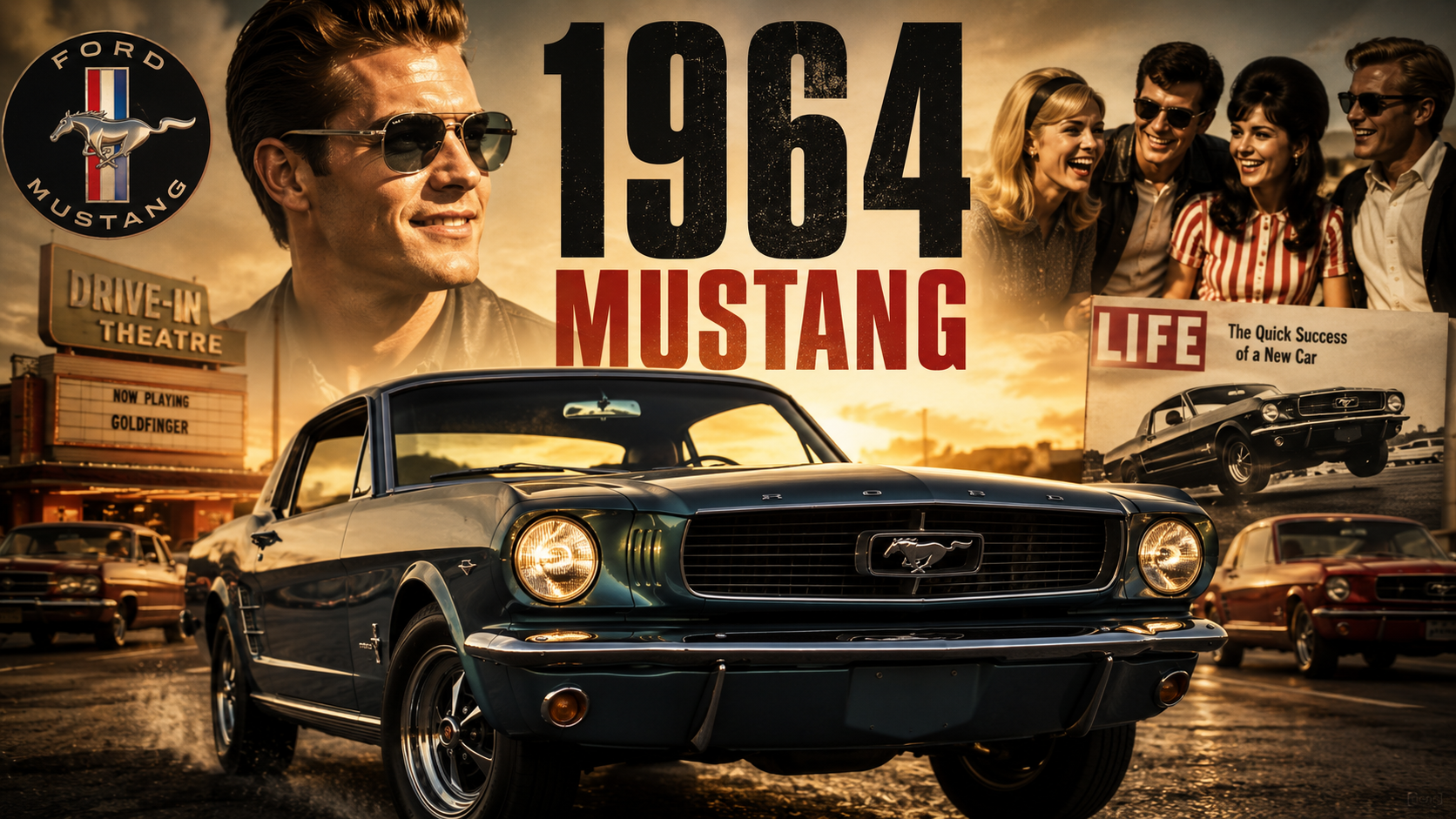
Few cars in automotive history have made an impact as quickly and dramatically as the original Ford Mustang. When it debuted in April 1964, it didn’t just enter the market—it reshaped expectations for what a personal car could be. Within months, it became a cultural phenomenon, capturing the attention of drivers, designers, advertisers, and even filmmakers.
Unlike many vehicles that slowly build a reputation over years, the Mustang exploded into public consciousness almost immediately. It was more than transportation; it became a symbol of youth, freedom, identity, and American automotive ambition.
While design and timing played major roles, the Mustang’s success also reflects deeper patterns of human behavior—how people respond to style, status, affordability, and emotional storytelling.
Here are six key behaviors that help explain why the Ford Mustang became an instant cultural icon in 1964.
1. People Responded Instantly to Emotional Design
One of the strongest reasons the Mustang became an overnight sensation was its emotional design appeal.
At the time, many cars were built primarily for function or status. The Mustang, however, was designed to evoke feeling—excitement, freedom, and individuality.
Its long hood, short rear deck, sporty proportions, and aggressive stance created an immediate visual identity. People didn’t need technical knowledge to appreciate it. They simply reacted to how it made them feel.
This emotional response is a powerful behavioral trigger. Humans are naturally drawn to objects that represent aspiration and identity.
The Mustang didn’t just look like a car—it looked like an experience.
2. Buyers Wanted Affordable Performance Identity
Before the Mustang’s arrival, sporty cars were often expensive, exclusive, or impractical for everyday use.
The Mustang changed that equation by offering style and performance at a relatively accessible price point.
This created a behavioral shift in consumer expectations. Buyers who previously felt excluded from the sports car market suddenly saw an opportunity to participate.
The car appealed especially to younger drivers who wanted something expressive but still within reach financially.
This combination of affordability and identity creation made the Mustang feel personal rather than aspirational from a distance.
People were not just buying transportation—they were buying a sense of self.
3. The Car Matched the Rise of Youth Culture
The early 1960s marked a major cultural shift in the United States.
A growing youth population was beginning to define its own identity through music, fashion, and lifestyle choices. Teenagers and young adults were becoming influential consumers for the first time.
The Mustang arrived at exactly the right moment.
It aligned with a generation that valued independence, mobility, and individuality.
Unlike older, more conservative car designs, the Mustang felt youthful, dynamic, and modern.
Behaviorally, this mattered because people are more likely to adopt products that reflect their identity and social belonging.
The Mustang became a moving symbol of youth culture in motion.
4. Word-of-Mouth Amplified Desire Faster Than Advertising
While Ford’s marketing campaign for the Mustang was strong and innovative, much of its early success came from organic excitement.
People saw the car on the street, in dealerships, and in advertisements—and talked about it.
This created a behavioral feedback loop:
- Someone sees the car
- They talk about it with friends
- More people become curious
- Demand increases
Word-of-mouth is one of the most powerful drivers of consumer behavior because it feels personal and trustworthy.
The Mustang’s design was distinctive enough to spark conversation naturally.
Its popularity grew not only because of what Ford said about it—but because of what people said to each other.
5. Buyers Connected the Mustang to Freedom and Escape
Cars have always represented more than transportation in American culture. They symbolize movement, independence, and personal freedom.
The Mustang amplified this association more effectively than many vehicles before it.
Its branding, styling, and marketing all reinforced the idea of escape—open roads, spontaneous travel, and youthful independence.
Psychologically, people are drawn to products that represent emotional release from routine or restriction.
The Mustang tapped into this desire perfectly.
For many buyers, owning the car felt like owning possibility itself.
It wasn’t just about driving—it was about going somewhere new, both physically and metaphorically.
6. Media Exposure Turned the Mustang Into a Cultural Symbol
Another major factor in the Mustang’s rapid rise was its visibility in media and popular culture.
Shortly after its release, the car appeared in television shows, films, advertisements, and magazine spreads. It quickly became a visual shorthand for modern American style.
Media exposure plays a key role in shaping collective behavior because repetition increases familiarity—and familiarity builds acceptance.
The more people saw the Mustang, the more normal and desirable it became.
Over time, it stopped being just a new car model and started becoming a cultural icon.
This transition from product to symbol is rare and powerful.
Why Timing Played a Critical Role
Even the most well-designed product can fail if it arrives at the wrong moment. The Mustang succeeded partly because it was introduced during a period of economic growth, cultural change, and increasing consumer confidence.
Post-war prosperity in the United States meant more people had disposable income. At the same time, younger consumers were becoming a significant market force.
The Mustang was perfectly positioned at the intersection of these trends.
Timing amplified everything the car already offered.
The Psychology Behind Automotive Icon Status
From a behavioral perspective, iconic products often share a few key traits:
- Strong emotional appeal
- Clear identity signaling
- Accessibility to a wide audience
- Cultural alignment
- High visibility in public spaces
The Mustang checked all of these boxes.
People didn’t just admire it—they identified with it.
That emotional identification is what turns a product into an icon.
The Role of Identity in Car Ownership
Car ownership has always been closely tied to identity expression.
People choose vehicles not only for practical reasons but also to reflect who they are—or who they want to be.
The Mustang offered something unique: the ability to project youthfulness, independence, and confidence without requiring luxury-level spending.
This made it especially powerful in shaping consumer identity behavior.
Drivers were not just purchasing a car—they were selecting a personality statement.
Cultural Legacy That Continues Today
Decades after its debut, the Mustang remains one of the most recognizable automotive nameplates in the world.
Its legacy is built on the same behavioral foundations that made it successful in 1964:
- Emotional design
- Cultural relevance
- Accessibility
- Identity expression
- Strong brand symbolism
Few vehicles maintain cultural relevance across multiple generations, but the Mustang continues to evolve while preserving its core identity.
Its endurance proves that early cultural momentum can create long-lasting brand power when supported by consistent evolution.
Final Thoughts
The instant rise of the Ford Mustang in 1964 was not accidental. It was the result of carefully aligned design, timing, cultural awareness, and human behavior patterns.
The six key behaviors that explain its success include:
- Emotional response to design
- Desire for affordable identity
- Alignment with youth culture
- Word-of-mouth momentum
- Association with freedom
- Strong media visibility
Together, these factors transformed a new car model into a cultural landmark.
The Mustang’s story is ultimately about more than automotive history—it is about how people connect with objects that reflect their aspirations.
When design, emotion, and culture align, products stop being just products.
They become symbols.
And few symbols have remained as powerful—or as enduring—as the Ford Mustang.







