When people hear the words bone marrow donation, many immediately imagine a painful medical procedure or assume that becoming a donor requires a major commitment. As a result, countless individuals overlook an opportunity that could potentially save someone’s life.
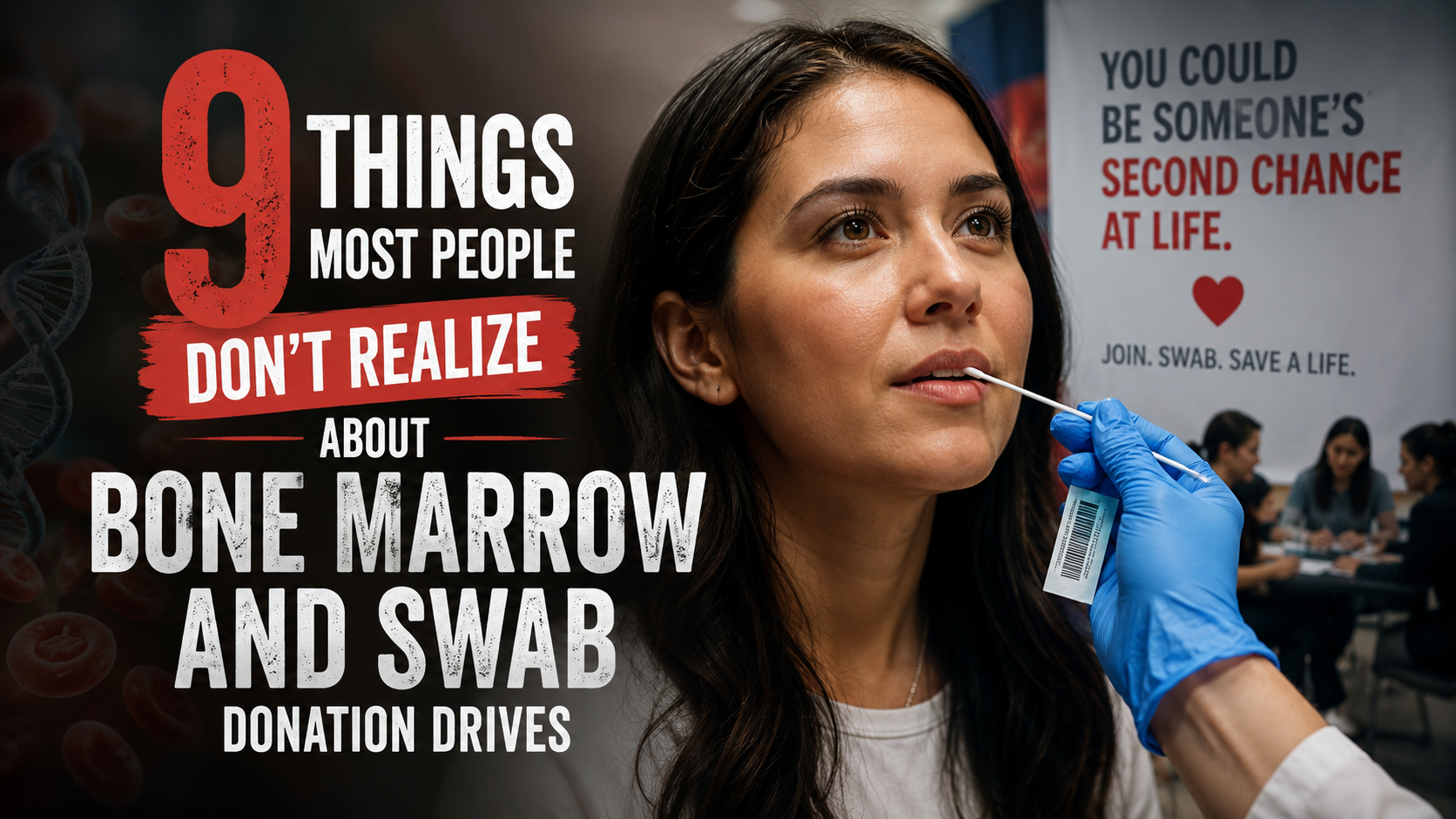
In reality, most bone marrow donor registration campaigns begin with something surprisingly simple: a cheek swab. These swab donation drives are held in schools, workplaces, community centers, hospitals, and public events around the world, helping donor registries identify potential matches for patients battling life-threatening diseases.
Despite the growing awareness surrounding stem cell and bone marrow donation, many misconceptions remain. Understanding how these drives work can help more people make informed decisions about joining donor registries and supporting patients in need.
Here are nine important things most people don’t realize about bone marrow and swab donation drives.
1. A Simple Cheek Swab Is Usually the First Step
One of the biggest misconceptions is that registering as a donor involves needles, blood tests, or immediate medical procedures.
In most cases, joining a bone marrow registry starts with a simple cheek swab. Participants gently rub a cotton swab along the inside of their cheeks to collect cells that contain genetic information used for tissue typing.
The process usually takes only a few minutes and is entirely noninvasive.
These samples help registries determine a person’s Human Leukocyte Antigen (HLA) type, which plays a crucial role in matching donors with patients who need stem cell transplants.
For many people, the ease of the registration process comes as a surprise.
2. Most Registered Donors Are Never Called to Donate
Many potential participants hesitate because they fear signing up will automatically lead to a medical procedure.
The reality is quite different.
Although millions of people join donor registries, only a small percentage are ever identified as potential matches for patients. Even among those selected as possible matches, additional testing is required before a donation is considered.
This means that registering does not guarantee that someone will be asked to donate.
However, without a large pool of registered volunteers, finding suitable matches becomes far more difficult for patients in urgent need.
3. Bone Marrow Donation and Stem Cell Donation Are Often Different Procedures
Another common misunderstanding involves the donation process itself.
Today, most donations are collected through a method known as peripheral blood stem cell (PBSC) donation. In this procedure, donors receive medication that encourages stem cells to move into the bloodstream. The cells are then collected using a process similar to blood donation.
Traditional bone marrow collection, which involves extracting marrow from the pelvic bone under anesthesia, is still used in certain cases but is less common than many people assume.
As a result, the majority of donors never undergo the procedure that many people associate with bone marrow donation.
4. Donors Can Save Lives Without Ever Meeting the Recipient
One of the most remarkable aspects of donation registries is the connection they create between strangers.
A donor in one city—or even one country—may become the lifesaving match for a patient thousands of miles away. Registries often cooperate internationally, dramatically increasing the chances of finding compatible donors.
In many cases, donors and recipients never meet due to privacy regulations. Yet the impact remains profound.
A single donation may give someone battling leukemia, lymphoma, sickle cell disease, or other serious conditions a renewed chance at life.
This global network of cooperation is something many people never fully appreciate.
5. Genetic Diversity Plays a Major Role in Matching
Finding a suitable donor is often much more complicated than matching blood types.
Successful stem cell transplantation requires close HLA compatibility, and these genetic markers are inherited. As a result, patients are more likely to find matches among people with similar ethnic, racial, or ancestral backgrounds.
Unfortunately, some communities remain underrepresented in donor registries. This can make it significantly harder for patients from those groups to find compatible donors.
Many swab drives specifically focus on increasing diversity within registries to improve match opportunities for all patients.
Understanding this challenge highlights why broad participation is so important.
6. Donation Drives Often Begin With Personal Stories
Many of the most successful donor registration campaigns start with a patient in need.
Families, friends, schools, workplaces, and community organizations frequently organize drives after learning that someone is searching for a compatible donor. These personal stories help people understand the urgent need for registry participation.
When individuals hear about a child, parent, sibling, or friend facing a life-threatening illness, the importance of donor recruitment becomes much more tangible.
Even if a newly registered volunteer does not match the specific patient who inspired the campaign, they may eventually help someone else.
In this way, every drive contributes to a larger lifesaving mission.
7. The Commitment Is More Meaningful Than Many People Realize
Joining a registry may take only a few minutes, but the decision carries significant potential impact.
By registering, individuals agree to be contacted if they are identified as a possible match in the future. While the odds of being selected remain relatively low, a match could represent one of the few treatment options available to a patient.
For someone battling a serious blood disorder or cancer, finding a compatible donor can mean the difference between continued illness and a chance for recovery.
This possibility gives donor registration an importance that extends far beyond the brief swabbing process itself.
8. Education Is a Major Goal of Donation Drives
Many donation campaigns are designed not only to recruit donors but also to address misinformation.
Common myths often discourage participation. Some people mistakenly believe donation is extremely painful, dangerous, or financially burdensome. Others assume they are too old, too young, or otherwise ineligible without verifying the requirements.
Educational outreach helps clarify these misconceptions and provides accurate information about eligibility, safety, and procedures.
By increasing public understanding, donation drives can encourage more informed decision-making and greater community participation.
Knowledge often becomes the first step toward action.
9. One Registration Can Create a Lifelong Opportunity to Help
Perhaps the most surprising fact is how long the impact of a single registration can last.
After joining a donor registry, individuals may remain available as potential matches for years, depending on registry guidelines and age requirements. During that time, they could potentially help patients they will never meet and whose stories they may never know.
Most registrants will never receive a call. But for the patient who does find a match, that one person’s decision to participate can be life-changing.
The simple act of completing a cheek swab may ultimately become one of the most meaningful contributions a person ever makes.
Why Bone Marrow Donation Matters
Bone marrow and blood stem cells play a vital role in producing healthy blood cells. For patients affected by diseases such as leukemia, lymphoma, aplastic anemia, and certain inherited immune disorders, stem cell transplantation can be a critical treatment option.
When chemotherapy, radiation, or disease damages the body’s ability to produce healthy blood cells, a compatible donor may provide the healthy stem cells needed to rebuild the patient’s blood and immune systems.
Because suitable matches are often difficult to find, donor registries remain an essential part of modern healthcare.
Every new registrant increases the chances that a patient somewhere will find the match they desperately need.
The Power of Community Participation
Swab donation drives demonstrate how collective action can create meaningful change.
A single event may register dozens, hundreds, or even thousands of potential donors. While not every participant will eventually donate, each new registration strengthens the overall registry and improves the likelihood of successful matches.
Communities that organize and support these drives contribute directly to expanding lifesaving opportunities for patients around the world.
The impact often extends far beyond the day of the event itself.
Final Thoughts
Bone marrow and swab donation drives are far more significant than many people realize. What appears to be a simple cheek swab is actually the first step in a process that could one day help save a life.
From increasing donor diversity and correcting misconceptions to connecting strangers across continents, these campaigns play a vital role in modern medicine. They also highlight the extraordinary power of ordinary people to make a difference through a small but meaningful act.
The nine insights discussed above reveal why donor registration drives continue to be an essential part of healthcare and community engagement. By understanding how they work, more people can appreciate their importance—and perhaps consider becoming part of the lifesaving network themselves.